Fr. Kenneth Baker, SJ, editor-emeritus of Homiletic and Pastoral Review has recently translated and made available an outstanding, and prescient, article from then-Father Joseph Ratzinger (now Pope-Emeritus Benedict XVI), first published in 1958.
It is notable to what extent the problems we continue to wrestle with today were already noticeable in the Church of the "pre-Vatican II" decades. It is also more than noteworthy, with what consistency Ratzinger/Benedict has approached these sorts of issues over the past five decades. What an outstanding thinker and teacher for the Church.
In this article, he supports the now-common practice of admitting to the Sacraments (when no obstacles exist) those weakly or improperly formed Catholics whom he calls "secularized" (I often use the phrase "formed more by the world than by the Church"), when they ask for them. The request itself constitutes some evidence of faith and desire to belong to the Church, however imperfect it may be, and the grace of the Sacraments certainly can aid them in growing in faith over time.
He also notes that this secularization of believers constitutes a tangible challenge for many believers, in that, if a very basic and worldly level of moral commitment, with occasional sacramental participation, is truly sufficient for salvation, then the higher level of commitment to Biblical morality and consistent sacramental participation (including frequent Confession) can be experienced as a burden rather than a grace. The long-term solution for this, he argues, is for the Church to relinquish its "medieval" assumptions of social prestige and place in the world, and return to a "martyrial" distinctiveness - not an opposition to the world, as if all the world outside the Church is evil and bad, but a distinctiveness of "the few" as witness and fulcrum for the lifting up of "the many." He calls this a "de-secularization" of the Church, and notes three (simultaneous) levels or steps:
(1) the sacramental, in which the distinctiveness of the Church's true worship stands over against any materialistic, "magical" thinking about sacramental participation, and therefore invites to a deeper level of conversion;
(2) the proclamation of the faith, in which the distinctiveness of the Church once again supports a clear difference in mode of preaching, between the catechetical (to those in the Church), and the missionary (to those not yet deeply converted) - and this mode has not been heard in the West in many centuries; and
(3) the personal witness, in which the distinctiveness of how the believer lives in the world, especially in the midst of rejection, ridicule, and suffering, stands as clear evidence of the reality and effectiveness of grace.
This core, missionary, and witnessing Church, then, serves ultimately as "priestly people" for the whole world, bringing the salvation of Jesus Christ to the whole world, even those baptized who remain quite worldly, and even those outside the Church, who might respond in any way to the power of God:
"If men and women, indeed the greater number of persons are saved, without belonging in the full sense to the community of the faithful, so then it takes place only because the Church herself exists as the dynamic and missionary reality, because those who have been called to belong to the Church are performing their duty as the few..." (third-to-last paragraph).
If, however, the Church has no such core, no such missionary impulse in the modern world, no such capacity for witness to grace (i.e., "the spirit of Vatican II" church), how shall Christ be proclaimed? If the Church's only mode of worshipping, proclaiming, and living, is "worldly," more or less indistinguishable from everyone else, what is there to inspire to a deeper and greater love?
Showing posts with label Church and State. Show all posts
Showing posts with label Church and State. Show all posts
Tuesday, January 31, 2017
Friday, August 26, 2016
Lessons of the Early Church
I am the Catholic I am, in large part because of the martyrs of the early Church. Their faith shamed my lack of faith, and understanding why they felt it was worth sacrificing the world for the sake of Heaven gave me the impetus to return to the Church as the only way to salvation. Now, the Church needs their witness again, as the world around us seems primed to descend into a new paganism.
The Christian refusal to cooperate with pagan Roman society was rooted in three connected things: (1) The Roman Empire was inherently idolatrous. Civic participation required participation in pagan ritual worship. Oaths of office required the same, to be a soldier, a teacher, etc., not just for politicians. (2) The reality of (unjust) persecution. Romans persecuted Christians mostly because they saw Christian faith as "atheism" and "innovation," two things that threatened the stability and success of the Empire as a whole. But as Tertullian famously pointed out in his Apologeticum, forcing Christians to worship other gods by violence made that worship ineffective for the good of the Empire. (3) Idolatry and unjust persecution represented abuses of power by the Empire. All worldly authority comes ultimately from God, as Paul argued. Its uses must therefore conform at least to natural law standards of justice. That the Empire abused its power in these (and other) ways justified Christian non-participation.
This line of argument, which permeated Christian thought for two centuries, has been buried under other understandings of the Church's relationship to a world seemingly cooperative rather than repressive. The successful evangelization of the West and the creation of Christendom meant that we didn't need to think much about things that support a Christianity of non-participation. But we have this treasure somewhere in the attic, not entirely lost or forgotten. If we confront the increasingly hostile world only with the lessons of cooperative Christendom, we will probably lose. We need the lessons of conflict as well, distilled from that earlier Christian experience of martyrdom.
Here are three of those critical lessons.
1. The world can never provide an avenue of salvation. This should be obvious to Christ's disciples. Only God can forgive sins; only God can save souls; our ultimate homeland is not earth, but Heaven. But in contrast, it's a key plank of modernism, more or less obvious in all three of its branches (liberal democracy, Communism, and fascism), that the State aspires to become all-in-all, the "savior," in a sense. In fascism, it does so directly. In Communism, it does so as the mediating institution of the people's revolutionary will. In liberal democracy, it does so more subtly, as the mediating institution between conflicts of rights and powers; but over time, its mediation inevitably expands and coems to dominate everything else. In all three, "scientism" promises imminent salvation from all the suffering and evils of the world.
Any uncritical acceptance of modernism, then, implicitly accepts the (false) claim that the State exercises the highest and most decisive form of authority. This claim tends to be not merely political, but also moral (i.e., abusing God-given authority!). It rejects, more or less explicitly, a traditional, Bible-informed moral vision. Acceptance of modernism therefore also means accepting the relegation of religion to the private sphere only. The moral verities and priorities of the culture (which are, in terms of Christian Revelation, not true) come to be enforced as true, and any serious objection to them is firmly punished, at least socially (loss of status, respect, jobs, friends, etc), possibly legally (fines, jail, the police showing up in the middle of the night to investigate your family, etc), and even (sometimes) fatally.
If we accept, even implicitly, that the world offers salvation within itself, we cannot be Christians. We must stand firmly and intentionally in the core Christian claim of salvation through Christ alone. Short of martyrdom, we do this especially in our (public) worship. Worship focused on God (as in traditional modes) demonstrates our conviction, and teaches spiritual salvation. Worship focused on ourselves (as in "theater in the round" church design, or hymns all about us or making us speak in God's first person voice, etc.) opens the door to implicit acceptance of the lie of the world saves itself.
2. Forms of idolatry must be clearly rebuked. The Church of the martyrs taught clearly and consistently to all its members that cooperation with idolatry leads to loss of saving relationship with Christ. It wasn't just pagan rituals that were identified, it was a whole host of public or civic activities or positions that were inherently idolatrous - teachers and soldiers, attending theater or civic games, etc etc. This process of identifying and rebuking forms of participation in idolatry was very successful.
Pope St. John Paul II, for one example, did an excellent job throughout his pontificate (and even before) of doing the equivalent for us today. We don't tend to think in terms of "idolatry" today, but the moral equivalent corrupting the Church and society is "secularism" (and similar labels). A creeping domination of "secular" ideas in all spheres of life is intent on displacing any Biblical or natural-law-based cultural patrimony in the West. This is especially apparent at the moment in issues of sexuality and family, or education policy, for example. Pope St. John Paul II showed us how to parse the good and the bad in all such conflicts, and having identified the elements or ideas inconsistent with truth and therefore unacceptable to Christians, he rebuked ideas without condemning people.
The more we conform ourselves to the mores of the world, the more this creeping secularism insinuates itself into our faith. Pope St. John Paul II told us constantly, "Be not afraid!" Short of martyrdom, we can be clear and consistent in our rejection of modern forms of idolatry by fearlessly knowing the truth (virtue of faith), living the truth (virtue of hope), and speaking the truth (virtue of love) - always with charity and mercy. It is, in fact, the visibility of the true charity and mercy of Christ in our lives that can attract those mired in worldly idolatry.
3. Faith in Christ is the greatest treasure. If we look to the world for our salvation (even unconsciously), and fall into secular (idolatrous) modes of thinking, we will inevitably undervalue our faith. This doesn't necessarily mean we will lose our faith entirely, but we won't have much motive for living it out consistently. We will be "secular Christians," who, even when we go every Sunday to worship God, live the rest of the week as if Christ doesn't matter to us. We will be "formed by the culture" rather than "formed by the Church." We will have fallen into the trap of privatizing our faith - which is precisely what the totalizing, secular world demands of us.
Pope Benedict XVI understood this dynamic deeply. So much of his pontificate was aimed at enflaming our faith anew, at helping us realize just what an inestimable treasure faith in Christ actually is. Nobody is attracted to a faith that seems not to matter even to its regular practitioners! Only those who are on fire for God have the chance to spread the fire to others. Only those who, by how they live in every sphere of life, clearly value above other things the love of God can proclaim the value of that love.
If it's true, finally, that "the blood of the martyrs is the seed of the Church," then our evangelizing efforts can only bear fruit if we first die to self, and to the world, and live only in Christ.
 |
| Martyrdom of St. Polycarp - "Away with the atheists!" |
This line of argument, which permeated Christian thought for two centuries, has been buried under other understandings of the Church's relationship to a world seemingly cooperative rather than repressive. The successful evangelization of the West and the creation of Christendom meant that we didn't need to think much about things that support a Christianity of non-participation. But we have this treasure somewhere in the attic, not entirely lost or forgotten. If we confront the increasingly hostile world only with the lessons of cooperative Christendom, we will probably lose. We need the lessons of conflict as well, distilled from that earlier Christian experience of martyrdom.
Here are three of those critical lessons.
1. The world can never provide an avenue of salvation. This should be obvious to Christ's disciples. Only God can forgive sins; only God can save souls; our ultimate homeland is not earth, but Heaven. But in contrast, it's a key plank of modernism, more or less obvious in all three of its branches (liberal democracy, Communism, and fascism), that the State aspires to become all-in-all, the "savior," in a sense. In fascism, it does so directly. In Communism, it does so as the mediating institution of the people's revolutionary will. In liberal democracy, it does so more subtly, as the mediating institution between conflicts of rights and powers; but over time, its mediation inevitably expands and coems to dominate everything else. In all three, "scientism" promises imminent salvation from all the suffering and evils of the world.
 |
| Reductio ad absurdum of acceptance of modernism. |
 |
| A different acceptance of modernism - no less absurd. |
2. Forms of idolatry must be clearly rebuked. The Church of the martyrs taught clearly and consistently to all its members that cooperation with idolatry leads to loss of saving relationship with Christ. It wasn't just pagan rituals that were identified, it was a whole host of public or civic activities or positions that were inherently idolatrous - teachers and soldiers, attending theater or civic games, etc etc. This process of identifying and rebuking forms of participation in idolatry was very successful.
Pope St. John Paul II, for one example, did an excellent job throughout his pontificate (and even before) of doing the equivalent for us today. We don't tend to think in terms of "idolatry" today, but the moral equivalent corrupting the Church and society is "secularism" (and similar labels). A creeping domination of "secular" ideas in all spheres of life is intent on displacing any Biblical or natural-law-based cultural patrimony in the West. This is especially apparent at the moment in issues of sexuality and family, or education policy, for example. Pope St. John Paul II showed us how to parse the good and the bad in all such conflicts, and having identified the elements or ideas inconsistent with truth and therefore unacceptable to Christians, he rebuked ideas without condemning people.
March for Life 2013 - excellent example of rebuking without condemning
The more we conform ourselves to the mores of the world, the more this creeping secularism insinuates itself into our faith. Pope St. John Paul II told us constantly, "Be not afraid!" Short of martyrdom, we can be clear and consistent in our rejection of modern forms of idolatry by fearlessly knowing the truth (virtue of faith), living the truth (virtue of hope), and speaking the truth (virtue of love) - always with charity and mercy. It is, in fact, the visibility of the true charity and mercy of Christ in our lives that can attract those mired in worldly idolatry.
3. Faith in Christ is the greatest treasure. If we look to the world for our salvation (even unconsciously), and fall into secular (idolatrous) modes of thinking, we will inevitably undervalue our faith. This doesn't necessarily mean we will lose our faith entirely, but we won't have much motive for living it out consistently. We will be "secular Christians," who, even when we go every Sunday to worship God, live the rest of the week as if Christ doesn't matter to us. We will be "formed by the culture" rather than "formed by the Church." We will have fallen into the trap of privatizing our faith - which is precisely what the totalizing, secular world demands of us.
 |
| Pope Benedict XVI Adoring our Lord Jesus Christ |
If it's true, finally, that "the blood of the martyrs is the seed of the Church," then our evangelizing efforts can only bear fruit if we first die to self, and to the world, and live only in Christ.
Friday, July 5, 2013
HHS Mandate news
A not insignificant group of religious leaders offered an "open letter" on Tuesday, on the danger of the HHS Mandate, still violating "free exercise of religion" and liberty of conscience in patently illegal and immoral ways. For the record, the "Final Final Rule," announced last Friday, remains unchanged from any of its previous iterations. All differences are cosmetic, merely trying to disguise the violation of law and conscience.
C-SPAN also has a Tuesday 7/2 press conference including comments by Archbishop Lori.
And, rather quietly, it was announced that not only would the deadline for the mandate be pushed back again to Jan 1, 2014, but also, another "grace period" would be offered to Jan 1, 2015. This avoid a showdown in the 2014 elections, of course, but also tacitly admits that enforcement is problematic at best, impossible at worst. [Correction: the grace period to 1/1/15 is for the employer mandate, not the HHS mandate.]
The Beckett Fund has a good page about the details of the dozens of major lawsuits against the mandate.
Thursday, June 27, 2013
Thoughts and round-up of thoughts on yesterday's Supreme Court decisions about marriage
No doubt you have already read or heard about the two decisions yesterday, United States V. Windsor (striking down that part of DOMA which defined "marriage" and "spouse" as used in federal statutes), and Hollingsworth v. Perry (dismissing the suit brought by citizens of California to protect their own Constitution from the refusal of elected officials to uphold the law, Proposition 8, as passed). Bishop Nickless's response is apt, for starters:
The Supreme Court of the United States announced two important decisions about the future of marriage in our country. In a 5-4 decision in United States v. Windsor, the Supreme Court struck down part of the Defense of Marriage Act (DOMA) as unconstitutional. In a separate 5-4 decision in Hollingsworth v. Perry, the Court dismissed the case, finding that the plaintiffs lacked standing to bring the suit.
We are, of course, most disappointed at the failure of the Court to uphold the dignity of marriage in both cases. If not corrected, the Court’s implicit repudiation of the role of both state and federal governments to regulate the institution of marriage for the sake of children’s wellbeing (and eventual moral health as citizens) will have long-lasting deleterious effects on our already tattered social fabric.
Marriage is not just any sexual relationship between consenting adults, nor the bestowal of social recognition and approval on such a relationship by government or society. Marriage has a clear nature, prior to the creation of positive laws to regulate it. Marriage is one specific and unique relationship: namely, the complementary union of the whole life of one man and one woman, for the sake of begetting children, and the good of the husband and wife. It is, of its nature, permanent, exclusive, total, and fruitful. Good laws recognize and defend the unique nature of marriage and the special privileges of parents and children that result from it. Such laws are “good” precisely because they foster what is best for children, and thereby for all of society.
We of the Roman Catholic Church, along with all those of every faith and of no faith who also recognize the unique dignity and purpose of marriage, will continue to pray and work, peacefully but unrelentingly, for the preservation in law and society of what marriage really is, and for the protection of all children unable to protect themselves.
There is a reference here to how abortion and contraception contribute to the destruction of marriage, because they make the activity of marriage only about the spouses - indeed, only about the satisfaction of a very narrow appetite - and not about the end (namely children) to which that activity is ordered, of its nature. So if that's all that marriage means, it is quite reasonable that two men, or two women, or any number of men and women in any combination, ought to be able to have legal recognition of the manner in which they choose, publicly and formally, to seek satisfaction for the sexual appetite. This becomes a reductio ad absurdum, but in our already absurd society, no one hears.
But the problems with the two decisions are much deeper than the failure to recognize the innate nature of marriage as such, the failure to protect parents and children, or the rejection of the idea that government has a vested interest in the health of families because healthy families produce healthy children, on the whole, and thus foster the common good. The worst aspects of these decisions are not problems of fact, but of vision: they are not decisions of law, but of ideology. Quite apart from the issue of marriage itself - and it's no small thing that the Court has, at every level, refused to recognize that marriage has its own nature, prior to the law - there is another underlying issue of democratic process, and the activism of legislating, indeed of moralizing, from the bench. Justice Scalia in his dissent in Windsor excoriates the majority for this:
The Court is eager—hungry—to tell everyone its view of the legal question at the heart of this case. Standing in the way is an obstacle, a technicality of little interest to anyone but the people of We the People, who created it as a barrier against judges’ intrusion into their lives. They gave judges, in Article III, only the “judicial Power,” a power to decide not abstract questions but real, concrete “Cases” and “Controversies.” Yet the plaintiff and the Government agree entirely on what should happen in this lawsuit. They agree that the court below got it right; and they agreed in the court below that the court below that one got it right as well. What, then, are we doing here?
The answer lies at the heart of the jurisdictional portion of today’s opinion, where a single sentence lays bare the majority’s vision of our role. The Court says that we have the power to decide this case because if we did not, then our “primary role in determining the constitutionality of a law” (at least one that “has inflicted real injury on a plaintiff ”) would “become only secondary to the President’s.” Ante, at 12. But wait, the reader wonders—Windsor won below, and so cured her injury, and the President was glad to see it. True, says the majority, but judicial review must march on regardless, lest we “undermine the clear dictate of the separation-of-powers principle that when an Act of Congress is alleged to conflict with the Constitution, it is emphatically the province and duty of the judicial department to say what the law is.” Ibid. (internal quotation marks and brackets omitted).
That is jaw-dropping. It is an assertion of judicial supremacy over the people’s Representatives in Congress and the Executive. It envisions a Supreme Court standing (or rather enthroned) at the apex of government, empowered to decide all constitutional questions, always and every- where “primary” in its role.
Moreover, the decisions themselves appear to be contradictory. The rules seem to bend in one direction in one case, to allow a third party to have standing (despite the fact, as Scalia points out, that there is no disagreement and no remaining injury, following the original judgment), while bending in the opposite direction to refuse a third party to have standing (despite the fact that the adversarial relationship is clearly present, and the additional fact, on which our whole constitutional theory rests, that the people always retain sovereignty over their elected officials). One scratches one's head trying to figure out how this is not merely arbitrary interpretation of law and precedents to achieve a predetermined outcome.
Finally, one of the best responses I've seen is this one, begging for more consistent teaching and practice of the faith by those most visible as leaders of the Church, namely, bishops and priests. The same goes for us as deacons, to the extent that we too are visible leaders (albeit in a slightly different sense) and official representatives (in the very same sense) of the Church. Permanent deacons have a special opportunity as married clergy (as nearly all of us are) to witness to the sanctity of marriage, to preach it in every sense (action, catechesis, and liturgical preaching), and to lead the Church's much-needed revival of the virtues of marriage. Buckle up, brothers, we are being called to the front lines.
Thursday, February 21, 2013
The "Myth" of Early Christian Persecution?
The Cardinal Newman Society news feed has this item today, about Notre Dame theology professor, Dr. Candida Moss, promoting her new book, "The Myth of Persecution: How Early Christians Invented a Story of Martyrdom." Here is her promotional:
Perhaps it would be an overreaction to this promotional material to express my surprise at what appears to be such a boldly revisionist project coming out of Notre Dame's theology department. I've not read this book, and have only read about her previous book on the early martyrs; so I make no judgments about Dr. Moss's scholarship. Certainly, I believe she would agree that there's nothing "mythic" or "invented" about the mere fact of persecution of Christians in the Roman Empire in the second and third centuries. Consider, for example, Trajan's law criminalizing Christianity "for the name;" the numerous judicial records of exactly such trials and the death, imprisonment, or exiling of actual Christians that resulted; the mid-third-century imperial laws (Decius, Valerian) against Christian clergy, possession of the Christian scriptures, and so forth; the persecution of Diocletian and his successors in the East; none of these things have ever been in doubt as what actually happened. (The question of why Roman authorities treated Christian in such ways is a separate one. I'd agree with her that it wasn't "merely because they refused to deny Christ." But why does she think these facts happened?)
This historical layer of the "Church of the martyrs" certainly does, as Dr. Moss claims, underlie in a persistent way the attitudes of Christians of other times and places to all sorts of circumstances. In this sense, one could say there is a "myth" being formed. But that's hardly unusual; all coherent groups of every kind, not only religious, recount shared experiences to reinforce identity and commitment. There's no implication here, generally, that "myth" in this sense means "not true," or "distorting the historical record," or "politicized," or the like. So it's difficult to see, based only on this promotional material and the rather provocative title, why it might follow that those implications are pertinent in this case.
But the promotion of the book as such, distinct from its scholarly content, does indeed seem to me obviously ideological ("... and they're not similarly persecuted today.") Here is an advertisement for an upcoming lecture on the same, to be given in Washington DC in March. Note the way in which word choice is used here to create an effect, and to qualify the meaningfulness of historical facts, in the direction of the very modern agenda already revealed in the video [my comments]:
What I find most arresting in this is how blatantly partisan such an avenue of promotion is, while still holding out the promised scholarship as properly scientific history. Because we know, of course, that rational, right-thinking progressives never make use of a religious heritage to suggest false or unhistorical connections between the past and the present:
Just in the promotional material, then, one seems meant to conclude that, since the Roman Empire is not really a persecutor of Christians, but made to seem so by (some) Christians intent on preserving their "hegemony," so too the modern states of the West can and should similarly exclude Christian persons and Christian ideas (the "dangerous" "religious and political right") from the public square. One cannot suggest that such exclusion might seem to violate otherwise compelling norms of law and fundamental rights, in a manner reminiscent of the history of persecution of Christians at other times and places, because of the implication that this is not really "persecution," for the same reasons it wasn't in late antique Rome. And it's left dangling as a further implication that such exclusion is necessary, lest Christians rebuild that same hegemony that (the now well-worn ideology continues) has been dismantled, at such heroic cost, by the forces of egalitarian Reason in the last three or four centuries.
This maneuver (again, just in the promotional material, since I haven't read the book itself), strikes me as highly damaging to the faith of believers. It calls into serious doubt the accepted meaning of an important period of the Church's history, and therefore also the authority of the tradition (or even Tradition) which has accepted and "mythologized" (if you like) that meaning. It challenges the use of that authority by the current leaders of the Church (in the Catholic Church, at least, the apostolic authority of the bishops) who have been increasingly outspoken against precisely that impetus of exclusion, common in the West for two generations. And it undermines the solidarity of Christians with the victims of much worse injustices (many of them, of course, Christians themselves) by falsely dividing different forms of abuse of power according to ideological preferences.
I hope the book itself will offer much better than this; this is certainly not exemplary of the love of truth and pietas to one's students which Notre Dame and Yale taught me.
* Herbert Musurillo, The Acts of the Christian Martyrs (Oxford, 1972), is an excellent example of exactly such an effort to sift true historical accounts of early Christian martyrs from later pious fictions, and is generally accepted by historians as basically accurate.
Perhaps it would be an overreaction to this promotional material to express my surprise at what appears to be such a boldly revisionist project coming out of Notre Dame's theology department. I've not read this book, and have only read about her previous book on the early martyrs; so I make no judgments about Dr. Moss's scholarship. Certainly, I believe she would agree that there's nothing "mythic" or "invented" about the mere fact of persecution of Christians in the Roman Empire in the second and third centuries. Consider, for example, Trajan's law criminalizing Christianity "for the name;" the numerous judicial records of exactly such trials and the death, imprisonment, or exiling of actual Christians that resulted; the mid-third-century imperial laws (Decius, Valerian) against Christian clergy, possession of the Christian scriptures, and so forth; the persecution of Diocletian and his successors in the East; none of these things have ever been in doubt as what actually happened. (The question of why Roman authorities treated Christian in such ways is a separate one. I'd agree with her that it wasn't "merely because they refused to deny Christ." But why does she think these facts happened?)
This historical layer of the "Church of the martyrs" certainly does, as Dr. Moss claims, underlie in a persistent way the attitudes of Christians of other times and places to all sorts of circumstances. In this sense, one could say there is a "myth" being formed. But that's hardly unusual; all coherent groups of every kind, not only religious, recount shared experiences to reinforce identity and commitment. There's no implication here, generally, that "myth" in this sense means "not true," or "distorting the historical record," or "politicized," or the like. So it's difficult to see, based only on this promotional material and the rather provocative title, why it might follow that those implications are pertinent in this case.
But the promotion of the book as such, distinct from its scholarly content, does indeed seem to me obviously ideological ("... and they're not similarly persecuted today.") Here is an advertisement for an upcoming lecture on the same, to be given in Washington DC in March. Note the way in which word choice is used here to create an effect, and to qualify the meaningfulness of historical facts, in the direction of the very modern agenda already revealed in the video [my comments]:
According to cherished [w/c] church tradition, early
Christians were uniquely [neither historians nor the Church have held the general position that only Christians were persecuted in the Roman Empire in Late Antiquity; one has only to look at e.g. Domitian] and systematically [the imperial laws against Christians in 251, 257, and 303-10 were as systematic as things got for the time] persecuted by a brutal [w/c] Roman
Empire. Vast [w/c] numbers of believers were thrown to the lions or routinely
[w/c] tortured or burned alive. In spite of these horrors, so the story goes [are we now to believe that no Christians were martyred by the Roman state?],
these heroes of the early church chose to die rather than renounce
their faith in God [indeed so; some Christians, then as now, possessed such courage and fidelity]. Such stories form part of the teaching of the church
to the present day, inspiring some to acts of like courage in the face
of modern hardships [this was and is an explicit goal in remembering the acts of the martyrs, just as the imitation of holiness is an explicit goal of remembering the lives of the saints]. Yet there is also the troubling [w/c] use of this
heritage to silence the voices of those who act outside the perceived
orthodoxies of the day [note the implication that all orthodox teachings are merely "perceived" and "of the day"].
In this lecture, Professor Candida Moss will
address the true history [never before told! hidden for hundreds of year!] of persecution in the early church, and show
how this history includes exaggerations and forgeries [this too is well known; yet we are able to evaluate the historical evidence and reliably hold that some subset of the evidence* is not exaggerated, forged, or added in later centuries] that eventually
became part of the rhetoric [w/c] of the church. Moss will also address the
question of the legacy [what she refers to in the trailer above as "dangerous," "especially in the language of the religious and political right"] of this history; a legacy that has animated the
acts of some within the religious world to exclude [w/c; the great sin of post-modernity] those who would
challenge [w/c] their hegemony [w/c].
What I find most arresting in this is how blatantly partisan such an avenue of promotion is, while still holding out the promised scholarship as properly scientific history. Because we know, of course, that rational, right-thinking progressives never make use of a religious heritage to suggest false or unhistorical connections between the past and the present:
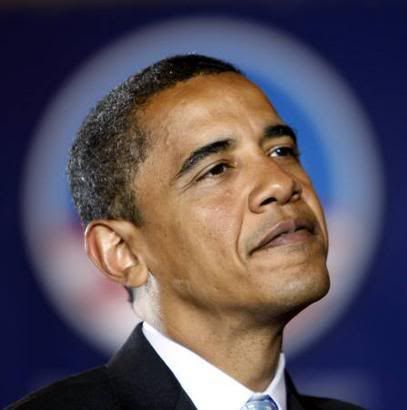 | |
| (Any allusion to other historical persons, living, dead, or resurrected from the dead, is purely a figment of the viewer's bigoted imagination.) |
This maneuver (again, just in the promotional material, since I haven't read the book itself), strikes me as highly damaging to the faith of believers. It calls into serious doubt the accepted meaning of an important period of the Church's history, and therefore also the authority of the tradition (or even Tradition) which has accepted and "mythologized" (if you like) that meaning. It challenges the use of that authority by the current leaders of the Church (in the Catholic Church, at least, the apostolic authority of the bishops) who have been increasingly outspoken against precisely that impetus of exclusion, common in the West for two generations. And it undermines the solidarity of Christians with the victims of much worse injustices (many of them, of course, Christians themselves) by falsely dividing different forms of abuse of power according to ideological preferences.
I hope the book itself will offer much better than this; this is certainly not exemplary of the love of truth and pietas to one's students which Notre Dame and Yale taught me.
* Herbert Musurillo, The Acts of the Christian Martyrs (Oxford, 1972), is an excellent example of exactly such an effort to sift true historical accounts of early Christian martyrs from later pious fictions, and is generally accepted by historians as basically accurate.
Tuesday, February 19, 2013
February 19 - Mini round-up
 |
| (Archbishop Paglia; CNS photo/Paul Haring) |
Particularly during times of high unemployment, the actions of government as they affect families must be examined carefully. The welfare state is characterized by family assistance programs principally intended to address situations where the family is broken, unstable or lacking in internal resources. In these cases the state attempts in effect to be a substitute for the family, or at least for some missing element of the family.
But by substituting itself for the family, the welfare state produces a kind of vicious circle where instead of strengthening family relationships, it weakens them even further, and thus creates increased need for government assistance. Increased need leads to crisis, however, because it gives rise to expectations that the government cannot hope to meet, firstly because financial resources are never unlimited, but more importantly because government cannot itself function as a family, only as an agency. It thus becomes clear how important it is for government programs not only to promote family “mainstreaming” but more importantly for the government to have a correct understanding of the family when formulating public policy and to respect subsidiarity, which should be a guiding principle in any governmental action.
 | |
| (Archbishop Lori) |
It can hardly be said that all these Presidents and Congresses, of both parties, had been waging a war on women. I have seen no evidence that such laws, showing respect for Americans’ conscientious beliefs, have done any harm to women or to their advancement in society. What seems to be at issue instead is a new, more grudging attitude in recent years toward citizens whose faith or moral principles are not in accord with the views of the current governing power. And while the mandate for coverage of abortion-causing drugs, contraceptives and sterilization is hailed by some as a victory for women’s freedom, it permits no free choice by a female employee to decline such coverage for herself or her minor children, even if it violates her moral and religious convictions.
It is most discouraging that this coercive element remains unchanged in the new notice of proposed rulemaking the Obama administration issued this month in response to widespread criticism of its original mandate.
Finally, in news unrelated to archbishops, we have heavy snow in the forecast for both Thursday and Monday...
 |
| (Next Tuesday's mushing to school and work... source) |
Tuesday, February 5, 2013
Thoughts on Friday's proposed new version of the HHS mandate - Updated 2/7
(Update, 2/7 - Here's the expected response from Cardinal Dolan and the USCCB.)
After sitting on the egg for the past nine months or so, the HHS Dept on Friday (2/1) released a new "notice of proposed rule-making" (full PDF here) regarding the much-contested implementation of the HHS mandate. (For those keeping score, here are a few of our posts from last year on this issue.) I've slogged through most of the new document, and have to agree (again) with Archbishop Chaput's brief analysis.
 The White House has made no concessions to the religious conscience
claims of private businesses, and the whole spirit of the “compromise”
is minimalist.
And here, his conclusion:
The scholar Yuval Levin has stressed that the new HHS mandate proposal, “like the versions that have preceded it, betrays a complete lack of understanding of both religious liberty and religious conscience.” In reality, despite the appearance of compromise, “the government has forced a needless and completely avoidable confrontation and has knowingly put many religious believers in an impossible situation.”
One of the issues America’s bishops now face is how best to respond to an HHS mandate that remains unnecessary, coercive and gravely flawed. In the weeks ahead the bishops of our country, myself included, will need both prudence and courage – the kind of courage that gives prudence spine and results in right action, whatever the cost. Please pray that God guides our discussions. [emphasis added]
Here's some of the key language from the full document:
On the exemption:
The Departments agree that the exemption should not exclude group health plans of religious entities that would qualify for the exemption but for the fact that, for example, they provide charitable social services to people of different faiths or employ people of different faiths when running a parochial school.... Accordingly..., the Departments propose to amend the [March 2012] definition of religious employer that was adopted in the 2012 final rules by eliminated the first three prongs of the definition and clarifying the fourth. Under this proposal, an employer that is organized and operates as a non-profit entity and referred to in section 6033(a)(3)(A)(i) or (iii) of the [Internal Revenue] Code would be considered a religious employer for purposes of the religious employer exemption. (p. 19)
Those two articles are regarding the exemption from filing even an information return (Form 990) with the IRS for certain tax-exempt non-profits of religious character:
"(i) Churches, their integrated auxiliaries, and conventions of associations of churches;" and
"(iii) the exclusively religious activities of any religious order."
Thus, the religious exemption has not been substantially broadened at all. It still excludes most if not all Catholic and other religious colleges, universities, health care institutions, charitable institutions like Catholic Charities, charitable fund-raising foundations, etc. It does now clearly include, in addition to parishes, most parish-owned institutions like schools, and possible cemeteries.
For these non-exempt religious employers, there is also very little change in the "accommodation" being offered. Note first this rather revealing bit of rationalization about the distinctions being made:
In proposed [new rules]..., the Departments propose policies relating to the accommodation of certain group health plans and group health insurance coverage with respect to the contraceptive coverage requirement. The Departments propose a comparable accommodation with respect to student health insurance coverage arranged by eligible organizations that are religious institutions of higher education. The Departments believe these proposed accommodation, as opposed to the exemption that is provided to religious employers, are warranted given that participants and beneficiaries in group health plans established by eligible organizations, as well as student enrollees and their covered dependents in student health insurance coverage arranged by eligible organizations, may be less likely than participants and beneficiaries in group health plans established or maintained by religious employers to share such religious objections of the eligible organizations. (p. 21, emphasis added)
I think it's rather alarming that the HHS feels capable of asserting that the diversity of employees at one Catholic (or other religious) institution makes that institution's Catholic (or other) identity less valuable than the Catholic identity of a less diverse institution. This is, first, a dramatic example of the "tyranny of relativism." And second, it betrays core principles of the right to private property - the fact that the Church owns a hospital, and therefore is entitled to define the mission and scope of the hospital's policies etc. (within reasonable bounds of what is consistent with the common good, certainly), is ignored, and the assertion of a newly invented "greater good" is used to violate more than only (only!) religious freedom rights.
For purposes of these proposed rules only, the Departments propose to define an eligible organization as an organization that meets all of the following criteria:
The actual "accommodation" is thus largely unchanged from its original proposal last February. The health insurance provider assumes the obligation, directly or indirectly, to provide the coverage to which the religious organization which is contracting with the provider objects morally:
...these proposed rules would provide that, in the case of an insured group health plan established or maintained by an eligible organization, the health insurance issuer providing group coverage in connection with the plan would assume sole responsibility, independent of the eligible organization and its plan, for providing contraceptive coverage without cost sharing, premium, fees, or other charge to plan participants and beneficiaries. (p. 24)
The proposed rules would direct the issuer receiving the copy of the self-certification [fourth point of eligibility, above] to ensure that the coverage for those contraceptive services identified [as objectionable] in the self-certificate is not included in the group policy, certificate, or contract of insurance; that such coverage is not reflected in the group health insurance premium; and that no fee or other charge in connection with such coverage is imposed on the eligible organization or its plan.
The huge question, of course, is how to guarantee this? On the surface, it seems impossible that the insurance provider would not include the costs of this additional coverage in its normal business expenses, and assign cost-values to all its plans and customers accordingly.
The proposed rules would further direct the issuer... to provide contraceptive coverage under individual policies, certificates, or contracts of insurance... for plan participants and beneficiaries without cost sharing, premium, fee, or other charge. The coverage would not be offered through a group health plan... The issuer would automatically enroll plan participants in a separate individual health insurance policy that covers recommended contraceptive services... The eligible organization would have no role in contracting, arranging, paying for, or referring for this separate contraceptive service. (p. 24-25)
Two huge questions here. First, if this individual plan is to be offered to all those enrolled in a given group health plan, how is it more than a merely conceptual difference to call it an "individual" plan? Second, if all this could be solved by the issuing of individual plans, why is the entire mandate needed at all - why not simply have the HHS provide such individual plans directly, levy a clear tax for it, and avoid the whole First Amendment morass entirely? And note, furthermore, the "automatic" enrollment. Apparently even those employees who do, somehow, share the religious employer's religious objections are not permitted to act on their principles, either.
The Departments believe that, in the case of insured group health plans, this proposed arrangement would alleviate the need for eligible organizations to contract, arrange, pay, or refer for contraceptive coverage while providing contraceptive coverage while providing contraceptive coverage to plan participants and beneficiaries at no cost. Actuaries, economists, and insurers estimate that providing contraceptive coverage is at least cost neutral, and may result in cost savings when taking into account all costs and benefits for the insurer. (fn 12) (p. 26)
 But there are huge problems with this assertion: First, the claim itself is contestable, and fact that the paper linked above in footnote 12 was written by an HHS staff researcher doesn't inspire confidence in its accuracy. Second, in the same paragraph, there is this admission that the costs of these individual plans are simply not separable from the employer's costs of contracting for health insurance: "The Departments believe that issuers generally would find that providing such contraceptive coverage is cost-neutral because they would be insuring the same set of individuals under both policies..." (p. 26, emphasis added) And third, the document later admits that cost-neutrality is indeed an illusion, offering to off-set those costs with equal rebates to the fees associated with participating in the soon-to-be-imposed "Federally Facilitated Exchanges." (see pp. 27, 28, 33, 34, etc.)
Almost as an afterthought, the same approach is proposed for self-insured plans, with the same reimbursement of expenses from off-set FFE fees. The "third party administrator" of the self-insured plan will assume the responsibility, with other details remaining again unchanged. Again, there is no examination of any effective, practical separation of costs associated with the individual plans, merely the assertion that this saves the religious employer from complicity.
We are still waiting from official word from the leadership of the USCCB in response to this proposal.
After sitting on the egg for the past nine months or so, the HHS Dept on Friday (2/1) released a new "notice of proposed rule-making" (full PDF here) regarding the much-contested implementation of the HHS mandate. (For those keeping score, here are a few of our posts from last year on this issue.) I've slogged through most of the new document, and have to agree (again) with Archbishop Chaput's brief analysis.
And here, his conclusion:
The scholar Yuval Levin has stressed that the new HHS mandate proposal, “like the versions that have preceded it, betrays a complete lack of understanding of both religious liberty and religious conscience.” In reality, despite the appearance of compromise, “the government has forced a needless and completely avoidable confrontation and has knowingly put many religious believers in an impossible situation.”
One of the issues America’s bishops now face is how best to respond to an HHS mandate that remains unnecessary, coercive and gravely flawed. In the weeks ahead the bishops of our country, myself included, will need both prudence and courage – the kind of courage that gives prudence spine and results in right action, whatever the cost. Please pray that God guides our discussions. [emphasis added]
Here's some of the key language from the full document:
On the exemption:
The Departments agree that the exemption should not exclude group health plans of religious entities that would qualify for the exemption but for the fact that, for example, they provide charitable social services to people of different faiths or employ people of different faiths when running a parochial school.... Accordingly..., the Departments propose to amend the [March 2012] definition of religious employer that was adopted in the 2012 final rules by eliminated the first three prongs of the definition and clarifying the fourth. Under this proposal, an employer that is organized and operates as a non-profit entity and referred to in section 6033(a)(3)(A)(i) or (iii) of the [Internal Revenue] Code would be considered a religious employer for purposes of the religious employer exemption. (p. 19)
 |
| St. Andrew's, Roanoke, VA |
"(i) Churches, their integrated auxiliaries, and conventions of associations of churches;" and
"(iii) the exclusively religious activities of any religious order."
Thus, the religious exemption has not been substantially broadened at all. It still excludes most if not all Catholic and other religious colleges, universities, health care institutions, charitable institutions like Catholic Charities, charitable fund-raising foundations, etc. It does now clearly include, in addition to parishes, most parish-owned institutions like schools, and possible cemeteries.
For these non-exempt religious employers, there is also very little change in the "accommodation" being offered. Note first this rather revealing bit of rationalization about the distinctions being made:
In proposed [new rules]..., the Departments propose policies relating to the accommodation of certain group health plans and group health insurance coverage with respect to the contraceptive coverage requirement. The Departments propose a comparable accommodation with respect to student health insurance coverage arranged by eligible organizations that are religious institutions of higher education. The Departments believe these proposed accommodation, as opposed to the exemption that is provided to religious employers, are warranted given that participants and beneficiaries in group health plans established by eligible organizations, as well as student enrollees and their covered dependents in student health insurance coverage arranged by eligible organizations, may be less likely than participants and beneficiaries in group health plans established or maintained by religious employers to share such religious objections of the eligible organizations. (p. 21, emphasis added)
I think it's rather alarming that the HHS feels capable of asserting that the diversity of employees at one Catholic (or other religious) institution makes that institution's Catholic (or other) identity less valuable than the Catholic identity of a less diverse institution. This is, first, a dramatic example of the "tyranny of relativism." And second, it betrays core principles of the right to private property - the fact that the Church owns a hospital, and therefore is entitled to define the mission and scope of the hospital's policies etc. (within reasonable bounds of what is consistent with the common good, certainly), is ignored, and the assertion of a newly invented "greater good" is used to violate more than only (only!) religious freedom rights.
For purposes of these proposed rules only, the Departments propose to define an eligible organization as an organization that meets all of the following criteria:
- The organization opposes providing coverage for some or all of the contraceptive services required to be covered [under ACA] on account of religious objections;
- The organization is organized and operates as a non-profit entity;
- The organization holds itself out as a religious organization;
- the organization self-certifies that it satisfies the first three criteria...
The actual "accommodation" is thus largely unchanged from its original proposal last February. The health insurance provider assumes the obligation, directly or indirectly, to provide the coverage to which the religious organization which is contracting with the provider objects morally:
...these proposed rules would provide that, in the case of an insured group health plan established or maintained by an eligible organization, the health insurance issuer providing group coverage in connection with the plan would assume sole responsibility, independent of the eligible organization and its plan, for providing contraceptive coverage without cost sharing, premium, fees, or other charge to plan participants and beneficiaries. (p. 24)
The proposed rules would direct the issuer receiving the copy of the self-certification [fourth point of eligibility, above] to ensure that the coverage for those contraceptive services identified [as objectionable] in the self-certificate is not included in the group policy, certificate, or contract of insurance; that such coverage is not reflected in the group health insurance premium; and that no fee or other charge in connection with such coverage is imposed on the eligible organization or its plan.
The huge question, of course, is how to guarantee this? On the surface, it seems impossible that the insurance provider would not include the costs of this additional coverage in its normal business expenses, and assign cost-values to all its plans and customers accordingly.
The proposed rules would further direct the issuer... to provide contraceptive coverage under individual policies, certificates, or contracts of insurance... for plan participants and beneficiaries without cost sharing, premium, fee, or other charge. The coverage would not be offered through a group health plan... The issuer would automatically enroll plan participants in a separate individual health insurance policy that covers recommended contraceptive services... The eligible organization would have no role in contracting, arranging, paying for, or referring for this separate contraceptive service. (p. 24-25)
Two huge questions here. First, if this individual plan is to be offered to all those enrolled in a given group health plan, how is it more than a merely conceptual difference to call it an "individual" plan? Second, if all this could be solved by the issuing of individual plans, why is the entire mandate needed at all - why not simply have the HHS provide such individual plans directly, levy a clear tax for it, and avoid the whole First Amendment morass entirely? And note, furthermore, the "automatic" enrollment. Apparently even those employees who do, somehow, share the religious employer's religious objections are not permitted to act on their principles, either.
The Departments believe that, in the case of insured group health plans, this proposed arrangement would alleviate the need for eligible organizations to contract, arrange, pay, or refer for contraceptive coverage while providing contraceptive coverage while providing contraceptive coverage to plan participants and beneficiaries at no cost. Actuaries, economists, and insurers estimate that providing contraceptive coverage is at least cost neutral, and may result in cost savings when taking into account all costs and benefits for the insurer. (fn 12) (p. 26)

Almost as an afterthought, the same approach is proposed for self-insured plans, with the same reimbursement of expenses from off-set FFE fees. The "third party administrator" of the self-insured plan will assume the responsibility, with other details remaining again unchanged. Again, there is no examination of any effective, practical separation of costs associated with the individual plans, merely the assertion that this saves the religious employer from complicity.
We are still waiting from official word from the leadership of the USCCB in response to this proposal.
Monday, January 7, 2013
Pope Benedict XVI, on peace (Address to the Diplomatic Corps, 1/7/13)
This morning, Pope Benedict gave his annual address to the group of international ambassadors and representatives to the Holy See. The full address was quickly translated and released by Vatican Radio. Some of his more urgent or important points:
His general theme is that of peace:
The Gospel of Luke recounts that on Christmas night the shepherds heard choirs of angels who gave glory to God and invoked peace on mankind. The Evangelist thus emphasizes the close relationship between God and the ardent desire of the men and women of every age to know the truth, to practice justice and to live in peace (cf. Blessed John XXIII, Pacem in Terris: AAS 55 [1963], 257). These days, we are sometimes led to think that truth, justice and peace are utopian ideals, and mutually exclusive. To know the truth seems impossible, and efforts to affirm it appear often to lead to violence. On the other hand, according to a now widespread way of thinking, peacemaking consists solely in the pursuit of compromises capable of ensuring peaceful coexistence between different peoples or between citizens within a single nation. Yet from the Christian point of view, the glorification of God and human peace on earth are closely linked, with the result that peace is not simply the fruit of human effort, but a participation in the very love of God. It is precisely man’s forgetfulness of God, and his failure to give him glory, which gives rise to violence. ... The consequences of forgetfulness of God cannot be separated from those resulting from ignorance of his true countenance, the root of a baneful religious fanaticism which, again in 2012, reaped victims in some countries represented here. As I have often observed, this is a falsification of religion itself, since religion aims instead at reconciling men and women with God, at illuminating and purifying consciences, and at making it clear that each human being is the image of the Creator.
He lists a number of places in the world where various sorts of violence are now taking place, without casting any particular blame. Then he goes on:
The building of peace always comes about by the protection of human beings and their fundamental rights. This task, even if carried out in many ways and with varying degrees of intensity, challenges all countries and must constantly be inspired by the transcendent dignity of the human person and the principles inscribed in human nature. Foremost among these is respect for human life at every stage.
I am inspired by such clarity of thought! He talks again about particular examples, such as changes in particular countries' laws regarding euthanasia or abortion. He talks about proper understanding of human rights versus falsely-understood autonomy (license), and discusses things like education as platforms for the development of peace. Then he hits hard at another constant theme:
I would like to add that peace in society is also put at risk by certain threats to religious liberty: it is a question sometimes of the marginalization of religion in social life; sometimes of intolerance or even of violence towards individuals, symbols of religious identity and religious institutions. It even happens that believers, and Christians in particular, are prevented from contributing to the common good by their educational and charitable institutions. In order effectively to safeguard the exercise of religious liberty it is essential to respect the right of conscientious objection. This “frontier” of liberty touches upon principles of great importance of an ethical and religious character, rooted in the very dignity of the human person. They are, as it were, the “bearing walls” of any society that wishes to be truly free and democratic.
Great analogy of our common "edifice" in society. Without these "[weight-]bearing walls" of proper defense of religious liberty, especially in pluralistic democracies such as we know today, the edifice threatens to collapse. Pray for our Pope!
Monday, December 17, 2012
Cultural Hypocrisy
President Obama's speech from Sandy Hook on Sunday night exposes the fundamental hypocrisy of our culture. Here's a salient quote:
 It comes as a shock at a
certain point where you realize, no matter how much you love these kids,
you can’t do it by yourself. That this job of keeping our children
safe, and teaching them well, is something we can only do together, with
the help of friends and neighbors, the help of a community, and the
help of a nation. And in that way, we come to realize that we bear a
responsibility for every child because we’re counting on everybody else
to help look after ours; that we’re all parents; that they’re all our
children. This is our first task — caring for our children. It’s our first
job. If we don’t get that right, we don’t get anything right. That’s
how, as a society, we will be judged. And by that measure, can we truly say, as a nation, that we are
meeting our obligations? Can we honestly say that we’re doing enough to
keep our children — all of them — safe from harm? [emphasis added]
This is, of course, a fundamental truth. The whole point of "culture" is to raise children into virtuous, competent adults, and to reinforce by the continuous formation of adults the same virtues being passed on, in a manner consistent enough across time and space to be a shared and unifying vision of the Good. Successful cultures are successful, stable, and enduring exactly in these terms. People come to share this commitment to the Good that is envisioned, because it is demonstrably a Good, and because it tests positively against human experience.
But in this speech, Obama moves too easily from truth to truism, and thence to misdirection.
The truism is that threats of violence against our children come from outside, from disordered elements of the culture (like mental illness, or the apparent randomness of many forms of violence):
We gather here in memory of twenty beautiful children and six remarkable adults. They lost their lives in a school that could have been any school; in a quiet town full of good and decent people that could be any town in America.... As these difficult days have unfolded, you’ve also inspired us with stories of strength and resolve and sacrifice. We know that when danger arrived in the halls of Sandy Hook Elementary, the school’s staff did not flinch, they did not hesitate....
This dichotomy is partly true, at the level of personal experience, and yet wholly false, morally. Obama alludes to this falsity when he says:
 [T]his job of keeping our children safe, and teaching them well, is
something we can only do together, with the help of friends and
neighbors, the help of a community, and the help of a nation. And in
that way, we come to realize that we bear a responsibility for every
child because we’re counting on everybody else to help look after ours;
that we’re all parents; that they’re all our children.
But if that's true, then there's not an "us" who try to protect children from violence and raise them in virtue, and a "them" who try the opposite. Those who harm our more vulnerable members are also "us." But from the ambiguity of the superficial truism, the speech is able to misdirect:
In the coming weeks, I will use whatever power this office holds to engage my fellow citizens — from law enforcement to mental health professionals to parents and educators — in an effort aimed at preventing more tragedies like this. Because what choice do we have? We can’t accept events like this as routine. Are we really prepared to say that we’re powerless in the face of such carnage, that the politics are too hard? Are we prepared to say that such violence visited on our children year after year after year is somehow the price of our freedom?
The misdirection here is actually three-fold.
First, there is the straw man of opposing "freedom" with "preventing more tragedies like this." Politically, this is a false dichotomy because freedom - true freedom, virtuous freedom, not license (as "freedom" is often cast) - is what makes a culture strong and resilient. Only a society characterized by humility, fortitude, and prudence is capable of reining in the impulses to violent brutality, without resorting to strict tyranny. Morally, this is a straw man because moral freedom is essential to love, and to the meaningfulness. Without moral freedom, life just is; neither good nor evil, but simply to be endured.
Second, there is the implied "big government" thinking, that only (or perhaps, best) the federal government is equipped to deal effectively with this problem. This is typical of this president's work (bailouts, Obamacare, etc). This is misdirection in this context to the extent that it belies the need for vigorous subsidiarity in making and enforcing good laws, and so forth. (The whole question of proper care for the mentally ill can be hooked onto this point.)
Third, and most blatantly, there is the elephant in the room of abortion, and indeed of the whole contraceptive mentality of behavior without natural consequence. Mr. Obama said, "Can we honestly say that we’re doing enough to keep our children — all of them — safe from harm?" Abortion is the most grievous form of violence visited upon our children - in scale (roughly 3000 children murdered daily), in social damage (emotional consequences, lives and relationships gravely harmed, etc), and in moral damage (abortion justifies other grave evils, because if this person's humanity can be denied, then so too can this one's). Abortion is a fatal cancer at the heart of our culture.
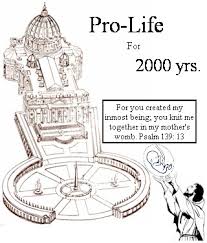 A society that teaches people that actions don't have natural consequences is doomed. Likewise, a society that teaches that some people aren't really human. A healthy society, by contrast, teaches natural virtue, respect for human dignity regardless of "utility" or circumstances, and the truth that love requires self-sacrifice. A society that doesn't "accept events like this as routine" is one that also condemns abortion, adultery, promiscuity, infidelity; that also upholds chastity, the sanctity of marriage, and the high dignity of the vocation to parenthood. Hence my opening comment about fundamental hypocrisy. It is viciously hypocritical to condemn violence against children in a school, and to propose sweeping societal changes to counter it, while also promoting systematic, devastating violence against children in the womb, and resisting efforts to counter it.

This is, of course, a fundamental truth. The whole point of "culture" is to raise children into virtuous, competent adults, and to reinforce by the continuous formation of adults the same virtues being passed on, in a manner consistent enough across time and space to be a shared and unifying vision of the Good. Successful cultures are successful, stable, and enduring exactly in these terms. People come to share this commitment to the Good that is envisioned, because it is demonstrably a Good, and because it tests positively against human experience.
But in this speech, Obama moves too easily from truth to truism, and thence to misdirection.
The truism is that threats of violence against our children come from outside, from disordered elements of the culture (like mental illness, or the apparent randomness of many forms of violence):
We gather here in memory of twenty beautiful children and six remarkable adults. They lost their lives in a school that could have been any school; in a quiet town full of good and decent people that could be any town in America.... As these difficult days have unfolded, you’ve also inspired us with stories of strength and resolve and sacrifice. We know that when danger arrived in the halls of Sandy Hook Elementary, the school’s staff did not flinch, they did not hesitate....
This dichotomy is partly true, at the level of personal experience, and yet wholly false, morally. Obama alludes to this falsity when he says:
But if that's true, then there's not an "us" who try to protect children from violence and raise them in virtue, and a "them" who try the opposite. Those who harm our more vulnerable members are also "us." But from the ambiguity of the superficial truism, the speech is able to misdirect:
In the coming weeks, I will use whatever power this office holds to engage my fellow citizens — from law enforcement to mental health professionals to parents and educators — in an effort aimed at preventing more tragedies like this. Because what choice do we have? We can’t accept events like this as routine. Are we really prepared to say that we’re powerless in the face of such carnage, that the politics are too hard? Are we prepared to say that such violence visited on our children year after year after year is somehow the price of our freedom?
The misdirection here is actually three-fold.
First, there is the straw man of opposing "freedom" with "preventing more tragedies like this." Politically, this is a false dichotomy because freedom - true freedom, virtuous freedom, not license (as "freedom" is often cast) - is what makes a culture strong and resilient. Only a society characterized by humility, fortitude, and prudence is capable of reining in the impulses to violent brutality, without resorting to strict tyranny. Morally, this is a straw man because moral freedom is essential to love, and to the meaningfulness. Without moral freedom, life just is; neither good nor evil, but simply to be endured.
Second, there is the implied "big government" thinking, that only (or perhaps, best) the federal government is equipped to deal effectively with this problem. This is typical of this president's work (bailouts, Obamacare, etc). This is misdirection in this context to the extent that it belies the need for vigorous subsidiarity in making and enforcing good laws, and so forth. (The whole question of proper care for the mentally ill can be hooked onto this point.)
Third, and most blatantly, there is the elephant in the room of abortion, and indeed of the whole contraceptive mentality of behavior without natural consequence. Mr. Obama said, "Can we honestly say that we’re doing enough to keep our children — all of them — safe from harm?" Abortion is the most grievous form of violence visited upon our children - in scale (roughly 3000 children murdered daily), in social damage (emotional consequences, lives and relationships gravely harmed, etc), and in moral damage (abortion justifies other grave evils, because if this person's humanity can be denied, then so too can this one's). Abortion is a fatal cancer at the heart of our culture.
Tuesday, November 27, 2012
Papal Nuncio, Archbishop Vigano, on Persecution of the Church in the Modern World - updated 11/28
Earlier in November, the Institute for Church Life at the University of Notre Dame hosted a conference on the current global persecution of Christians. Archbishop Vigano, the Apostolic Nuncio to the United States, was the keynote speaker. (Additional presentations available.) Here's his excellent, accurate, and unapologetic talk (and as PDF):
Here's his thesis (italic text indicates quotation from the PDF linked above): [I]t is crucial to see that in the world of the present age, persecution of the faithful can manifest itself in a variety of forms, some obvious, but others less so. While it is necessary to remind ourselves of the obvious, we must also consider the not-so-obvious, for great danger to the future of religious freedom lies with religious persecution that appears inconsequential or seems benign but in fact is not. (emphasis added)
In this talk, he separates the interrelated ideas of martyrdom, persecution, and religious freedom. Martyrdom, he notes, depends on two things: the fidelity of the believer who refuses to compromise the demands of the faith, and the intention of the persecutor: [T]he intention underlying the objectives of the persecutor is important to understand: it was to eradicate the public witness to Jesus Christ and His Church. An accompanying objective can be the incapacitation of the faith by enticing people to renounce their beliefs, or at least their public manifestations, rather than undergo great hardships that will be, or can be, applied if believers persist in their resistance to apostasy. The plan is straightforward: if the faith persists, so will the hardships. (emphasis added) He also notes that the "hardships" can be not only legal or physical, but also social (ridicule, social isolation, marginalization).
Persecution is a slightly larger set of actions than those that end in martyrdom: Persecution is typically associated with the deeds preceding those necessary to make martyrs for the faith. While acts of persecution can mirror those associated with martyrdom, other elements can be directed to sustaining difficulty, annoyance, and harassment that are designed to frustrate the beliefs of the targeted person or persons rather than to eliminate these persons. It would seem, then, that the objective of persecution is to remove from the public square the beliefs themselves and the public manifestations without necessarily eliminating the persons who hold the beliefs. The victimization may not be designed to destroy the believer but only the belief and its open manifestations. From the public viewpoint, the believer remains but the faith eventually disappears. (emphasis added) This is just the same distinction between "public" and "private" faith that we are seeing, as an attempt to change the meaning of the First Amendment's guarantee of freedom of religion (i.e., limiting it to freedom of worship only, but not freedom of practice of all the moral consequences of that worship).
In opposition to martyrdom and persecution, Religious freedom is the exercise of fidelity to God and His Holy Church without compromise. He rightly makes the classic distinction, best made by St. Augustine in the "City of God," between the "two cities" of God and of man: At the core of this fidelity is the desire to be a good citizen of the two cities where we all live: the City of Man and the City of God. Baptism makes us citizens of the City of God, but we remain "sojourners" in the world. Worldly justice, then, requires making the worldly city resemble more (it will never do so perfectly) the true freedom and true justice of the heavenly city. Freedom of religion, then, is simply that set of attitude and priorities, enshrined into positive law to the extent necessary, that allows one to be "good citizens" of both cities at the same time. Without religious freedom, the inherent difference between the two cities results in opposition, hostility, and therefore persecution and martyrdom.
Abp Vigano puts his finger right on this point: The problem of persecution begins with this reluctance to accept the public role of religion in these affairs, especially but not always when the protection of religious freedom involves beliefs that the powerful of the political society do not share. This is precisely the heart of the issue. A secular worldview assumes that religion is, in itself, problematic for the "city of man." It rejects that religion in general, and Christianity in particular, ought to influence the culture, the laws, the State, etc., in the direction of "resembling more" Christ's true freedom and true justice. Thus, the more forceful or radical the secular view, the more it is at odds with the Church; the less it can value religious freedom (replacing it with mere "freedom of worship" and vacuous "toleration"), and the more likely it is to persecute Christians, even to the point of martyrdom.
Abp Vigano lists several current examples of that sort of persecution, not yet to the point of martyrdom, and builds to this crescendo: An Englishman who found his way to the United States, Christopher Dawson (who became a Catholic in his early adulthood) still reminds us that the modern state, even the democratic one, can exert all kinds of pressure on authentic religious freedom. Dawson insightfully explained that the modern democratic state can join the totalitarian one in not being satisfied with “passive obedience” when “it demands full cooperation from the cradle to the grave.” He identified the challenges that secularism and secular societies can impose on Christians which surface on the cultural and the political levels. Dawson thus warned that “if Christians cannot assert their right to exist” then “they will eventually be pushed not only out of modern culture, but out of physical existence.” He acknowledged that this was not only a problem in the totalitarian and non-democratic states, but “it will also become the issue in England and America if we do not use our opportunities while we still have them.” (citing Christopher Dawson, “The Challenge of Secularism”, Catholic World (1956); emphasis added)
He then cites the same point made by Pope John Paul II in Christifideles Laici (1988) and Centesimus Annus (1991), and concludes very strongly: We are still a far cry from fully embracing the Holy Father’s encouraging exhortation [i.e. Christifideles Laici] when we witness in an unprecedented way a platform being assumed by a major political party, having intrinsic evils among its basic principles, and Catholic faithful publicly supporting it. There is a divisive strategy at work here, an intentional dividing of the Church; through this strategy, the body of the Church is weakened, and thus the Church can be more easily persecuted. His last two paragraphs are an exhortation to resist this division, remain united to the life-giving vine that is Christ, and to protect religious freedom by living the Faith deeply and authentically in every area of our life.
Update (11/28) - The Holy Father touched on the theme of making the city of man resemble more the city of God, in his Wednesday audience today. His approach is that of evangelization: Speaking about God, therefore, means enabling others to understand through words and acts that God is not a competitor in our existence but rather its true guarantor, the guarantor of the greatness of the human person. Thus we return to the beginning: speaking about God means communicating, with power and simplicity, through words and the life we lead, that which is essential: the God of Jesus Christ, the God Who showed us a love so great that He took on human flesh, died and rose again for us; the God Who asks us to follow Him and to allow ourselves to be transformed by His immense love in order to renew our lives and our relationships; the God Who gave us the Church, to allow us to journey together and, through the Word and the Sacraments, to renew the entire City of Man so that it might become the City of God. Anthony Esolen also had a relevant article in Crisis Magazine recently.
Wednesday, October 17, 2012
Homily for Oct 17 - St. Ignatius, Bishop and Martyr
In the second century, the Roman Empire had a growing problem. There were increasing numbers of these "Christians" everywhere, and they just would not cooperate with how the Empire did things. And the Romans simply could not understand why the Christians held themselves apart like that.
About the year 106, the Emperor Trajan, in thanksgiving for a great military victory, passed a law that all the people of Syria should offer a sacrifice to the traditional Roman gods. But in the middle of Syria was the capital, Antioch, and the Bishop of Antioch was Ignatius. St. Ignatius preached loudly, in his pulpit and in the streets, that Christians could not obey this law.
The Romans simply did not understand this. Why couldn't the Christians do what everybody else did - offer the public sacrifice once, and then go home and follow their own religion in private? Why couldn't the Christians compartmentalize their faith, like everybody else?
In our own time, our government increasingly acts the same way toward Christians. There are many examples, but one of the most important instances is the HHS Mandate: that all employers must offer their employees, in their health insurance plans, the benefits - and "benefits" are in quotation marks - of contraception, sterilization, and chemical abortions. And our government simply doesn't understand why we Christians cannot compartmentalize our faith, and perform our economic duties over here, in accordance with the law, and our religious duties over there, in private, however we want.
 In the Gospel today, Jesus teaches us that, "Unless a grain of wheat falls to the ground and dies, it remains only a grain of wheat. But if it dies, it brings forth much fruit." (Jn 12:24-5) St. Ignatius used this very Gospel passage in a letter to the Church in Rome. He pointed to himself, saying, "I am the grain of wheat." He called the teeth of the wild animals which would kill him in the arena, the "millstones" grinding the wheat into bread, a bread like Christ's own Body, that would nourish the faith of others. He wanted to be that bread, to nourish the Church and to change the Roman world.
And that's exactly what he did as a martyr. The witness of his death for the crime of being a Christian and not committing idolatry nourished the faith of others. It took two hundred years, and thousands of martyrs dying for Christ, to change the Roman Empire, but it happened. In the fourth century, the Roman Empire became the Christian Roman Empire.
 That's why, when our own government was founded in the 18th century, it could be founded as a Christian government. But if we want to keep it a Christian government and a Christian country, we need to change the hearts and minds of our neighbors, by the witness of our lives. We may not be called to "red" martyrdom, but we still preach about Christ, or not, by the actions of our lives every day. Our actions show what are our priorities, and the daily witness of our charity shows whether we love God and neighbor.
We are the only Christ, that those who don't yet know Him, can learn about Him by. We are the grains of wheat, and our daily witness for Him grinds us into bread. Will we be a tasteless and worthless bread of no value? Or will we be the bread that we really are as the Body of Christ - the bread that nourishes the faith of others?
 | |
| Emperor Trajan |
The Romans simply did not understand this. Why couldn't the Christians do what everybody else did - offer the public sacrifice once, and then go home and follow their own religion in private? Why couldn't the Christians compartmentalize their faith, like everybody else?
In our own time, our government increasingly acts the same way toward Christians. There are many examples, but one of the most important instances is the HHS Mandate: that all employers must offer their employees, in their health insurance plans, the benefits - and "benefits" are in quotation marks - of contraception, sterilization, and chemical abortions. And our government simply doesn't understand why we Christians cannot compartmentalize our faith, and perform our economic duties over here, in accordance with the law, and our religious duties over there, in private, however we want.
 |
| St. Ignatius in the arena |
We are the only Christ, that those who don't yet know Him, can learn about Him by. We are the grains of wheat, and our daily witness for Him grinds us into bread. Will we be a tasteless and worthless bread of no value? Or will we be the bread that we really are as the Body of Christ - the bread that nourishes the faith of others?
Wednesday, May 30, 2012
Two websites for religious liberty resources
I found this page today at the Becket Fund for Religious Liberty (though now, several hours after opening the tab, I don't recall whence I reached it). It looks like a very detailed set of resources about the HHS mandate, including a time-line and many links, etc.
The USCCB's set of resources is also worth keeping handy.
Prayer for the liberty of the Church, from the "Leonine Prayers" after Mass:
O God, our refuge and our strength, look down with mercy upon the people who cry to Thee; and by the intercession of the glorious and immaculate Virgin Mary, Mother of God, of Saint Joseph her spouse, of the blessed Apostles Peter and Paul, and of all the saints, in Thy mercy and goodness hear our prayers for the conversion of sinners, and for the liberty and exaltation of the Holy Mother the Church. Through the same Christ Our Lord. Amen.
Thursday, March 1, 2012
Cardinal Dolan on the HHS Mandate, and two other worthy articles - Update (3/2)
From His Eminence's blog, "The Gospel in the Digital Age:"
Update (3/2) - Bishop Lori responds smartly to the same horrible America article:
Now what to do?
Well, for one, we’ll keep up advocacy and education on the issue. We continue to tap into your concern as citizens and count on your support. Regrettably, the unity of the Catholic community has been tempered a bit by those who think the President has listened to us and now we can quit worrying. You’re sure free to take their advice. But I hope you’ll listen to your pastors who are still very concerned.
Two, we’ll continue to seek a rescinding of the suffocating mandates that require us to violate our moral convictions — or at least a wider latitude to the exemptions so that churches can be free — and of the rigidly narrow definition of church, minister, and ministry that would prevent us from helping those in need, educating children, and healing the sick who are not Catholic.
The President invited us to “work out the wrinkles,” and we have been taking him seriously. Unfortunately, this seems to be going nowhere: the White House Press Secretary, for instance, informed the nation that the mandates are a fait accompli (and, embarrassingly for him, commented that we bishops have always opposed Health Care anyway, a charge that is simply scurrilous and insulting). The White House already notified Congress that the dreaded mandates are now published in the Federal Registry “without change.” The Secretary of HHS is widely quoted as saying, “Religious insurance companies don’t really design the plans they sell based on their own religious tenets,” which doesn’t bode well for a truly acceptable “accommodation.” And a recent meeting between staff of the bishops’ conference and the White House staff ended with the President’s people informing us that the broader concerns of religious freedom — that is, revisiting the straight-jacketing mandates, or broadening the maligned exemption—are all off the table. Instead, they advised the bishops’ conference that we should listen to the “enlightened” voices of accommodation, such as the recent hardly-surprising but terribly unfortunate editorial in America. The White House seems to think we bishops are hopelessly out of touch with our people, and with those whom the White House now has nominated as official Catholic teachers.
So, I don’t know if we’ll get anywhere with the executive branch.
Congress offers more hope, with thoughtful elected officials proposing promising legislation to protect what should be so obvious: religious freedom. As is clear from the current debate in the senate, our opponents are marketing this as a “woman’s health issue.” Of course, it cannot be reduced to that. It’s about religious freedom. (By the way, the Church hardly needs to be lectured about health care for women. Thanks mostly to our Sisters, the Church is the largest private provider of health care for women and their babies in the country. Here in New York State, Fidelis, the Medicare/Medicaid insurance provider, owned by the Church, consistently receives top ratings for its quality of service to women and children.)
And the courts offer the most light. In the recent Hosanna-Tabor ruling, the Supreme Court unanimously and enthusiastically defended the right of a Church to define its own ministry and services, a dramatic rebuff to the administration, but one apparently unheeded by the White House. Thus, our bishops’ conference and many individual religious entities are working with some top-notch law firms who have told us they feel so strongly about this that they will represent us pro-bono.
So, we have to be realistic and prepare for tough times. Some, like America magazine, want us to cave-in and stop fighting, saying this is simply a policy issue; some want us to close everything down rather than comply (In an excellent article, Cardinal Francis George wrote that the administration apparently wants us to “give up for Lent” our schools, hospitals, and charitable ministries); some want us to engage in civil disobedience and be fined; some worry that we’ll have to face a decision between two ethically repugnant choices: subsidizing immoral services or no longer offering insurance coverage, a road none of us wants to travel.
Read the whole thing, it's very good. Also, at "Public Discourse," the blog of the Witherspoon Institute, there's a very solid article by Robert George, Sherif Girgis, and Ryan Anderson in response to a stupidicizing editorial in America:Well, the bishops certainly do oppose mandating this funding (and always have), for contraceptives and abortifacients are, as Cardinal Timothy Dolan and others have noted, not health care. Anovulent pills can be used for genuinely health-related purposes, which the bishops support and even cover for their own employees. But what contraception and abortion prevent or “treat”—the existence of new people—is no illness or disease. They serve, as such, no common good. And when one weighs religious liberty against what is no public good at all, it’s easy to see how the scales of justice will tip. Bishops who point this out are not flexing “political muscle” in a hyped-up “difference over policy,” as America’s editors suggest. They are drawing the plain implications of Catholic principle—to which Jesuit magazines are, we presume, editorially committed.
But suppose, for the sake of argument, that these services were forms of health care. Imagine too that the “compromise solution” were more than the election-year I.O.U. of a politician who had already revealed himself to be reckless about religious freedom (and even averse to that term). We still face the fact that the mandate would require Catholic and other religiously opposed employers to provide plans that cover services they find morally abhorrent, or else pay crippling fines. Insurance companies would be the ones to advertise (and, officially, to fund) the plans’ controversial parts, but objecting employers would in practice bear their costs. Which of these tweaks, we wonder, moved Dionne, Shields, Kaine, and Casey from indignant opposition back to gushing support? The America editorial, long on assertion and innuendo but short—very short—on argument, doesn’t say. Let’s go through the possibilities...
Thirdly, Michael Uhlmann at "The Catholic Thing" offers a six-point plan which he argues the bishops should now follow in their continuing struggle against the HHS mandate, and for the larger principle of religious freedom. It's a thought-provoking little essay. I don't disagree in principle with his points, but he's leaving a lot out (especially in 4 and 5, where he seems to leave the door open to libertarian views that may or may not be "Catholic" in any relevant sense), and the path is not nearly as neat or simple as this plan would make it appear.Update (3/2) - Bishop Lori responds smartly to the same horrible America article:
Have I forgotten any other details we bishops shouldn’t be attending to? Well, I guess we’re policy wonks for wondering if the government has a compelling interest in forcing the Church to insure for proscribed services when contraception is covered in 90% of healthcare plans, is free in Title X programs, and is available from Walmart (generic) for about $10 a month. Pardon me also for wondering whether the most basic of freedoms, religious liberty, isn’t being compromised, not by a right to health care, but by a claim to “services” which regard pregnancy and fertility as diseases.
And didn’t President Obama promise adequate conscience protection in the reform of healthcare? But maybe it’s inappropriate for pastors of souls to ask why the entirely adequate accommodation of religious rights in healthcare matters that has existed in federal law since 1973 is now being changed.
Oh, and as Detective Colombo used to say: “Just one more thing.” It’s the comment in the editorial about when we bishops are at our best. Evidently, it’s when we speak generalities softly and go along to get along, even though for the first time in history the federal government is forcing church entities to provide for things that contradict church teaching. Maybe Moses wasn’t at his best when he confronted Pharaoh. Maybe the Good Shepherd was a bit off his game when he confronted the rulers of his day.
But those are just details.
Subscribe to:
Posts (Atom)