Showing posts with label Proclamation by example. Show all posts

Tuesday, August 13, 2013

Homily, 19th Sunday in Ordinary Time, 11 August 2013

This is, as best I recall, what I preached on Sunday on these readings.

There are a great many ideas of faith in the world, that are inaccurate, or misleading, or just wrong.  Let me note briefly just two of them.  The first is the idea of faith as sentimentality.  This shows up, for example, in false moral ideas that reduce right and wrong to feelings, and that therefore end up trying to justify grave moral evils based on how it makes them feel, or makes someone else feel.  The second is the idea of faith in what has been called "the god of the gaps;" that is, that what science can know about how the universe is, really is certain knowledge; and that faith, then, is a way of knowing, without great certainty, what lies outside the boundaries of scientific knowledge.  But since scientific knowledge is always growing, eventually what is known by faith is replaced by something else, known by science.  So, this kind of faith always leads to scepticism.


Neither of these ideas is real faith.  The problem with both of these ideas is that they do not give us a relationship with God, but only with ourselves, with human sentiment, knowledge, or opinion.  In contrast, all of our readings today show what a real idea of faith looks like.  And in this sense, the most important line in this set of readings is right at the beginning of the Gospel: "Do not be afraid," Jesus tells his disciples, "for it pleases my Father to give you the kingdom" of Heaven.  It pleases God our Father to give us salvation.  God wants us to be with Him in Heaven!  This is what real faith looks like: the idea that it pleases God to save us.

In the second reading, we have the example of Abraham, the "father of faith."  He is called the father of our faith because he offered to God total trust, that what God was promising would indeed be done.  Because of his great trust in the goodness of what God wanted for him, he was willing to leave his home and take his family into a foreign and unknown land, without protection - something that, at that time, was about as risky a thing as could be imagined.  Because of his great trust in God, he was able to flourish there, and even, as we know from Scripture, to offer extravagant hospitality to strangers.  And we know all the things that he was able to accept from God, including the sacrifice of his only son, Isaac, by which God tested his faith, not so that Isaac would die, but so that He should make the great promise to provide the lamb for the sacrifice.

And the first reading evokes the faith of Moses leading Israel out from their slavery - their physical
slavery to Egypt and their moral slavery to sin.  This faith is expressed in "oaths," in the great Covenant which God makes with Israel.  God binds Himself to do certain things, in order to save His people, and in return, God's people also bind themselves to do certain other things, ritually and morally.  This is what the ritual of the Passover constantly expressed.  But this binding, this commitment, is not about force or threats or coercion by God.  It's about love: God wants us to be saved, and in order to be saved, He must do things so that we can also do things.  God gives Israel the Law, although the Law is not itself salvation; and God gives them the land, although this is but the promise of our true home in Heaven; and God gives them the Temple, again, so that He could also give us the true Lamb of the sacrifice.

Abraham and Moses had great faith, faith that expressed itself in total trust in His goodness, and in great obedience to the terms of the Covenant, and in the waiting for the coming of the Lamb.  We, too, are invited to have faith that looks like this: trust, and obedience, and adoration of the Lamb, our Lord Jesus Christ.  We know that He is the true Lamb of God, and that He alone sets us free from sin and brings us to Heaven, where the Father wants us to be.

In the Gospel, Jesus points to Himself as the perfect example of trusting, obedient faith.  "Amen, I say to you, he will gird himself, have them recline at table, and proceed to wait on them."  When does Jesus do this for His disciples?  He does it at the Last Supper, at the Passover when He truly becomes the sacrificial Lamb for us.  The Last Supper is also the first Holy Mass.  And still today, in every Holy Mass, Jesus Himself puts on the servant's apron, and gets down on His knees for us, in order to give us Himself, the Lamb, in the Holy Eucharist.


Our faith needs to have the same shape as this.  Because of our faith, we must have such trust in God, such trust that what He wants for us is really what is good for us, because whatever He wants for us in this life is meant to get us to be with Him in Heaven.  And because of our faith, we must live according to the oaths of the Covenant, sealed in the blood of the Lamb.  We must live by the moral law and the Gospel, and come to the sacraments of the Church, and pray and give alms, reaching out to the poor and needy as their servants.  I say "must," again, not in the way of threat or force, but of love: God loves us so much that He wants us to be with Him in Heaven, and He gives us the sacrifice of His only Son, Jesus our Lamb, so that we can get there; and if we love Him even a little in return, we will want for ourselves what He wants for us.  This love, this desire, is what real faith always looks like.


And if we have even a taste of this real faith, we want it, not only for ourselves, but also for others.  God wants them to get to Heaven too!  Therefore we constantly offer them the example of our faith - of our trust in God, like Abraham's trust, that gives us life and joy; our faithful obedience, like that of Moses, that brings us back to the Church again and again, and lifts us up with hope; our compassion and hospitality to the needs of others, like Christ washing the feet of His disciples, that puts our love into action every day.  In the face of a world that has no faith, we offer this faith, this real faith in Jesus Christ, in these ways.

As we continue with this Holy Mass, and especially as we continue in this Year of Faith, let us strive the imitate more fully these great examples of faith: the trust of Abraham, the obedience of Moses, the loving service of our Lord Jesus Christ.  Ask the Holy Spirit to make your faith stronger, to put the fire of His love into your heart, and into your life.  Pray for faith, and then share your faith.  It pleases God our Father to give us faith.  May we follow Him all the way home to Heaven.
Thursday, June 27, 2013

Thoughts and round-up of thoughts on yesterday's Supreme Court decisions about marriage

No doubt you have already read or heard about the two decisions yesterday, United States V. Windsor (striking down that part of DOMA which defined "marriage" and "spouse" as used in federal statutes), and Hollingsworth v. Perry (dismissing the suit brought by citizens of California to protect their own Constitution from the refusal of elected officials to uphold the law, Proposition 8, as passed).  Bishop Nickless's response is apt, for starters:

The Supreme Court of the United States announced two important decisions about the future of marriage in our country. In a 5-4 decision in United States v. Windsor, the Supreme Court struck down part of the Defense of Marriage Act (DOMA) as unconstitutional. In a separate 5-4 decision in Hollingsworth v. Perry, the Court dismissed the case, finding that the plaintiffs lacked standing to bring the suit.

We are, of course, most disappointed at the failure of the Court to uphold the dignity of marriage in both cases. If not corrected, the Court’s implicit repudiation of the role of both state and federal governments to regulate the institution of marriage for the sake of children’s wellbeing (and eventual moral health as citizens) will have long-lasting deleterious effects on our already tattered social fabric.

Marriage is not just any sexual relationship between consenting adults, nor the bestowal of social recognition and approval on such a relationship by government or society. Marriage has a clear nature, prior to the creation of positive laws to regulate it. Marriage is one specific and unique relationship: namely, the complementary union of the whole life of one man and one woman, for the sake of begetting children, and the good of the husband and wife. It is, of its nature, permanent, exclusive, total, and fruitful. Good laws recognize and defend the unique nature of marriage and the special privileges of parents and children that result from it. Such laws are “good” precisely because they foster what is best for children, and thereby for all of society.

We of the Roman Catholic Church, along with all those of every faith and of no faith who also recognize the unique dignity and purpose of marriage, will continue to pray and work, peacefully but unrelentingly, for the preservation in law and society of what marriage really is, and for the protection of all children unable to protect themselves.

There is a reference here to how abortion and contraception contribute to the destruction of marriage, because they make the activity of marriage only about the spouses - indeed, only about the satisfaction of a very narrow appetite - and not about the end (namely children) to which that activity is ordered, of its nature.  So if that's all that marriage means, it is quite reasonable that two men, or two women, or any number of men and women in any combination, ought to be able to have legal recognition of the manner in which they choose, publicly and formally, to seek satisfaction for the sexual appetite.  This becomes a reductio ad absurdum, but in our already absurd society, no one hears.

But the problems with the two decisions are much deeper than the failure to recognize the innate nature of marriage as such, the failure to protect parents and children, or the rejection of the idea that government has a vested interest in the health of families because healthy families produce healthy children, on the whole, and thus foster the common good.  The worst aspects of these decisions are not problems of fact, but of vision: they are not decisions of law, but of ideology.  Quite apart from the issue of marriage itself - and it's no small thing that the Court has, at every level, refused to recognize that marriage has its own nature, prior to the law - there is another underlying issue of democratic process, and the activism of legislating, indeed of moralizing, from the bench.  Justice Scalia in his dissent in Windsor excoriates the majority for this:

The Court is eager—hungry—to tell everyone its view of the legal question at the heart of this case. Standing in the way is an obstacle, a technicality of little interest to anyone but the people of We the People, who created it as a barrier against judges’ intrusion into their lives. They gave judges, in Article III, only the “judicial Power,” a power to decide not abstract questions but real, concrete “Cases” and “Controversies.” Yet the plaintiff and the Government agree entirely on what should happen in this lawsuit. They agree that the court below got it right; and they agreed in the court below that the court below that one got it right as well. What, then, are we doing here?
 

The answer lies at the heart of the jurisdictional portion of today’s opinion, where a single sentence lays bare the majority’s vision of our role. The Court says that we have the power to decide this case because if we did not, then our “primary role in determining the constitutionality of a law” (at least one that “has inflicted real injury on a plaintiff ”) would “become only secondary to the President’s.” Ante, at 12. But wait, the reader wonders—Windsor won below, and so cured her injury, and the President was glad to see it. True, says the majority, but judicial review must march on regardless, lest we “undermine the clear dictate of the separation-of-powers principle that when an Act of Congress is alleged to conflict with the Constitution, it is emphatically the province and duty of the judicial department to say what the law is.” Ibid. (internal quotation marks and brackets omitted).
 

That is jaw-dropping. It is an assertion of judicial supremacy over the people’s Representatives in Congress and the Executive. It envisions a Supreme Court standing (or rather enthroned) at the apex of government, empowered to decide all constitutional questions, always and every- where “primary” in its role.

Moreover, the decisions themselves appear to be contradictory.  The rules seem to bend in one direction in one case, to allow a third party to have standing (despite the fact, as Scalia points out, that there is no disagreement and no remaining injury, following the original judgment), while bending in the opposite direction to refuse a third party to have standing (despite the fact that the adversarial relationship is clearly present, and the additional fact, on which our whole constitutional theory rests, that the people always retain sovereignty over their elected officials).  One scratches one's head trying to figure out how this is not merely arbitrary interpretation of law and precedents to achieve a predetermined outcome.

Finally, one of the best responses I've seen is this one, begging for more consistent teaching and practice of the faith by those most visible as leaders of the Church, namely, bishops and priests.  The same goes for us as deacons, to the extent that we too are visible leaders (albeit in a slightly different sense) and official representatives (in the very same sense) of the Church.  Permanent deacons have a special opportunity as married clergy (as nearly all of us are) to witness to the sanctity of marriage, to preach it in every sense (action, catechesis, and liturgical preaching), and to lead the Church's much-needed revival of the virtues of marriage.  Buckle up, brothers, we are being called to the front lines.

Thursday, May 2, 2013

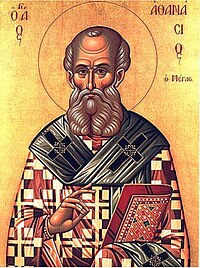
May 2, 2013 - St. Athanasius, Evangelization, the Unicity of the Church, and truth and goodness


Today is the feast day of St. Athanasius, whose chops as an opponent of heresy are second to none; and for that reason, and because of some of the reading I've been doing for the conclusion of our Christology class, as well as some recent news stories in which the Church is unnecessarily type-cast as the antagonist, I have been pondering a bit this phenomenon of increasing open, vocal, assertive, brazen anti-Christian rhetoric and posturing.  It certainly verges on discrimination, although it's not yet formally entrenched anywhere in the US, merely materially ascendant in certain places.


Dominus Iesus (2000) hit the nail squarely on the head in listing, in a very general sort of way, the nature of the erroneous thinking involved here:


4. The Church's constant missionary proclamation is endangered today by relativistic theories which seek to justify religious pluralism, not only de facto but also de iure (or in principle). As a consequence, it is held that certain truths have been superseded; for example, the definitive and complete character of the revelation of Jesus Christ, the nature of Christian faith as compared with that of belief in other religions, the inspired nature of the books of Sacred Scripture, the personal unity between the Eternal Word and Jesus of Nazareth, the unity of the economy of the Incarnate Word and the Holy Spirit, the unicity and salvific universality of the mystery of Jesus Christ, the universal salvific mediation of the Church, the inseparability "while recognizing the distinction" of the kingdom of God, the kingdom of Christ, and the Church, and the subsistence of the one Church of Christ in the Catholic Church.

The roots of these problems are to be found in certain presuppositions of both a philosophical and theological nature, which hinder the understanding and acceptance of the revealed truth. Some of these can be mentioned: the conviction of the elusiveness and inexpressibility of divine truth, even by Christian revelation; relativistic attitudes toward truth itself, according to which what is true for some would not be true for others; the radical opposition posited between the logical mentality of the West and the symbolic mentality of the East; the subjectivism which, by regarding reason as the only source of knowledge, becomes incapable of raising its "gaze to the heights, not daring to rise to the truth of being"; the difficulty in understanding and accepting the presence of definitive and eschatological events in history; the metaphysical emptying of the historical incarnation of the Eternal Logos, reduced to a mere appearing of God in history; the eclecticism of those who, in theological research, uncritically absorb ideas from a variety of philosophical and theological contexts without regard for consistency, systematic connection, or compatibility with Christian truth; finally, the tendency to read and to interpret Sacred Scripture outside the Tradition and Magisterium of the Church.

The question that I think this applies equally to, alongside the theological argument of the document itself, is why does this sort of thinking lead to specifically anti-Christian views, rather than merely to abandonment of Christianity in the cultural mainstream?  

One part of the answer is, as always, merely power.  The Church is pretty much the only coherent, readily articulated, and systematic point of view that stands against all of the "-isms" of the modern world, which are a threat to man or to the dignity of man.  And those various "-isms" would love to be able to defeat the Church in some way, both to be seen as more powerful, and to remove a strong opponent to their untrammelled domination.

But I think we shouldn't underestimate the consequences of muddled thought in and of itself.  Moral relativism is taught daily in our public schools, sometimes overtly, often by default; subjectivism is everywhere, with its stupid but powerful idea that truth is best recognized by an observable emotional response; the problem of "metaphysical emptying" is everywhere, quite apart from its Christological and ecclesiological implications, teaching people to accept lower order goods and to accept division in place of unity; eclecticism makes rational argumentation much harder than it needs to be; and so forth.  The net effect of all of these incomplete or inadequate ways of thinking is that most people are more or less convinced that what's good for them (often in a reductive and/or immediate sense) is the same as the common good; and therefore if others disagree with them, these others must be opposed to them, in the manner of trying to deny them some good.

St. Athanasius, for all his trials and struggles for the apostolic faith of the Church, didn't have this problem to deal with.  His opponents were, by and large, at least rational.  Arius thought he was solving the difficult problem of divine impassibility in the Incarnation.  Constantius thought he was doing what was good and necessary for the unity of the Empire.  That they were mistaken about these things didn't mean they couldn't be reasoned with, and indeed, eventually, the process of rational argument did secure the apostolic teaching and the rejection of Arianism fairly definitively.

In our evangelization today, at the individual level, I think we still need to do this.  How we talk about the faith, about our worldly and spiritual experiences, our consistency of word and action, and so on, constitute a kind of argument about most basic principles which is readily apparent to those around us.  And since people are not usually attracted by philosophy (a systematic presentation of the truth as ideas) but by holiness (a very different but no less systematic presentation of the truth in action), this is the right way to proceed. 

For those who think we are opposed to them personally merely because we disagree with them about ideas, it is the witness of consistent and joyful imitation of Christ by those who are known to them which has a chance to convince of our goodwill, even if conversion never follows. 

But at the wider level, this kind of personal approach doesn't work.  Here the clash of ideas and perceptions happens in a separate way from our personal witness.  Consistency and joy still matter here, but somehow it needs to be translated to that more impersonal level.  Here, martyrial witness is a powerful kind of argument.  Those who are willing to suffer for Christ (in whatever sense; in other words, to carry the Cross in daily life, without complaint, even when it is unjust) are appealing in this sense.  But the appeal rests on the coherence of the tradition or identity - in this case, the apostolic Tradition and the identity of bearing Christ's name as Christians.  If that tradition and identity is not generally perceived as internally coherent - in other words, if Christians are generally perceived to be disloyal to their own tradition, for whatever reason - at one level, it doesn't even matter if it's true or not - then the quality of the witness is badly undermined.

So as St. Athanasius knew so well, a well-formed Church is really necessary for the project of evangelization.  The weakness of our evangelization in the West in the past three-four generations is a symptom of insufficient internal coherence, consistency, joy, and zeal in bearing the Name and the Cross of our Redeemer.  John Paul II wrote the same:

Difficulties both internal and external have weakened the Church's missionary thrust toward non-Christians, a fact which must arouse concern among all who believe in Christ. For in the Church's history, missionary drive has always been a sign of vitality, just as its lessening is a sign of a crisis of faith. (Redemptoris Missio, 2)

The Catechism of the Catholic Church is a major step in the right direction.  So is a coherent anthropology at the root of our formation programs (four pillars of human, spiritual, intellectual, and pastoral formation).  So is the plethora of solid and orthodox Bible studies which use well all the tools available to us, without abusing the historical critical method in the manner which leads to supplanting Christian identity with some mere political ideology.  So is the new Missal's use of a consciously sacral language for worship.  So is Friday abstinence and the daily Rosary, as universally shared elements of a clear, Catholic identity.  And so on...  these are the things, when used well and often, that build up our conviction, our faith, our zeal, and therefore our ability to evangelize the increasingly unfamiliar world around us.


Friday, February 10, 2012

On the President's First Amendment "Compromise" Falsely so-called - Updates (2/13 and 2/14)

As everyone has no doubt seen by now, President Obama held a press conference today (2/10) to announce his wonderful "compromise" on the unjust (and illegal) HHS mandate:

Today, President Obama will announce that his Administration will implement a policy that accommodates religious liberty while protecting the health of women. Today, nearly 99 percent of all women have used contraception at some point in their lives, but more than half of all women between the ages of 18-34 struggle to afford it.

Under the new policy to be announced today, women will have free preventive care that includes contraceptive services no matter where she works. The policy also ensures that if a woman works for a religious employer with objections to providing contraceptive services as part of its health plan, the religious employer will not be required to provide, pay for or refer for contraception coverage, but her insurance company will be required to directly offer her contraceptive care free of charge.

This is a distinction without a difference. Clearly, the question of whether the conscientious objector pays directly, or indirectly by paying a third party to pay for the immoral services, is quite irrelevant to either the wedge issue of contraction (including sterilization and abortifacients), or to the deeper issue of religious liberty. In either case, the one who tries not to be complicit in moral evil is still compelled to be complicit in moral evil.

The best response I've seen is by Bishop Slattery of the Diocese of Tulsa, OK:

We are grateful that the President has begun to listen to the voices raised in opposition to this intrusion on our first amendment rights, and we are encouraged that he understands the urgency of this matter. However, we are dismayed that he does not understand the root issues which are involved here.

There will be a time, there must be a time, when Americans of good will and strong conscience discuss these points in a rational and non-idealogical conversation.
• First, no one is asking why it is that the Catholic Church is opposed to
artificial birth control, direct sterilization and abortifacients. For two thousand
years, the Church has understood that all of these methods that prevent life
damage marriages and thereby weaken the fabric of society.
• Secondly, in describing artificial birth control, direct sterilization and
abortifacients as “Preventive care” it is apparent that the ideology which
underlies this governmental intrusion is that pregnancy is a disease and that
the conception of life should be prevented.
• Thirdly, the question of who ultimately pays for this immoral coverage has
remained unanswered by the President. Free coverage is never free;
someone will have to pay for this coverage in their premium.

He also notes that the religious liberty issue is not limited to church institutions, but also affects individuals, either purchasers of insurace or employers providing it, and even insurance companies themselves. Spot on, Bishop Slattery.

I think there is now another issue here, also. As we heard from Abp (Cardinal-elect) Dolan, President Obama promised him, in an interview in the White House in November, that he respected the Church's stand on the contraception issue[s], and wanted to protect religious liberty etc. etc. But as he proved in allowing the Sebelius mandate to remain unchanged in January, he lied. By making today's announcement of a change (even though the change is not one of substance), he's tacitly admitting that he lied before, and also tacitly admitting that he approved a policy that violated the First Amendment (!!). (If it did not, why would he capitulate, even only in appearance, to the rising demands on behalf of religious freedom?) And now he's trying to change the subject with a "cheap accounting gimmick."

The Anchoress has more round up of responses, many of them also very good. The Beckett Fund's response is particularly pointed. And Bishop Nickless gave a very clear and precise response for tonight's evening news.

Update (2/13): Abp. Chaput, among others, has an excellent response to Friday's "insulting and dangerous" retrenchment by the Obama administration. The USCCB offered its more definitive response very late Friday evening.

Update II (2/13): Lydia McGrew gives a clear and compelling rebuttal of that "98% of Catholic women use contraception" lie that figured so prominently, if irrelevantly, in the logic (for whatever that's worth) of the HHS mandate. (I found this linked via Tom Hoopes at CatholicVote.org.)

Update III (2/14): Pope Benedict gave his third speech to American bishops making their ad limina visit yesterday (see here, but it's not posted there yet). Msgr. Pope gives his thoughts on the address most compellingly. Thomas Peters draws the obvious conclusion that where no compromise is (repeatedly) offered, none is possible, and sets his sights firmly on the electoral defeat of Obama and his oppressive ilk. And the Anchoress shares another little example of that animus, in this otherwise unremarked rule change. Last but not least, the USCCB lists six more things everyone should know about the HHS mandate.

Wednesday, May 25, 2011

R. R. Reno on the Preferential (Moral) Option for the Poor

From First Things' online Public Square:

Want to help the poor? By all means pay your taxes and give to agencies that provide social services. By all means volunteer in a soup kitchen or help build houses for those who can’t afford them. But you can do much more for the poor by getting married and remaining faithful to your spouse. Have the courage to use old-fashioned words such as chaste and honorable. Put on a tie. Turn off the trashy reality TV shows. Sit down to dinner every night with your family. Stop using expletives as exclamation marks. Go to church or synagogue.

In this and other ways, we can help restore the constraining forms of moral and social discipline that don’t bend to fit the desires of the powerful—forms that offer the poor the best, the most effective and most lasting, way out of poverty. That’s the truest preferential option—and truest form of respect—for the poor.


Full essay here.