Showing posts with label historicizing. Show all posts

Thursday, February 21, 2013

The "Myth" of Early Christian Persecution?

The Cardinal Newman Society news feed has this item today, about Notre Dame theology professor, Dr. Candida Moss, promoting her new book, "The Myth of Persecution: How Early Christians Invented a Story of Martyrdom."  Here is her promotional:


Perhaps it would be an overreaction to this promotional material to express my surprise at what appears to be such a boldly revisionist project coming out of Notre Dame's theology department.  I've not read this book, and have only read about her previous book on the early martyrs; so I make no judgments about Dr. Moss's scholarship.  Certainly, I believe she would agree that there's nothing "mythic" or "invented" about the mere fact of persecution of Christians in the Roman Empire in the second and third centuries.  Consider, for example, Trajan's law criminalizing Christianity "for the name;" the numerous judicial records of exactly such trials and the death, imprisonment, or exiling of actual Christians that resulted; the mid-third-century imperial laws (Decius, Valerian) against Christian clergy, possession of the Christian scriptures, and so forth; the persecution of Diocletian and his successors in the East; none of these things have ever been in doubt as what actually happened.  (The question of why Roman authorities treated Christian in such ways is a separate one.  I'd agree with her that it wasn't "merely because they refused to deny Christ."  But why does she think these facts happened?)

This historical layer of the "Church of the martyrs" certainly does, as Dr. Moss claims, underlie in a persistent way the attitudes of Christians of other times and places to all sorts of circumstances.  In this sense, one could say there is a "myth" being formed.  But that's hardly unusual; all coherent groups of every kind, not only religious, recount shared experiences to reinforce identity and commitment.  There's no implication here, generally, that "myth" in this sense means "not true," or "distorting the historical record," or "politicized," or the like.  So it's difficult to see, based only on this promotional material and the rather provocative title, why it might follow that those implications are pertinent in this case.

But the promotion of the book as such, distinct from its scholarly content, does indeed seem to me obviously ideological ("... and they're not similarly persecuted today.")  Here is an advertisement for an upcoming lecture on the same, to be given in Washington DC in March.  Note the way in which word choice is used here to create an effect, and to qualify the meaningfulness of historical facts, in the direction of the very modern agenda already revealed in the video [my comments]:

According to cherished [w/c] church tradition, early Christians were uniquely [neither historians nor the Church have held the general position that only Christians were persecuted in the Roman Empire in Late Antiquity; one has only to look at e.g. Domitian] and systematically [the imperial laws against Christians in 251, 257, and 303-10 were as systematic as things got for the time] persecuted by a brutal [w/c] Roman Empire. Vast [w/c] numbers of believers were thrown to the lions or routinely [w/c] tortured or burned alive. In spite of these horrors, so the story goes [are we now to believe that no Christians were martyred by the Roman state?], these heroes of the early church chose to die rather than renounce their faith in God [indeed so; some Christians, then as now, possessed such courage and fidelity]. Such stories form part of the teaching of the church to the present day, inspiring some to acts of like courage in the face of modern hardships [this was and is an explicit goal in remembering the acts of the martyrs, just as the imitation of holiness is an explicit goal of remembering the lives of the saints]. Yet there is also the troubling [w/c] use of this heritage to silence the voices of those who act outside the perceived orthodoxies of the day [note the implication that all orthodox teachings are merely "perceived" and "of the day"].

In this lecture, Professor Candida Moss will address the true history [never before told! hidden for hundreds of year!] of persecution in the early church, and show how this history includes exaggerations and forgeries [this too is well known; yet we are able to evaluate the historical evidence and reliably hold that some subset of the evidence* is not exaggerated, forged, or added in later centuries] that eventually became part of the rhetoric [w/c] of the church. Moss will also address the question of the legacy [what she refers to in the trailer above as "dangerous," "especially in the language of the religious and political right"] of this history; a legacy that has animated the acts of some within the religious world to exclude [w/c; the great sin of post-modernity] those who would challenge [w/c] their hegemony [w/c].

What I find most arresting in this is how blatantly partisan such an avenue of promotion is, while still holding out the promised scholarship as properly scientific history.  Because we know, of course, that rational, right-thinking progressives never make use of a religious heritage to suggest false or unhistorical connections between the past and the present:
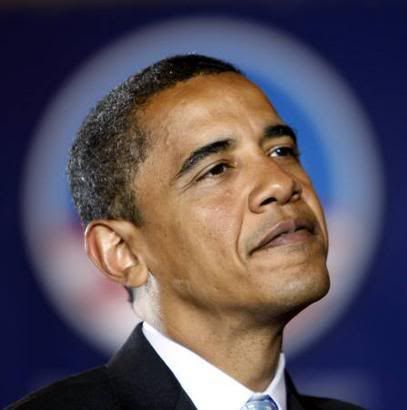

(Any allusion to other historical persons, living, dead, or resurrected from the dead, is purely a figment of the viewer's bigoted imagination.)
Just in the promotional material, then, one seems meant to conclude that, since the Roman Empire is not really a persecutor of Christians, but made to seem so by (some) Christians intent on preserving their "hegemony," so too the modern states of the West can and should similarly exclude Christian persons and Christian ideas (the "dangerous" "religious and political right") from the public square.  One cannot suggest that such exclusion might seem to violate otherwise compelling norms of law and fundamental rights, in a manner reminiscent of the history of persecution of Christians at other times and places, because of the implication that this is not really "persecution," for the same reasons it wasn't in late antique Rome.  And it's left dangling as a further implication that such exclusion is necessary, lest Christians rebuild that same hegemony that (the now well-worn ideology continues) has been dismantled, at such heroic cost, by the forces of egalitarian Reason in the last three or four centuries.

This maneuver (again, just in the promotional material, since I haven't read the book itself), strikes me as highly damaging to the faith of believers.  It calls into serious doubt the accepted meaning of an important period of the Church's history, and therefore also the authority of the tradition (or even Tradition) which has accepted and "mythologized" (if you like) that meaning.  It challenges the use of that authority by the current leaders of the Church (in the Catholic Church, at least, the apostolic authority of the bishops) who have been increasingly outspoken against precisely that impetus of exclusion, common in the West for two generations.  And it undermines the solidarity of Christians with the victims of much worse injustices (many of them, of course, Christians themselves) by falsely dividing different forms of abuse of power according to ideological preferences. 

I hope the book itself will offer much better than this; this is certainly not exemplary of the love of truth and pietas to one's students which Notre Dame and Yale taught me.

* Herbert Musurillo, The Acts of the Christian Martyrs (Oxford, 1972), is an excellent example of exactly such an effort to sift true historical accounts of early Christian martyrs from later pious fictions, and is generally accepted by historians as basically accurate.

Tuesday, July 27, 2010

Models of Revelation 10

In Ch. 7, Dulles presents his fifth and final model, that of “revelation as new awareness.” Again, he’s presenting an abstraction, a type assembled from several related theological ideas, and he admits he’s not really representing any of the authors thoroughly.

This model is rooted in “subjective idealism of the nineteenth century” (98). It assumes the Kantian denial of noumenal knowledge is fully true (i.e., we cannot know things as they really are in themselves, only as they appear to our senses). It also assumes a very aggressive historicism of ideas (context driven meaning rather than content driven meaning). Thus, this model begins with the premise that the Church at time/culture A is not inherently the same thing as the Church at time/culture B.

Furthermore, this model also assumes an “anthropological turn” characteristic of the 19th and 20th centuries. Man can be defined only with reference to himself; there is no “outside” or “objective” constant against which to define (no noumenal knowledge means no certain knowledge of a personal God, a non-mythical Jesus Christ, or an unchanging human nature). In its more virulent modes, this is taken of the individual person; in less aggressive modes, it is taken only of groups of persons (cultures, “peoples” in the sense of “the American people,” or even of humanity in general).

Given these assumptions, it’s scarcely surprising where this model goes: namely, evolution. Pierre Teilhard de Chardin argued that revelation and [spiritual] progress are tightly interlinked (99). He talked about “orthogenesis” (“right becoming”) rather than orthodoxy. Karl Rahner followed this argument. “For him revelation is a particular instance of a more general phenomenon – that of the self-transcending movement of created reality toward ever-greater freedom and self-possession” (100). [Questions: does this movement exist? Can it be proven to be in this direction? Is it “self-” movement, rather than having an exterior cause?] Rahner basically argued that revelation is grace: the experience of grace (even understood more or less in classical theological terms) itself reveals the self-giving God who saves. Dulles quotes another contemporary theologian, Gregory Baum: “Since divine revelation is not information about another world but God’s self-communication to man, and hence his gracious entry into the dynamic process of man’s becoming fully human, it is possible to express what the Church believes by describing the new self-consciousness created by faith.” (101, fn 18). In other words, in the end, revelation doesn’t reveal God to man, it reveals man to himself.

It’s characteristic of this model to assert the use of reason; but in order to get around the limits Kant et al set on reason, they must assert a non-discursive reason, a kind of intuition for faith (103). This often becomes the role of imagination. “Since the imagination is the power by which we anticipate and construct our own future, revelation must actuate the symbolic imagination” (103). This kind of symbolic thought is the opposite of propositional doctrine: image, not word; myth, not truth-that-can-be-expressed-propositionally; subjectivity, not objectivity. As symbolic, the truth-value of revelation can only be judged pragmatically. “Revelation is true if it enriches the quality of individual and community life.” (104, fn 36).

Therefore, revelation is not something we receive from the past; it is by definition something we experience in the present. “History is revelatory insofar as it provides paradigms for human self-transcendence that continue to function in the present” (105). Biblical history, creeds, and doctrines are not recordings or summaries of some objective truth, but of powerfully creative symbols of change (106).

Because there are no revealed truths, this model cannot talk about “human nature;” instead, it talks about “the human condition.” To the extent that revelation says something useful about the human condition, it is universal. Therefore revelation is not limited to the Bible or Judeo-Christian truths. From here it’s a very short step to the idea that grace is universal (107).

The strengths of this model which Dulles notes are not objective, but require the same assumptions the model uses. First he notes how this model responds to the weaknesses of all the other models: not “authoritarian and rigid” (110) as the propositional model is argued to be; not assuming two layers of history; not sentimental or overly mystical, as the “inner experience” model can be; not passive, as the dialectical model can render us. If, however, one does not accept the initial assumptions, it’s much less clear that this model provides any significant advantage over any of the other models.

In terms of the seven criteria of evaluation, Dulles suggests this model does well on plausibility, practical fruitfulness, and dialogue. Again, it’s only plausible if one accepts the assumptions. It’s very practical in the sense that it can be made to fit a lot of different kinds of situations and ideas; but if Truth is the measure of practice, its inherent relativism mitigates this. The same with dialogue.

Apart from the reasonable of its core assumptions, this model also has some serious flaws. “The most persistent objection has to do with the fidelity of this model to Scripture and tradition” (111). Moreover, by implying that modern Christians are more “enlightened” than in the past [oh, those doltish credulists of the past!], it makes Christ not Christ. Dulles rather laconically notes that this makes it “difficult to give a fully coherent account of [this] position” (113) as a Christian theological position. Further, this model is adequate, not to all experience, but only to certain kinds. As to theoretical fruitfulness, its reduction of thought to imagination is “dissatisfying” (113).

Wednesday, July 14, 2010

Models of Revelation 7

Using the seven criteria of evaluation, Dulles notes several strengths of the historical model:
• It emphasizes our relationship with God in more concrete ways, in the sense that actions speak louder than words.
• It retrieves some biblical themes that can be missed or downplayed in the propositional model.
• It is “more organic” than the propositional model. “The meaning of events is capable of being formulated in many ways… The flexibility, however, does not [necessarily] lead to relativism. Believers in every age and culture can find their identity in relationship to events that have objectively occurred…” (61). I would add, though, that this risk of relativism must be consciously avoided.
• It is less authoritarian.

There are some weaknesses to note also:
• Words do remain intrinsically meaningful and indispensable. “God’s self-disclosure in words and visions is not unrelated to his self-disclosure by deed, but there seems to be no cogent reason for unilaterally subordinating the former to the latter…” (63).
• Some biblical categories (e.g. Wisdom books) make little sense in purely historical terms.
• Some biblical categories (e.g. Genesis) are not “history” in terms meaningful to this model.
• It is not well attested in early Christian thought or tradition; this raises the question of continuity and resulting change of identity (if discontinuous with Tradition).
• It has questionable value for the ecumenical project of Christian unity, or for interreligious dialogue generally.
• The idea of an historical “act of God” (this is not the same thing as the Catholic meaning of “miracle”) is difficult to define coherently. If, in terms of the second form of this model, one posits two strains of history, human and sacred, one can avoid the definition but still needs criteria for which acts belong to which histories. If, in terms of the third form of this model, one posits only one strain of history, the definition risks denying the possibility of the miraculous, or else becoming merely a circular definition. (This problem, as I noted in the last post, is linked to the use of “scientific” standards of objectivity for history treated as a social science.)
• Finally, if events are not self-interpreting, as most theologians using this model agree, it seems to be implied that the event is not primary to the word which interprets it.

Dulles concludes the chapter with a quote (on p. 66) from Dei Verbum: “This plan of revelation is realized by deeds and words having an inner unity: the deeds wrought by God in the history of salvation manifest and confirm the teaching and realities signified by the words, while the words proclaim the deeds and clarify the mystery contained in them.” He suggests, in other words, that these two models must be used together, as if one model, to understand the “inner unity” of revelation in Scripture.

Monday, July 12, 2010

Models of Revelation 6

Dulles continues in Chapter 4 with his second model: “Revelation as History.”

A word of preface here. One of the features of the model mind-set is the increasing tendency, since the late 18th c., to “historicize” everything. This means that people see everything only, or at least mostly, in terms of a process over time. This view connects closely with the model of evolution, and goes a long way to explain why we now tend to see everything, not merely biology, in terms of that theory.

In a positive sense, this historicizing can keep us from making the mistake of thinking that people at time A had the same assumptions or attitudes about stuff as people at time B. It has made us more aware of the diversity of human experience.

But in a negative sense, historicizing has also undermined any confidence in a fundamental stability to stuff. It denies more or less strongly that anything is permanently real: thus, no unifying human nature, no unchanging moral law, etc.

Since everything else was subjected to historicizing in the 19th c., it’s not surprising that revelation also was.

Dulles notes from the first that there is an historical element in the first model of Revelation as dogma. That model implies that revelation occurs in history, for where else would it occur? It notes that revelation must also be handed down through history (“Traditio”). And it includes some events, such as Exodus and the life of Christ, in the category of Revelation. “Still, the propositional model is not in the fullest sense historical, for it denies that the events of sacred history are by themselves revelation…” (53).

The defining notion of this model is that “revelation occurs primarily through deeds, rather than words, and that its primary content is the series of events by which God has manifested himself in the past” (53).

Dulles identifies three forms of this model, and gives examples of theologians who follow each.

The first form he calls “Revelation as Event.” “God, inasmuch as he is personal, cannot be adequately revealed through nature, but only through persons – that is to say, through actors on the stage of human history. The historical persons and events are the source of any truths which the mind may derive from them. Creeds and doctrines depend upon the prior events of revelation from which they are derived.” (54). The events, in other words, offer a self-evident interpretation. For this version of this model, there are some immediate problems:
• If words do not reveal, there are no revealed truths in dogmatic form. At the extreme, all dogma is changeable, if our interpretation of the events of sacred history changes.
• The Bible, strictly speaking, is not revealed, and therefore cannot be held to be inerrant.
• What becomes the ground for interpreting the events of sacred history? At the extreme, is there even such a thing as Tradition?
• “If we cannot trust the biblical interpretation, what resources do we have for asserting [even] the fact that God was active in this history?” (56).

The second form he calls “Revelation as Salvation History.” The Protestant Oscar Cullmann and the Catholic Jean Danielou represent this version of the model quite well. Cullmann responds to some of the problems of the first version of this model by distinguishing among event, prophetic interpretation, and recapitulation. [So for example, the meaning of the event, “the crossing of the Red Sea,” is made clear through the centuries by accumulating layers of interpretation of liturgy and law and prophecy, culminating in the baptism of Christ in the Jordan and the institution of the Sacrament of Baptism in the Church.] The key difference from the first version of the model is that here, the events cannot interpret themselves. So there must be some kind of meaning-carrying Tradition to serve as the interpretive key. The Catholic scholar Danielou follows much the same path, but manages to include in the accumulating layers of meaning in Tradition a defense of Patristic typology. Something very significant for the reality of the Church comes from this, but of course this is a Catholic point, which Cullmann does not fully agree with.

The principle objection to this second version is that it still posits two kinds of history taking place together: one objective and human, one sacred and meaningful only to those who have faith. The third version, which Dulles calls “Revelation as History,” takes on this objection. One of its principle supporters was Pannenberg. “Revelation, he holds, is not to be found in a special segment of history, but rather in universal history…” (59). In other words, every event, no matter what its context, or how mundane or celebrated, how public or private it is, can serve to reveal something of God in an objective way. [NB, this is tied in to the mid-20th c. defense of historicizing which tries to make history into a social science, rather than a liberal art.] “Hence no special illumination is needed for their meaning to be understood. It suffices that people be able to use their reason… Faith, therefore, does not precede the recognition of revelation…” (59). In order to hold this position, one must claim that events reveal God only indirectly, never directly, which denies the possibility of theophanies, word-revelations [“I am who am.”], and miracles.

This throws one immediately back to the question of interpretation. This version can only hang its claim to objective, universal interpretation on the Resurrection. This becomes the interpretative key to the whole of Revelation, the most fundamental meaning of any and every other event in human history.

Question: Can you think of examples of this model which you have encountered?