Showing posts with label Acts 6. Show all posts

Thursday, May 29, 2014

Deacon as Ἄγγελος, Angel or Herald

sanctuary of the Cathedral of the Epiphany
In the sanctuary of our Cathedral, we have four quite lovely stained-glass windows, depicting the Last Supper, the Resurrection, the giving of the Keys to St. Peter, and Pentecost.  During the year before my ordination, when I was serving Mass as an acolyte, I had a clear view of the Resurrection window, in which an angel is depicted rolling away the stone from the tomb, while Christ emerges and the soldiers are struck insensible with awe and fear.

In this window, the angel is wearing a dalmatic.

I pondered the better part of that year, week after week, what it meant that angels wear dalmatics, and what sort of "angel" I could be as a deacon.  I still think of those reflections, and what I learned in that time, each time I see that window.

Dcn. Bill Ditewig recently had a rather nice post on his blog on this topic, to which I was refered yesterday.  He makes the point correctly that this symbolism of angels wearing dalmatics is vital to the Eastern theological understanding of the diaconate, and less so the Western, but is a dominant tradition in the artistic representation of both angels and deacons even in the West (as in our Cathedral).

He doesn't, however, make the further point about what the word "deacon" (διάκονος) actually means.  The usual English translation is "servant," and that's alright in a very general sort of way.  But "servant" in English carries a wide range of connotations, from "slave" to "butler" to "trusted advisor," that only partially overlaps with the connotations of "deacon" in koine Greek.  One end of that range of connotations is occupied by other Greek words (e.g. "doulos," "slave" or "personal servant," which is also used frequently in the New Testament), while the connotation of the New Testament's "deacon" word group is rather different from the range of "servant." It means more specifically something like "ambassador," "messenger," or "herald" (as John Collins' meticulous study "Diakonia" (Oxford UP, 2009) showed).  This is why the translation into Latin has always been "minister," which has a very similar range of connotations (consider the usual governmental context of "minister" as a title today), and not something like "servus," "slave" (the root, e.g., of our English "servant" and "serf").

In other words, it's not just in art and in theology that the connection between angels and deacons is made, but that connection itself derives from the overlapping semantic content of the two words.  Both are "sent from" someone else, and wield (a share of) that person's own authority.  And thus, to push even further, the third word that fits directly into this same semantic weave is "apostle" (ἀπόστολος), lit. "one who is sent."  Indeed, just as the Father sends Christ the Son, and Christ sends the Apostles and their successors, the bishops, so also the bishops perforce send (priests and) deacons to extend their ministry to all (e.g., Lumen Gentium #18-20).  And the intimate connection between deacons and bishops that, say, St. Ignatius of Antioch makes flows also from this understanding of ministry and mission.

St. Gabriel
Thus, when Lumen Gentium goes on to say in #29:

At a lower level of the hierarchy are deacons, upon whom hands are imposed "not unto the priesthood, but unto a ministry of service."(74*) For strengthened by sacramental grace, in communion with the bishop and his group of priests they serve in the diaconate of the liturgy, of the word, and of charity to the people of God. It is the duty of the deacon, according as it shall have been assigned to him by competent authority, to administer baptism solemnly, to be custodian and dispenser of the Eucharist, to assist at and bless marriages in the name of the Church, to bring Viaticum to the dying, to read the Sacred Scripture to the faithful, to instruct and exhort the people, to preside over the worship and prayer of the faithful, to administer sacramentals, to officiate at funeral and burial services. Dedicated to duties of charity and of administration, let deacons be mindful of the admonition of Blessed Polycarp: "Be merciful, diligent, walking according to the truth of the Lord, who became the servant of all."(75*)

...the "ministry of service" the Council Fathers have in mind is, in its essence, that share of the apostolic ministry first entrusted by the Apostles to the Seven chosen in Acts 6, and which we see carried out by St. Stephen and Philip in Acts 7 and 8, namely, the proclamation of the Good News by word and witness, and the bringing of people into union with Christ through baptism and through inviting them to receive the full ministry of the Apostles themselves.  And this is also what the ordination rite clearly means when, as the bishop hands the Evangelarium to the newly ordained deacon, he says, "Receive the Gospel of Christ, whose herald you now are; believe what you read, preach what you believe, practice what you preach."

Two other implications then flow from this, both of which are contested points about the diaconate today.  First, just as angels only do what God sends them to do, so deacons must exercise their ministry within ecclesial structures.  For most deacons, this means a parish assignment and an active presence in the parish's liturgical and ministerial life.  (One could also be assigned to other ecclesial institutions, e.g. diocesan offices, schools, hospitals, apostolates, etc.  But all of these are "ecclesial" in the same sense, that of obedience to and communion with the local bishop.)  Whatever ministry a deacon undertakes, it must remain connected with the apostolic center, and with the altar.  Deacons are not "extra-ecclesial" ministers in the sense that they function "beyond" the institutions of the Church.  The fact that most permanent deacons are married and have jobs outside the Church confuses this greatly.  Certainly in those roles deacons remain deacons, and should preach Jesus Christ (especially by example), but it is not for this that they are ordained; all the baptised should do as much, each according to vocation and state in life.

2014 ordination of permanent deacons, in the same Cathedral
Second, just as the only example of disunity among the angels is the Fall, so the unity of the deacon with the bishop means that those who are chosen to be ordained as deacons must in principle be capable of receiving a greater share of the apostolic ministry; that is, they must in principle be eligible to be chosen to the presbyterate (and the episcopate).  To ordain as a (permanent) deacon someone who could never, under any circumstances, be ordained a priest would separate the ministry of the deacon from the ministry of the bishop.  It would create another, non-apostolic, "sending" for the deacon to pursue. 

Thursday, May 15, 2014

Apostolic Succession: Thoughts on the Feast of St. Matthias, 14 May

Yesterday was the Feast of St. Matthias, the one chosen in Acts 1:15-26 to take the place of Judas among the Twelve.  I preached on how this demonstrates Apostolic Succession, and what that means for our faith today.  This is an extended version of what I preached about, more in the form of reflections than the homily was.

Here's the text, according to the Douay-Rheims version:

In those days Peter rising up in the midst of the brethren, said (now the number of persons together was about an hundred and twenty): Men, brethren, the scripture must needs be fulfilled, which the Holy Ghost spoke before by the mouth of David concerning Judas, who was the leader of them that apprehended Jesus: Who was numbered with us, and had obtained part of this ministry...  For it is written in the book of Psalms: Let their habitation become desolate, and let there be none to dwell therein [Ps 69 (68):26]. And his bishopric [Vulg "episcopatum;" LXX "επισκοπήν, episcopen"] let another take [Ps 109 (108):8]. Wherefore of these men who have companied with us, all the time that the Lord Jesus came in and went out among us, Beginning from the baptism of John, until the day wherein he was taken up from us, one of these must be made a witness with us of his resurrection. And they appointed two, Joseph, called Barsabas, who was surnamed Justus, and Matthias. And praying, they said: Thou, Lord, who knowest the heart of all men, shew whether of these two thou hast chosen, To take the place of this ministry and apostleship, from which Judas hath by transgression fallen, that he might go to his own place. And they gave them lot, and the lot fell upon Matthias, and he was numbered with the eleven apostles.

This passage clearly shows us the criteria in the minds of the earliest disciples, including the Apostles, even before Pentecost, of what would come to be called "apostolic succession."  I've highlighted the key passages:
  • Peter rising up... - It's Peter's role as the leader of the Twelve to take this action.  Right from the beginning, Peter has a distinctive leadership among the Apostles, rooted in the events of Mt 16:18-19 ("You are Peter, and on this rock...") and Jn 21:15-17 ("Do you love me? Feed my sheep." (thrice)).  The first several chapters of Acts bear this out.  When Peter eventually becomes Bishop of Rome, this headship will be exercised by his successors, Linus, Cletus, Clement (e.g., in his Letter to the Corinthians), etc., and become the basis of papal authority over the whole Church.
  • ...the scripture must needs be fulfilled... - The action described here is explicitly understood to be divinely inspired, both in the action of the Holy Spirit among the community prompting Peter's leadership, the community's responses, and the eventual choice of Matthias - note, again, this is before Pentecost! - and in the Scriptural foundation now revealed to be a prophetic preparation for this moment.  God is in charge, and therefore the whole doctrine of apostolic succession is "of God."
  • And his bishopric let another take... - The divine shape of the office of bishop is, in is essence, also rooted in Scripture and in the use Christ and (here) the Holy Spirit make of it.  Peter uses Ps 109 to call the position held by Judas and now to be given to another the "episcopate."  In the Greek and in the Latin, the connotation is not generic, such as "manager" for us today is generic, but something with more specific, even if still flexible, outlines, function, and purpose.  
  • ...one of these must be made a witness... - part of the essence of the office being given is that of witness, of one who can proclaim the Good News and the Kingdom as an eyewitness and credible testifier.  
  • ...a witness with us... - the unity of the Twelve in this mission, among themselves and together with Peter their leader, is paramount.  This is still true today; see e.g., Lumen Gentium 18: "This Sacred Council, following closely in the footsteps of the First Vatican Council, with that Council teaches and declares that Jesus Christ, the eternal Shepherd, established His holy Church, having sent forth the apostles as He Himself had been sent by the Father; and He willed that their successors, namely the bishops, should be shepherds in His Church even to the consummation of the world. And in order that the episcopate itself might be one and undivided, He placed Blessed Peter over the other apostles..." etc.
  • ...a witness with us of his resurrection. - The bedrock of the Gospel is the Resurrection of Christ from the dead.  It's not just that Jesus worked miracles, or taught a moral law, or challenged corrupt or lax religious authority, but most especially that He died and rose for us, that makes Christianity what it is.  One cannot proclaim or follow Christ without proclaiming and following the (hope of) the Resurrection.  Knowing and following the Lord Jesus must make this kind of difference in one's life.  
  • ...take the place of this ministry and apostleship... - Again, Peter and the Apostles are giving this task of proclaiming a specific authority and shape with this sort of terminology.  Their role in the Church is different from that of other disciples, even if they are still disciples first, as Ignatius of Antioch would say (Letter to the Romans, 4).  "Ministry," in particular, although it can often be a more generic word, takes on a specific, non-generic connotation in relation to the Resurrection of Christ, and the proclamation of that Good News by the Church (see e.g. Paul's usage in Rom 15:16: "That I should be the minister of Christ Jesus among the Gentiles: sanctifying the gospel of God, that the oblation of the Gentiles may be made acceptable and sanctified in the Holy Ghost.")  Here, Gospel proclamation and Eucharistic sacrifice are explicitly linked in "the ministry of Christ."
  • ...he was numbered with the eleven apostles. - In other words, Matthias held an equal position with the other Apostles, under the leadership of Peter, even though he was given this position by them, and not, as they originally were or as Paul would be, by Christ Himself.  The fullness of Christ gifts to the Apostles are still held by Matthias - and by extension, by all those chosen by the Apostles and by their successors.
What all of this shows is the critical importance of the doctrine of apostolic succession for the Catholic faith.  Jesus Christ gave specific teachings, spiritual gifts and powers, and a share in His own authority to the Twelve.  They in turned passed the same "inheritance" on, intact and unchanged, to Matthias and others (e.g. Timothy, etc.).  They in turn used the gifts for the same purpose (i.e. "ministry," namely, proclamation of the Good News, leadership of the Church in unity under Peter and his eventual successors, and the sacraments (e.g., baptism, Acts 2:38; Confirmation, Acts 8:14-17; Eucharist, Acts 2:46, I Cor 11:20; anointing, Jas 5:14-15; ordaining by laying on of hands, Acts 6:6, I Tim 5:22; witnessing marriages "in the Lord," I Cor 7:39; forgiving sins (but private auricular confession becomes normal for the use of this power only later), Acts 3:19, 26; 4:4...).

Therefore, we must recognize the fact that the Church exists from its beginning in Christ, in its fullness!  (See CCC 771ff.)  Christ gives everything necessary to the Church, in the beginning, completely.  Now, granted, there is the historical work of "unpacking" the fullness of this gift, doctrinally, sacramentally and liturgically, and in evangelization of the whole world, and indeed that unpacking continues even today.  But it is the unfolding of what has already been given, not the creation or invention of new divine gifts and revelations.

It's precisely this apostolic succession that ensures that we're dealing with the same divine deposit of faith, and not inventing new things for ourselves.  This is the essential argument of Irenaeus against Gnosticism, for example, and it has been deployed many times.  If the Eucharist does not come from the hands of Christ Himself at the Last Supper, then the Church invented it, and it is not essential or divinely intended.  If Holy Orders do not come from the hands and will of Christ Himself, through the Apostles (choosing Matthias, choosing the Seven in Acts 6, Paul choosing Timothy, etc), then the Church invented these roles and rules, and they are not essential or divinely intended.  And so forth.  This is exactly what we mean when we say in the Creed that we believe the Church to be "apostolic" as one of its defining realities.

This doctrine is part of the faith we receive in baptism, but it is not, in the strict sense, a "mystery."  It is not impenetrable, nor does it exceed reason to consider in what way, precisely, as recorded in the New Testament and as lived out in the history of the Church, the concrete and tangible gifts of ministry were given by Christ to the Apostles, and were used by them in the first three decades of the Church, and were handed on intact by them to their successors, to be used still further for the building up of the Church, and so on.  It is entirely rational and historical to grasp this part of the faith, and to apply it to the realities of the seven Sacraments, the Church's worship in general, the moral life, and the life of charity.  The great apologists of the second century - e.g., Irenaeus, Justin Martyr, Tertullian, Clement of Alexandria - did exactly that in defending apostolicity against both Roman (pagan) syncretism and Gnostic mythologization, and others since have imitated them.

But contrast this understanding of faith against the most common assumption or model of the modern world, namely, "evolution."  Modern thought implicitly assumes that everything follows the pattern of evolution gleaned from biology - of more primitive things becoming more complex over time, following certain common patterns and driven not by clear purpose or teleology, but by "survival" or "fitness" in a specific context, or by mere self-perpetuation in some form.  Nearly every example of adaptation or change over time is squeezed in this evolutionary model, regardless of whether that actually helps understanding or not.
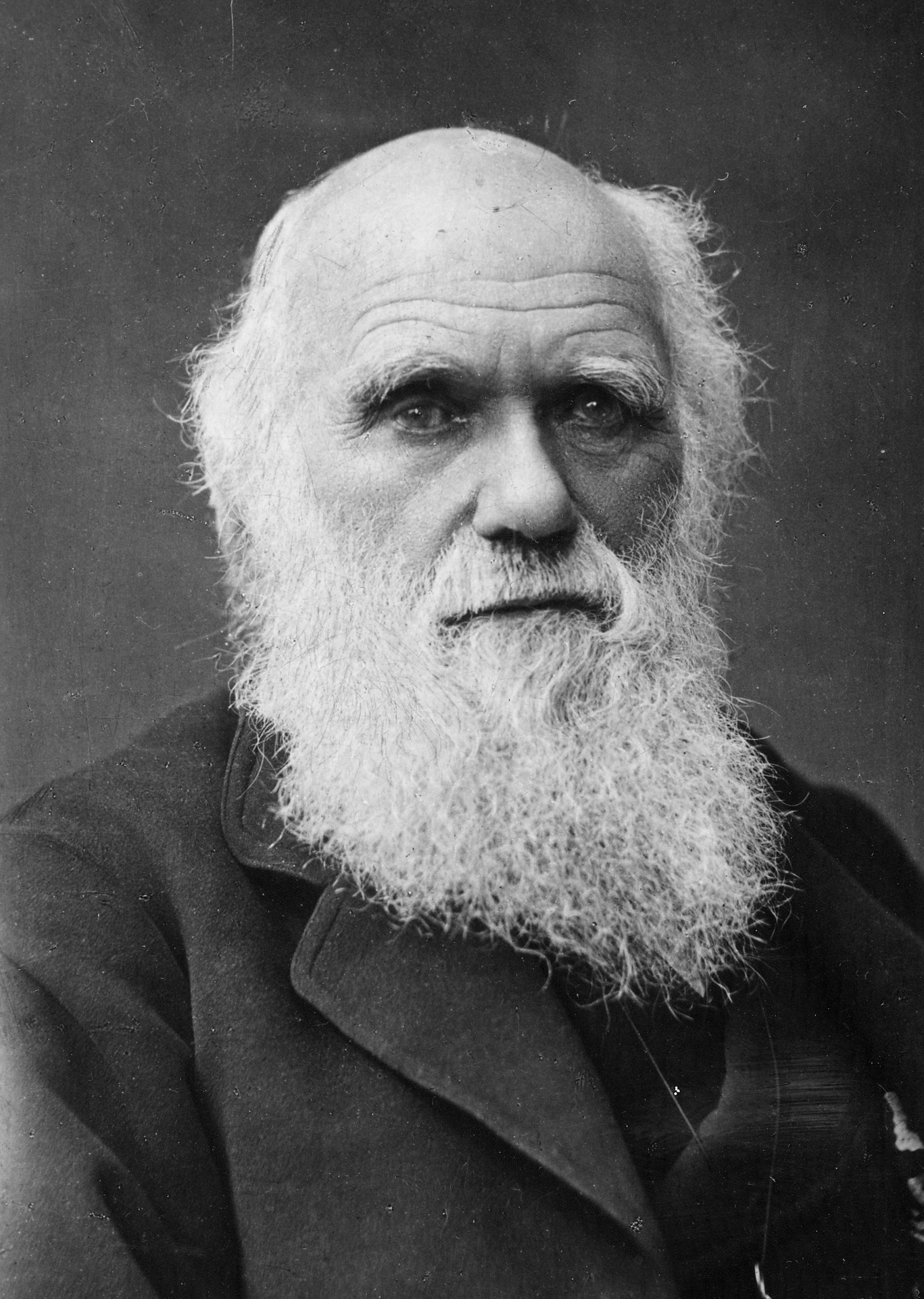
Darwin might look like a prophet, but he's a poor theologian.
In terms of Church history, the imposition of the evolutionary model since the 19th century has led to many "non-traditional" arguments and conclusions, some of which are extremely damaging to the faith.  For a lesser example, arguments that Mark's Gospel is earlier than Matthew's essentially boil down to the claim that it must be earlier because it's shorter (= the more primitive form). (There's a bit more to the argument than that, especially that so much of Mark is in Matthew, but not as much in reverse.  Still, some good arguments for Matthew's being earlier are not given as much attention, because they don't fit the model.)  There are many other, more serious ways in which the imposition of the evolutionary model distorts our understanding of faith.  Most insidious is the idea that opposes "the Jesus of history" (primitive form) against "the Christ of faith" (later complex form), and ends with denying the divinity of Jesus itself!

In terms of the doctrine of apostolic succession, especially, the evolutionary model is completely the wrong one to use.  Still, it is all too common to assume that more primitive forms of ministry must have preceded later forms, such that, in the first decades of the Church, it's not really possible to talk of "bishops," of Peter as "Pope," of the "sacraments" (apart from baptism, and the "breaking of bread," which is not yet the "Eucharist"), of a coherent body of doctrine (apart from a few elements labelled "the primitive kerygma"), etc.  The dissimilarities between the earliest Church and the "post-Apostolic" Church are just too great, it is argued, to use these later terms and institutions to describe what's going on in the "primitive form" of the earliest Church.  If these fit even in the earliest Church, then they're not really primitive forms - but, it's just impossible (it is assumed) to explain how fully developed forms of things can exist without more primitive predecessors.

But the problem with this conclusion is precisely that it is not consonant with faith in Christ, as noted above.  If Christ did not will and give the essential aspects of these things to the Apostles, then they are not constitutive of the Church!  If they are not willed and given by Christ to the Apostles, then there is no divine power behind them.  Baptism doesn't really wash away sins, it's just a symbol.  Priestly ordination doesn't really give a man a sacred power to change bread and wine into Christ's own Body and Blood, it's just a symbol of leadership, possibly even a corrupt and politicized one.  The faith which is proclaimed doesn't have to be the same one that was proclaimed by earlier generations of Christians; it can even contradict what was previously believed.  Even Scripture itself is undermined, since divine authorship is incompatible with the evolutionary model, and the Canon of the New Testament is therefore a political side-effect of Church history, and thus also one which a new politics could redefine.  In the end, imposing an evolutionary model on the Church destroys apostolic succession and many other central doctrines, and makes us all into feckless false believers in empty, meaningless symbols.

I ended my homily with an exhortation to ask the intercession of St. Matthias and the other Apostles to increase our faith and strengthen our witness.  If we don't believe in a robust doctrine of the Church and her dependance on Christ and the Apostles, if we don't accept that there is a true and unchanging apostolic deposit of faith which we must believe, live, and transmit to others unchanged, then in the end, we don't really believe in Christ as "the one Mediator between God and men."  God save us from such a puny and selfish thing!
"Christ taking leave of the Apostles," Duccio di Buoninsegna ca. 1311, in the Museo dell'Opera del Duomo, Siena


Monday, May 5, 2014

3 May 2014: On the Feast of Ss. Philip and James, ordination to the Holy Diaconate of ten new deacons!

Congratulations and continued prayers for our ten (!!) newly ordained permanent deacons: Joe Coleman, Rick Rohr, Vern Burke, Paul Gengler, Dennis Brockhaus, Kevin Poss, Rob Claypool, Tom Henrich, Rick Salocker, Dan Goebel!  Ad multos annos, brothers!  May your ministry as deacons always be filled with the love of Christ and the seven-fold gift of the Holy Spirit, for the salvation of many souls!  (Captions are under the pictures.)

After the reading of the Gospel, the presentation of the candidates.

Prostration during the Litany of the Saints

Having made the promises of obedience and the act of fealty to the bishop, the candidates await the imposition of hands.

The imposition of hands, in silence.

The prayer of consecration over the candidates.  At this point, they are now ordained!

About to receive the investiture of stole and dalmatic

Acolytes bring forward the stoles and dalmatics, while vesting deacons and priests prepare to vest the newly ordained.

Dcn. David (left) assists newly ordained Dcn. Tom Henrich at the preparation of the altar.

Consecration of the gifts and incensing of the altar.
 
The newly ordained pose with Bishop Nickless after Mass.

Wednesday, June 8, 2011

Last Saturday's diaconal ordination


Many thanks to Laura Anderson, who took this photo from the choir loft last Saturday, and shared it and others with me this week. Please continue to pray for Bishop Nickless; and our brother deacon Pat Behm as he labors for Christ this summer in his home parish, and as he completes his seminary formation this coming year; and for all our seminarians. May God continue to send us many good men to serve the Church and the world as priests and deacons.

"Deacon Reader" Summer Reading 3

In addition to Acts 6, there's good information on deacons in Phil 1 and 1 Tim 3, which Fr. Enright refers to in the first essay in the Deacon Reader.

Phil 1 specifically addresses the "bishops and deacons" in this city. They are described as having a "partnership in the Gospel" (1:5; and 1:7, "defending the Gospel") and as being completed by Christ's "good work in you" (1:6 - a prayer still used in ordinations: "May he who began the good work in you bring it to completion"), and as "sharing in God's grace with me [Paul]" (1:7). All these ideas resemble the actual ministry of the Seven, and will certainly become characteristic of the ordained by the end of the 1st century. But there's a little element of doubt that "bishops and deacons" are, this early, recognizable offices in the Church, distinct from others, because (a) the Apostles are still alive, and (b) Rom 16 refers to Phoebe as a "deacon". So the words "bishop" and "deacon" seem to be used to refer both to those on whom hands had been laid for the apostolic ministry (ordained, like the Seven), and on those on whom hands had not been laid for the apostolic ministry. In any case, even if, before the 60's, the identity of the clergy was still rudimentary and developing, the special share of the apostolic ministry given to some was notable.

1 Tim 3 also describes "bishops and deacons," given a list of moral and spiritual qualifications. This seems pretty clearly something different from baptism; even this early, it looks like, leaders of the fledgling Christian community were expected to be held to a demandingly higher standard. There is also a distinction, as with the Seven, between the bishops and the deacons, since there are two lists of these qualifications, not just one. The list for deacons (vv. 8-12) is still recognizable to us, and, in its essence, is what we're still expected to represent.

These three critical passages, then, seem to indicate that, even in the first generation of the Church, from the 30's to the 60's, the most basic truths of the sacrament of Holy Orders existed in the Church. Even though everyone in the Church was active in charity and ministry, some people were set aside by the Apostles, by the act of laying on of hands, to exercise a special share in the work Christ gave them specifically. There was the distinction between sacerdotal need (Apostles and bishops, which becomes what we call bishops and priests after the Apostles die) for "breaking bread" (the Mass), and diaconal need for preaching, evangelizing, baptizing, and so forth (deacons, like Stephen and Philip in Acts 7-8, from which all the minor orders, now reduced to lector and acolyte, eventually derived). There were moral and spiritual qualities looked for, which not all the baptized were expected to have. All this is part of the apostolic deposit of faith, but the precision of theological understanding and terminology developed in the next 2 or 3 generations.

Thursday, May 26, 2011

"Deacon Reader" Summer Reading 2

We're looking at the first essay, by Fr. Enright. I posed the question,

1) What are the two points from Acts 6 he makes on p. 8? Do you agree with these two points?

On p. 8 he writes:

The diaconate starts out as seven men serving the Greek-speaking Jewish-Christian widows in Jerusalem, a serving that is to be found at two tables at which these neglected saints would sit, the table of the word and the table of charity, both places of need, the spiritual and the material, but each flowing from the other. To put it another way, serving these two tables meant that these men were engaging in an evangelization of the whole person.

Is this "evangelization of the whole person by word and charity" who deacons really are? What are your reasons for agreeing or disagreeing?

Tuesday, May 24, 2011

"Deacon Reader" Summer Reading 1

In the Introduction, Dcn. Keating writes that this collection of essays hopes to help clarify "the fundamental identity of the deacon" (1). We have to grasp what we are being called to, sufficiently that we can love our vocation. "In loving one's vocation, the conditions for the possibility of becoming a saint are established" (2). Please keep this ultimate goal in mind as we dig in to this summer reading.

It's fairly reasonable to start by asking, what has the identity of the deacon been in the past?

Fr. Enright's first essay gives an historical overview. He gives some indication of his method:

First methodological point: "[T]he historical movement of a great idea [in the Church] is from the implicit to the explicit. Therefore, the following trip through diaconal history starts out by uncovering the implicit roots of the order in the early church" (8). He clarifies a bit more: "As Kenan Osborne, OFM, cautions, when it comes to New Testament data about any ecclesial matters, one has to be careful not to read into texts anachronistically what appears at a later time in the Church's history" (9); and "The New Testament as we know it today was not completely formed into a canon until well into the fourth century..." (9). So he starts by looking at the apostolic information about the earliest diaconate through a somewhat skeptical historical lens. It's possible to take this skepticism too far; let's be careful not to be skeptical about dogma.

Second methodological point: "The history of the diaconate is painted in a very organic way by its intimate relationship to Jesus himself, whose whole life was diaconal, "to the point of death - death on a cross" (Phil 2:8), and to the call made by Jesus to all baptized Christians to be his servants in the world" (8). So the identity of the diaconate is assumed (not unreasonably, but note it's an assumption) to have some particular relationship to the two priesthoods in Christ (ordained, sacrificial priesthood, and common, baptismal priesthood). We should be alert to see if this relationship gets defined in this essay (or elsewhere in this book). This relationship should also provide a consistent element of continuity across whatever historical changes might surface.

Third methodological point: "At first all the ministries were verbs, the doing of something for the Christian community, but later they became nouns, designated offices" (8). He's suggesting that the earliest deacons defined their role by what they did, rather than doing whatever they did because it was "proper" to their "office" to do this but not that. There's a certain truth to this, but again, one mustn't take this point too far. We should understand that whatever the earliest deacons did was not entirely open-ended, nor defined only historically. If it's true that the diaconate is part of the sacrament of Holy Orders (which we believe dogmatically), and that all the sacraments are given to the Church by Christ in some way (which we also believe dogmatically), then the diaconate is given to the Church by Christ. So it has something inherent in it that the Church receives, not creates - presumably, that core diaconal relationship to the priesthood of Christ noted in the previous point.

Having noticed these three methodological points, let's look at his actual argument. He starts (see p. 8) with the most important NT passages on the diaconate: Acts 6:1-6, 1 Tim 3:13 (really 8-13), Phil 1:1, and Rom 16:1-2. But (perhaps in the interests of space in this book?) he seems to use the first methodological point to skip over much of the detail these passages contain. He's got just two brief point on the bottom of p. 8, but then passes on to post-Scriptural Church writings.

So, here are your discussion questions:

1) What are the two points from Acts 6 he makes on p. 8? Do you agree with these two points?

2) What else do you think Acts 6 means for the fundamental identity of the diaconate? (And in reading Acts 6, it's also important to read what Philip and Stephen actually do in Acts 7 and 8.)

3) What do the other three passages listed add to Acts 6?

Then we'll look at what he says about other apostolic and patristic texts.