Twice in as many months (e.g., here and here), Pope Francis has inveighed against "rigid" believers. He uses very negative language against this perceived phenomenon: “They appear good because they follow the Law; but behind, there is something that does not make them good. Either they're bad, hypocrites, or they are sick. They suffer!” Such people are "enslaved," they "lead a double life." They exhibit the opposite of the beatitudes: "Rigidity is not a gift of God. Meekness is; goodness is; benevolence is; forgiveness is. But rigidity isn’t!" He attaches the same label and language to those who know, love, and respect the traditional liturgy: "Pope Francis told Father Spadaro he wonders why some young people, who were not raised with the old Latin Mass, nevertheless prefer it. 'And I ask myself: Why so much rigidity? Dig, dig, this rigidity always hides something, insecurity or even something else. Rigidity is defensive. True love is not rigid.'"
Certainly, the temptation to this sort of "pharisaical" attitude exists in the Church. It is something always to be guarded against. Because of our sacramental forms and theology, it is easy at times to get caught up in the details of the liturgy, and miss the forest (interior and spiritual realities) for the trees (exterior and physical forms, words, symbols). Likewise with the nuances of our moral theology. One can, in this sense, fall into "rigidity." And it is true that rigidity is not loving, and that rigidity resists Christ and grace.
But there is another sort of "rigidity" not often adverted to, although it appears to be far more common, currently. It consists in putting one's own will before God's, insisting that one is right while Tradition, the Church, the Bible, and God Himself must be wrong. St. James says, "Submit yourself to God... If you judge the law, you are not subject to the law." (Jms 4:7, 11). Those who are rigid in this sense judge the law of faith, and do not submit to God in their hearts.
The path of faith always involves conversion. After our initial conversion (which might be as an infant or child in Baptism), we continue to experience "ongoing conversion," as we strive over our whole life to conform our hearts and minds, our loves and desires, to those of Christ. To be united with Christ in this conformity, "putting on the mind of Christ" (Rom 2:12, etc), is precisely what it means to live as a Christian.
The heart experiencing conversion must be humble. It must recognize and accept (even when there is struggle actually to do - concupiscence is a real thing) that what the believer desires, of himself, is likely not what God desires for him, and therefore that one must learn to desire instead what God desires. This softness and pliability of the heart in respect to God's Law, Revelation, commandments and precepts, personal vocation, moral law, and Tradition is properly understood as a sign of strong faith. As the Rule of St. Benedict says in its very first words, "Listen carefully, my son, to the Master's instructions, and attend to them with the ear of your heart... The labor of obedience will bring you back to Him from whom you have drifted by the sloth of disobedience." This is the opposite of rigidity. (See e.g. the parable of the Pharisee and the publican, Lk 18:9-14.)
Rigidity, then, is not only clinging to the exterior forms of religion, which Pope Francis (rightly) decries. The willful rejection of Tradition is equally a form of rigidity (see e.g. Dei Verbum #7-8, etc). It is a hardness of heart with respect to God's calling the believer. It is spiritual pride, asserting in effect that this generation (or even this individual!) knows better what is good for souls than all prior generations, than all prior saints, doctors, mystics of the Church. I don't think it's too strong to say that there's more than a touch of idolatry, of self-worship, in this attitude. (It remains true that much of the rejection and loss of Tradition and faith in the last century is not willful, but from ignorance and weakness.)
Thus, one might correctly say: The idea that external or physical forms (e.g., the construction of a church, the placement of the Tabernacle, the beauty of vestments and statues, etc) don't matter to internal or spiritual realities (faith, union with God, repentance and conversion) is false (e.g. Sacrosanctum Concilium #8, 112-3, 122-5, etc). To cling to this idea in the face of Tradition and correction is to be rigid.
Idem: The idea that Christ did not and does not will the seven Sacraments for the Church, as the primary means of salvific grace for believers, is false (e.g. SC #5-8, Lumen Gentium #7, 11, etc). To cling stubbornly to the opposite idea, that we can meddle with the Sacraments or deny their efficacy, in the face of Tradition and correction, is to be rigid.
Idem: The ideas of moral relativism and religious indifferentism are false (e.g. Dominus Iesus, Fides et Ratio, etc). To insist, in the face of Tradition and correction, that they are true, is to be rigid.
And so forth.... In short, modernism is rigid, but Tradition properly received and loved ("the living faith of the dead," as one great Church historian noted) is life with Christ.
Showing posts with label Lumen Gentium. Show all posts
Showing posts with label Lumen Gentium. Show all posts
Wednesday, December 7, 2016
Thursday, May 15, 2014
Apostolic Succession: Thoughts on the Feast of St. Matthias, 14 May
Yesterday was the Feast of St. Matthias, the one chosen in Acts 1:15-26 to take the place of Judas among the Twelve. I preached on how this demonstrates Apostolic Succession, and what that means for our faith today. This is an extended version of what I preached about, more in the form of reflections than the homily was.
Here's the text, according to the Douay-Rheims version:
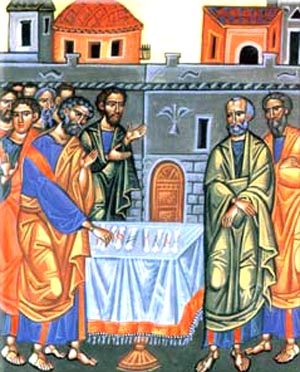 In those days Peter rising up in the midst of the brethren, said (now
the number of persons together was about an hundred and twenty): Men, brethren, the scripture must needs be fulfilled, which the Holy
Ghost spoke before by the mouth of David concerning Judas, who was the
leader of them that apprehended Jesus: Who was numbered with us, and had obtained part of this ministry... For it is written in the book of Psalms: Let their habitation become
desolate, and let there be none to dwell therein [Ps 69 (68):26]. And his bishopric [Vulg "episcopatum;" LXX "επισκοπήν, episcopen"] let
another take [Ps 109 (108):8]. Wherefore of these men who have companied with us, all the time that the Lord Jesus came in and went out among us, Beginning from the baptism of John, until the day wherein he was taken
up from us, one of these must be made a witness with us of his
resurrection. And they appointed two, Joseph, called Barsabas, who was surnamed Justus, and Matthias. And praying, they said: Thou, Lord, who knowest the heart of all men, shew whether of these two thou hast chosen, To take the place of this ministry and apostleship, from which Judas
hath by transgression fallen, that he might go to his own place. And they gave them lot, and the lot fell upon Matthias, and he was numbered with the eleven apostles.
In those days Peter rising up in the midst of the brethren, said (now
the number of persons together was about an hundred and twenty): Men, brethren, the scripture must needs be fulfilled, which the Holy
Ghost spoke before by the mouth of David concerning Judas, who was the
leader of them that apprehended Jesus: Who was numbered with us, and had obtained part of this ministry... For it is written in the book of Psalms: Let their habitation become
desolate, and let there be none to dwell therein [Ps 69 (68):26]. And his bishopric [Vulg "episcopatum;" LXX "επισκοπήν, episcopen"] let
another take [Ps 109 (108):8]. Wherefore of these men who have companied with us, all the time that the Lord Jesus came in and went out among us, Beginning from the baptism of John, until the day wherein he was taken
up from us, one of these must be made a witness with us of his
resurrection. And they appointed two, Joseph, called Barsabas, who was surnamed Justus, and Matthias. And praying, they said: Thou, Lord, who knowest the heart of all men, shew whether of these two thou hast chosen, To take the place of this ministry and apostleship, from which Judas
hath by transgression fallen, that he might go to his own place. And they gave them lot, and the lot fell upon Matthias, and he was numbered with the eleven apostles.
This passage clearly shows us the criteria in the minds of the earliest disciples, including the Apostles, even before Pentecost, of what would come to be called "apostolic succession." I've highlighted the key passages:
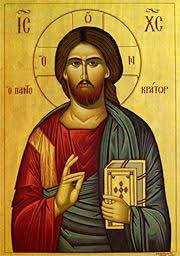 What all of this shows is the critical importance of the doctrine of apostolic succession for the Catholic faith. Jesus Christ gave specific teachings, spiritual gifts and powers, and a share in His own authority to the Twelve. They in turned passed the same "inheritance" on, intact and unchanged, to Matthias and others (e.g. Timothy, etc.). They in turn used the gifts for the same purpose (i.e. "ministry," namely, proclamation of the Good News, leadership of the Church in unity under Peter and his eventual successors, and the sacraments (e.g., baptism, Acts 2:38; Confirmation, Acts 8:14-17; Eucharist, Acts 2:46, I Cor 11:20; anointing, Jas 5:14-15; ordaining by laying on of hands, Acts 6:6, I Tim 5:22; witnessing marriages "in the Lord," I Cor 7:39; forgiving sins (but private auricular confession becomes normal for the use of this power only later), Acts 3:19, 26; 4:4...).
Therefore, we must recognize the fact that the Church exists from its beginning in Christ, in its fullness! (See CCC 771ff.) Christ gives everything necessary to the Church, in the beginning, completely. Now, granted, there is the historical work of "unpacking" the fullness of this gift, doctrinally, sacramentally and liturgically, and in evangelization of the whole world, and indeed that unpacking continues even today. But it is the unfolding of what has already been given, not the creation or invention of new divine gifts and revelations.
 It's precisely this apostolic succession that ensures that we're dealing with the same divine deposit of faith, and not inventing new things for ourselves. This is the essential argument of Irenaeus against Gnosticism, for example, and it has been deployed many times. If the Eucharist does not come from the hands of Christ Himself at the Last Supper, then the Church invented it, and it is not essential or divinely intended. If Holy Orders do not come from the hands and will of Christ Himself, through the Apostles (choosing Matthias, choosing the Seven in Acts 6, Paul choosing Timothy, etc), then the Church invented these roles and rules, and they are not essential or divinely intended. And so forth. This is exactly what we mean when we say in the Creed that we believe the Church to be "apostolic" as one of its defining realities.
This doctrine is part of the faith we receive in baptism, but it is not, in the strict sense, a "mystery." It is not impenetrable, nor does it exceed reason to consider in what way, precisely, as recorded in the New Testament and as lived out in the history of the Church, the concrete and tangible gifts of ministry were given by Christ to the Apostles, and were used by them in the first three decades of the Church, and were handed on intact by them to their successors, to be used still further for the building up of the Church, and so on. It is entirely rational and historical to grasp this part of the faith, and to apply it to the realities of the seven Sacraments, the Church's worship in general, the moral life, and the life of charity. The great apologists of the second century - e.g., Irenaeus, Justin Martyr, Tertullian, Clement of Alexandria - did exactly that in defending apostolicity against both Roman (pagan) syncretism and Gnostic mythologization, and others since have imitated them.
But contrast this understanding of faith against the most common assumption or model of the modern world, namely, "evolution." Modern thought implicitly assumes that everything follows the pattern of evolution gleaned from biology - of more primitive things becoming more complex over time, following certain common patterns and driven not by clear purpose or teleology, but by "survival" or "fitness" in a specific context, or by mere self-perpetuation in some form. Nearly every example of adaptation or change over time is squeezed in this evolutionary model, regardless of whether that actually helps understanding or not.
In terms of Church history, the imposition of the evolutionary model since the 19th century has led to many "non-traditional" arguments and conclusions, some of which are extremely damaging to the faith. For a lesser example, arguments that Mark's Gospel is earlier than Matthew's essentially boil down to the claim that it must be earlier because it's shorter (= the more primitive form). (There's a bit more to the argument than that, especially that so much of Mark is in Matthew, but not as much in reverse. Still, some good arguments for Matthew's being earlier are not given as much attention, because they don't fit the model.) There are many other, more serious ways in which the imposition of the evolutionary model distorts our understanding of faith. Most insidious is the idea that opposes "the Jesus of history" (primitive form) against "the Christ of faith" (later complex form), and ends with denying the divinity of Jesus itself!
In terms of the doctrine of apostolic succession, especially, the evolutionary model is completely the wrong one to use. Still, it is all too common to assume that more primitive forms of ministry must have preceded later forms, such that, in the first decades of the Church, it's not really possible to talk of "bishops," of Peter as "Pope," of the "sacraments" (apart from baptism, and the "breaking of bread," which is not yet the "Eucharist"), of a coherent body of doctrine (apart from a few elements labelled "the primitive kerygma"), etc. The dissimilarities between the earliest Church and the "post-Apostolic" Church are just too great, it is argued, to use these later terms and institutions to describe what's going on in the "primitive form" of the earliest Church. If these fit even in the earliest Church, then they're not really primitive forms - but, it's just impossible (it is assumed) to explain how fully developed forms of things can exist without more primitive predecessors.
But the problem with this conclusion is precisely that it is not consonant with faith in Christ, as noted above. If Christ did not will and give the essential aspects of these things to the Apostles, then they are not constitutive of the Church! If they are not willed and given by Christ to the Apostles, then there is no divine power behind them. Baptism doesn't really wash away sins, it's just a symbol. Priestly ordination doesn't really give a man a sacred power to change bread and wine into Christ's own Body and Blood, it's just a symbol of leadership, possibly even a corrupt and politicized one. The faith which is proclaimed doesn't have to be the same one that was proclaimed by earlier generations of Christians; it can even contradict what was previously believed. Even Scripture itself is undermined, since divine authorship is incompatible with the evolutionary model, and the Canon of the New Testament is therefore a political side-effect of Church history, and thus also one which a new politics could redefine. In the end, imposing an evolutionary model on the Church destroys apostolic succession and many other central doctrines, and makes us all into feckless false believers in empty, meaningless symbols.
I ended my homily with an exhortation to ask the intercession of St. Matthias and the other Apostles to increase our faith and strengthen our witness. If we don't believe in a robust doctrine of the Church and her dependance on Christ and the Apostles, if we don't accept that there is a true and unchanging apostolic deposit of faith which we must believe, live, and transmit to others unchanged, then in the end, we don't really believe in Christ as "the one Mediator between God and men." God save us from such a puny and selfish thing!
Here's the text, according to the Douay-Rheims version:
This passage clearly shows us the criteria in the minds of the earliest disciples, including the Apostles, even before Pentecost, of what would come to be called "apostolic succession." I've highlighted the key passages:
- Peter rising up... - It's Peter's role as the leader of the Twelve to take this action. Right from the beginning, Peter has a distinctive leadership among the Apostles, rooted in the events of Mt 16:18-19 ("You are Peter, and on this rock...") and Jn 21:15-17 ("Do you love me? Feed my sheep." (thrice)). The first several chapters of Acts bear this out. When Peter eventually becomes Bishop of Rome, this headship will be exercised by his successors, Linus, Cletus, Clement (e.g., in his Letter to the Corinthians), etc., and become the basis of papal authority over the whole Church.
- ...the scripture must needs be fulfilled... - The action described here is explicitly understood to be divinely inspired, both in the action of the Holy Spirit among the community prompting Peter's leadership, the community's responses, and the eventual choice of Matthias - note, again, this is before Pentecost! - and in the Scriptural foundation now revealed to be a prophetic preparation for this moment. God is in charge, and therefore the whole doctrine of apostolic succession is "of God."
- And his bishopric let another take... - The divine shape of the office of bishop is, in is essence, also rooted in Scripture and in the use Christ and (here) the Holy Spirit make of it. Peter uses Ps 109 to call the position held by Judas and now to be given to another the "episcopate." In the Greek and in the Latin, the connotation is not generic, such as "manager" for us today is generic, but something with more specific, even if still flexible, outlines, function, and purpose.
- ...one of these must be made a witness... - part of the essence of the office being given is that of witness, of one who can proclaim the Good News and the Kingdom as an eyewitness and credible testifier.
- ...a witness with us... - the unity of the Twelve in this mission, among themselves and together with Peter their leader, is paramount. This is still true today; see e.g., Lumen Gentium 18: "This Sacred Council, following closely in the footsteps of the First Vatican Council, with that Council teaches and declares that Jesus Christ, the eternal Shepherd, established His holy Church, having sent forth the apostles as He Himself had been sent by the Father; and He willed that their successors, namely the bishops, should be shepherds in His Church even to the consummation of the world. And in order that the episcopate itself might be one and undivided, He placed Blessed Peter over the other apostles..." etc.
- ...a witness with us of his resurrection. - The bedrock of the Gospel is the Resurrection of Christ from the dead. It's not just that Jesus worked miracles, or taught a moral law, or challenged corrupt or lax religious authority, but most especially that He died and rose for us, that makes Christianity what it is. One cannot proclaim or follow Christ without proclaiming and following the (hope of) the Resurrection. Knowing and following the Lord Jesus must make this kind of difference in one's life.
- ...take the place of this ministry and apostleship... - Again, Peter and the Apostles are giving this task of proclaiming a specific authority and shape with this sort of terminology. Their role in the Church is different from that of other disciples, even if they are still disciples first, as Ignatius of Antioch would say (Letter to the Romans, 4). "Ministry," in particular, although it can often be a more generic word, takes on a specific, non-generic connotation in relation to the Resurrection of Christ, and the proclamation of that Good News by the Church (see e.g. Paul's usage in Rom 15:16: "That I should be the minister of Christ Jesus among the Gentiles: sanctifying the gospel of God, that the oblation of the Gentiles may be made acceptable and sanctified in the Holy Ghost.") Here, Gospel proclamation and Eucharistic sacrifice are explicitly linked in "the ministry of Christ."
- ...he was numbered with the eleven apostles. - In other words, Matthias held an equal position with the other Apostles, under the leadership of Peter, even though he was given this position by them, and not, as they originally were or as Paul would be, by Christ Himself. The fullness of Christ gifts to the Apostles are still held by Matthias - and by extension, by all those chosen by the Apostles and by their successors.
Therefore, we must recognize the fact that the Church exists from its beginning in Christ, in its fullness! (See CCC 771ff.) Christ gives everything necessary to the Church, in the beginning, completely. Now, granted, there is the historical work of "unpacking" the fullness of this gift, doctrinally, sacramentally and liturgically, and in evangelization of the whole world, and indeed that unpacking continues even today. But it is the unfolding of what has already been given, not the creation or invention of new divine gifts and revelations.
This doctrine is part of the faith we receive in baptism, but it is not, in the strict sense, a "mystery." It is not impenetrable, nor does it exceed reason to consider in what way, precisely, as recorded in the New Testament and as lived out in the history of the Church, the concrete and tangible gifts of ministry were given by Christ to the Apostles, and were used by them in the first three decades of the Church, and were handed on intact by them to their successors, to be used still further for the building up of the Church, and so on. It is entirely rational and historical to grasp this part of the faith, and to apply it to the realities of the seven Sacraments, the Church's worship in general, the moral life, and the life of charity. The great apologists of the second century - e.g., Irenaeus, Justin Martyr, Tertullian, Clement of Alexandria - did exactly that in defending apostolicity against both Roman (pagan) syncretism and Gnostic mythologization, and others since have imitated them.
But contrast this understanding of faith against the most common assumption or model of the modern world, namely, "evolution." Modern thought implicitly assumes that everything follows the pattern of evolution gleaned from biology - of more primitive things becoming more complex over time, following certain common patterns and driven not by clear purpose or teleology, but by "survival" or "fitness" in a specific context, or by mere self-perpetuation in some form. Nearly every example of adaptation or change over time is squeezed in this evolutionary model, regardless of whether that actually helps understanding or not.
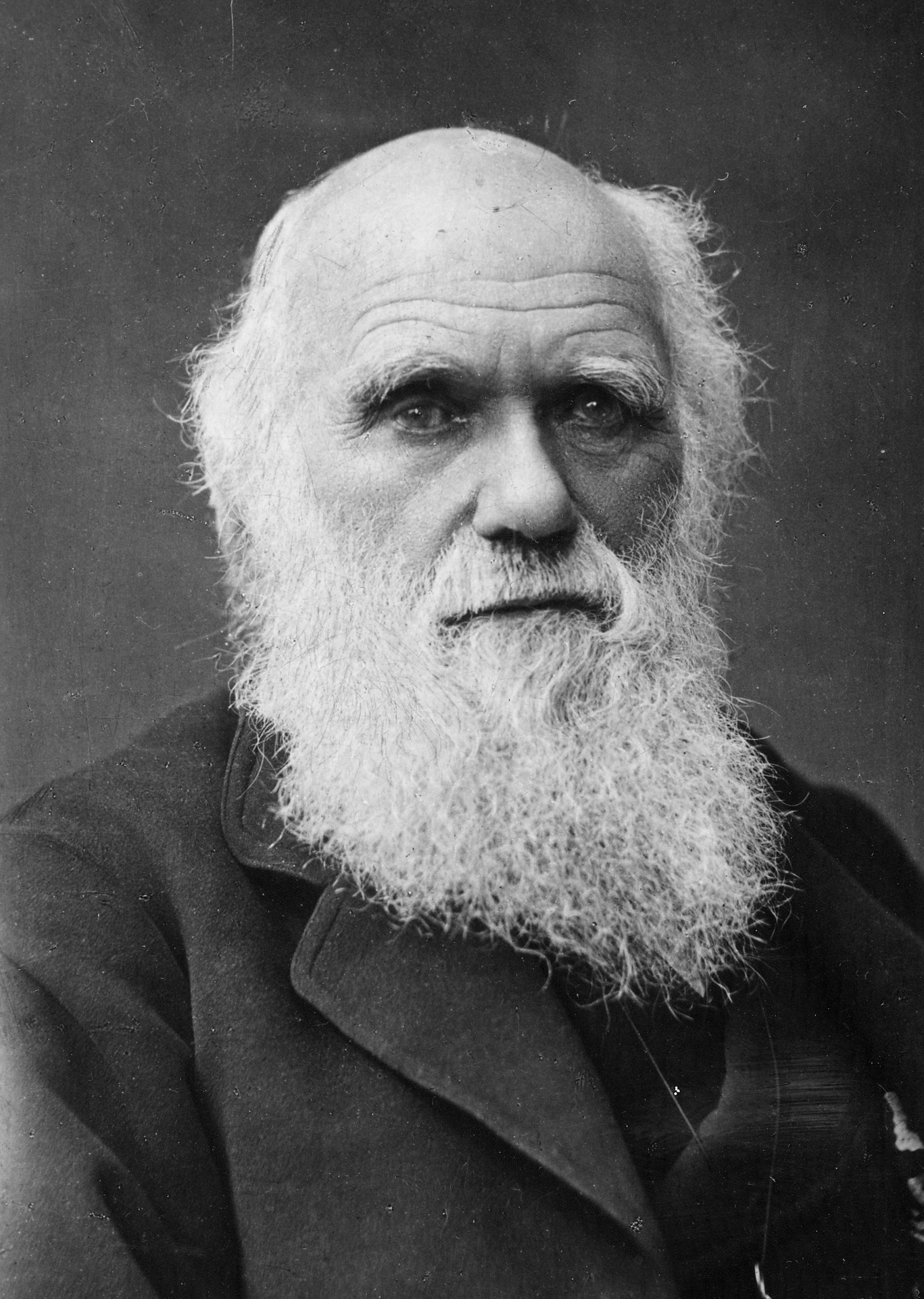 | |
| Darwin might look like a prophet, but he's a poor theologian. |
In terms of the doctrine of apostolic succession, especially, the evolutionary model is completely the wrong one to use. Still, it is all too common to assume that more primitive forms of ministry must have preceded later forms, such that, in the first decades of the Church, it's not really possible to talk of "bishops," of Peter as "Pope," of the "sacraments" (apart from baptism, and the "breaking of bread," which is not yet the "Eucharist"), of a coherent body of doctrine (apart from a few elements labelled "the primitive kerygma"), etc. The dissimilarities between the earliest Church and the "post-Apostolic" Church are just too great, it is argued, to use these later terms and institutions to describe what's going on in the "primitive form" of the earliest Church. If these fit even in the earliest Church, then they're not really primitive forms - but, it's just impossible (it is assumed) to explain how fully developed forms of things can exist without more primitive predecessors.
But the problem with this conclusion is precisely that it is not consonant with faith in Christ, as noted above. If Christ did not will and give the essential aspects of these things to the Apostles, then they are not constitutive of the Church! If they are not willed and given by Christ to the Apostles, then there is no divine power behind them. Baptism doesn't really wash away sins, it's just a symbol. Priestly ordination doesn't really give a man a sacred power to change bread and wine into Christ's own Body and Blood, it's just a symbol of leadership, possibly even a corrupt and politicized one. The faith which is proclaimed doesn't have to be the same one that was proclaimed by earlier generations of Christians; it can even contradict what was previously believed. Even Scripture itself is undermined, since divine authorship is incompatible with the evolutionary model, and the Canon of the New Testament is therefore a political side-effect of Church history, and thus also one which a new politics could redefine. In the end, imposing an evolutionary model on the Church destroys apostolic succession and many other central doctrines, and makes us all into feckless false believers in empty, meaningless symbols.
I ended my homily with an exhortation to ask the intercession of St. Matthias and the other Apostles to increase our faith and strengthen our witness. If we don't believe in a robust doctrine of the Church and her dependance on Christ and the Apostles, if we don't accept that there is a true and unchanging apostolic deposit of faith which we must believe, live, and transmit to others unchanged, then in the end, we don't really believe in Christ as "the one Mediator between God and men." God save us from such a puny and selfish thing!
 |
| "Christ taking leave of the Apostles," Duccio di Buoninsegna ca. 1311, in the Museo dell'Opera del Duomo, Siena |
Wednesday, April 4, 2012
In Defense of the Transitional Diaconate - theological argument from "sacra potestas"
In the historical argument for the transitional diaconate, we noted that the grades of Holy Orders have, from the beginning and always, been received in a "cumulative and sequential" manner. Even when grades (either minor or major) were skipped, this remained true - there is zero evidence that anyone anywhere was ever ordained to the diaconate after the priesthood, or the subdiaconate after the diaconate, etc., even if that grade had previously been skipped. This is important, because it shows that the apostolic pattern has been maintained always and everywhere, even if some of the details of which orders are included, and which not (cantors, catechists, gravediggers, deaconesses, etc.), took more time to decide. Thus, the standard hierarchy of four minor orders (porter, lector, exorcist, acolyte) and four major orders (subdeacon, deacon, priest, bishop) became fixed for the Latin Church even as early as the third century, and were invariably received in this order by roughly 700.
This apostolic pattern in favor of the transitional diaconate is also supported by two potent theological arguments. One is the "sacra potestas" argument. The other, which we won't broach in this post, is the unity of the sacrament argument.
We'll briefly look at the sacra potestas argument in five questions.
1. What is a "sacra potestas?" A sacra potestas is a "sacred power," that is, a piece of Christ's own divine power, given explicitly to the Apostles, and passed on by them to their successors and helpers by the laying on of hands and (eventually) the precise ritual of ordination to each grade.
These "sacred powers" are obviously rather important, because they are precisely that for which Christ gave us the sacrament of Holy Orders. At the very least, He willed the Church to have bishops to rule, to confirm, and to ordain; priests to confect the Eucharist and to forgive sins; and deacons to proclaim the Gospel. And, given what the Magisterium of the Church is in fact, we must also admit that the subdiaconate and the minor orders also were part of what He willed, at least for the temporality of the Church, if not for her divine constitution (i.e., they are consistent with the will of Christ, but not constituent of it, as bishops, priests, and deacons are).
The hierarchy of "sacred powers," then, is the essence, the "what," of Christ's divine ministry carried out by the Church. It guides how the sacraments are poured out for the people. It defines what is and is not "ecclesial" and "secular," in their particular spheres of human activity (see St. Augustine's "City of God," or Pope Gelasius's "two swords" doctrine, etc.). And it fundamentally shapes the pastoral care of the Church, without defining the "how" of that care dogmatically.
2. Does every grade have a "sacra potestas?" All the major orders have a sacred power. The ordination rites of the Latin Church - I'm looking at those used from roughly 700 until the reforms of Vatican II - were extremely clear about the power given to each grade, both in the words used, and in the symbols. (The current rites have shifted emphasis away from the powers of each grade, and so are not nearly so clear about them.) The power was explicitly conveyed, usually with the formula "Receive the power of... (Accipe potestatem...)" according to each grade.
Moreover, the sacred powers of the bishop and of the priest were clearly and dogmatically defined by the Magisterium, most coherently at Trent (especially Session XXIII), but not uniquely at that Council. Bishops have the fullness of the Holy Spirit, the apostolic power of governance of the Church, and the power to confirm and to ordain. In the ordination rite, the bishop-elect was ordained when the consecrating bishops each put their hands on his head and said, "Receive the Holy Spirit." The other powers were enumerating in the signs of the rite: chrismation of the hands, giving of the pastoral staff, ring, and miter, and giving of the Gospels (apostolic commission).
Priests have the power to confect the Eucharist "in persona Christi," and to absolve from sins (Confession and Anointing). In the ordination rite, the newly ordained priest was then told, "Receive the power to offer the sacrifice to God, and to celebrate Masses, as much for the living as for the dead."
The exact sacred power of the deacon (or the subdeacon) has never been dogmatically defined with this same precision. But it is dogmatic that the deacon has sacred power (Trent, Session XXIII, chapter 4; Lumen Gentium 18), and this has always been understood of the subdeacon, too, although not to my knowledge asserted dogmatically. Major Orders convey powers, and the lex orandi is the lex credendeni. Thus, what is true of bishop and priest in the ordination rite is also true of deacon (and subdeacon) in the same rite.
3. What is the deacon's "sacra potestas?" This has never, as far as I know, be dogmatically defined. However, for more than twelve centuries, every deacon ordained in the Latin Church was told, "Receive the power of reading the Gospels in the Church of God, as much for the living as for the dead." Nor is there any other tradition about the deacon's sacred power floating around out there. The Church has always believed, then, and expressed clearly in her lex orandi, that the deacon's sacred power is to proclaim the Gospel within the Church.
This is why reading the Gospel is the deacon's characteristic function within the Church's liturgy. This function is the most immediate manifestation of the deacon's sacred power, in exactly the same way that presiding at Mass and offering Confession and Absolution are the most immediate manifestations of the priest's sacred power. It should be noted, however, that while the priest always exercises his sacred power "in persona Christi," such that it is in fact Christ who changes bread and wine into His own Body and Blood, and Christ who says, "I absolve you...," there's no parallel tradition of the deacon acting "in persona Christi."
The other parts of the deacon's ministry, of sacrament and of charity, relate to the proclamation of the Gospel in fairly direct ways. The Gospel is at the root of all the Church's teachings, so catechesis and sacramental preparation are derivative forms of proclaiming the Gospel. Baptism is the beginning of receiving the Gospel in the Church, so deacons can baptize (e.g., Philip and the Ethiopian eunuch). The Gospel must be proclaimed in action as well as by words, so deacons "sacramentalize the service of the Church," as Pope John Paul II put it.
Again, this is exactly parallel to how the other parts of a priest's ministry relate to the Eucharist (e.g., Lumen Gentium 28 - see more below); and to how the various parts of a bishop's ministry in the "fullness of orders" fit together in the three-fold responsibility to govern, sanctify, and teach.
4. Where in the Gospel does Christ give the Apostles such a power? Lk 9:1-6 is the most clear (parallel passages in Mt 10 and Mk 6). The Twelve receive the power to "keryssein" (preach, herald), and they went out "euaggelizomenoi" ("gospelizing," proclaiming the Gospel or coming of the Kingdom). Luke is most interesting on this point, because in Lk 10, he recounts a separate commission for the 72 disciples, with a different vocabulary of what exactly they are commissioned to do. They are not given a power ("dynamis"), but told only to "say" ("legete," 10:8) the Kingdom is coming.
This same power to "kerygein" the "kerygma," and to "euaggelizein," that is, to proclaim the Good News, is precisely what is given by the Twelve to the Seven in Acts 6, by the laying on of hands. Philip, using this gift of sacred power, explicitly "kerygein-ed" Christ to the Samaritans (8:5), many of whom were healed of demons and baptized; and "euaggelizein-ed" Christ to the eunuch (8:35), who was also baptized. Stephen's trial before the Sanhedrin is unmistakably a "kerygma," completed in his martyrdom (baptism of blood), which led directly to the conversion of the witness Saul.
5. How does this defend the transitional diaconate? The end of the deacon's proclaiming the Gospel, in every ministerial context, is the relationship of the hearer with Christ. In the case of initial conversion, that means baptism first; in the case of the baptized, it means the Eucharist. Deacons proclaim in order to bring people to Christ, and the deepest union with Christ in this life is the Eucharist.
The wisdom of the Tradition is that proclaiming leads to deeper union with Christ. Priests also have the power of proclaiming, in order to make their ministry of uniting and reconciling (Eucharist and absolution) more accessible and more fruitful. The one leads naturally to the other. (This is as it must be, if there is in fact one priesthood of Christ in the New Covenant; but we needn't get into the unity argument here.)
Lumen Gentium 28 states most clearly the theological relationship of the power of proclaiming to the power of confecting and absolving, in the ministry of priests:
By the power of the sacrament of Orders, in the image of Christ the eternal high Priest, they are consecrated to preach the Gospel and shepherd the faithful and to celebrate divine worship, so that they are true priests of the New Testament. Partakers of the function of Christ the sole Mediator, on their level of ministry, they announce the divine word to all. They exercise their sacred function especially in the Eucharistic worship or the celebration of the Mass by which acting in the person of Christ and proclaiming His Mystery they unite the prayers of the faithful with the sacrifice of their Head and renew and apply in the sacrifice of the Mass until the coming of the Lord the only sacrifice of the New Testament, namely that of Christ offering Himself once for all a spotless Victim to the Father. For the sick and the sinners among the faithful, they exercise the ministry of alleviation and reconciliation and they present the needs and the prayers of the faithful to God the Father.
To be true priests of Christ, both in His image and "in persona," priests must preach the Gospel, shepherd the people to Christ, and celebrate the sacraments. They cannot mediate like Christ the Mediator without announcing the Gospel. They cannot unite the faithful to the sacrifice of the altar without proclaiming the mystery of Christ's death and resurrection. This is simply what it means to be a priest of Jesus Christ.
If, however, priests were not ordained deacons first, then they would never receive the sacred power of proclaiming. Like the 72 disciples, they would be able to "say" the Kingdom, but not "proclaim" it with "power and authority." The healing sacraments would be disconnected from the Word, quite contrary to what Luke clearly says in 9:1-6, or what the Church has clearly stated in LG 28. They would not be able to preach in the same ministerial acts as shepherding and celebrating; they would not be able to mediate like Christ, and they would not be able to unite the faithful to the sacrifice of the altar.
This apostolic pattern in favor of the transitional diaconate is also supported by two potent theological arguments. One is the "sacra potestas" argument. The other, which we won't broach in this post, is the unity of the sacrament argument.
We'll briefly look at the sacra potestas argument in five questions.
1. What is a "sacra potestas?" A sacra potestas is a "sacred power," that is, a piece of Christ's own divine power, given explicitly to the Apostles, and passed on by them to their successors and helpers by the laying on of hands and (eventually) the precise ritual of ordination to each grade.
These "sacred powers" are obviously rather important, because they are precisely that for which Christ gave us the sacrament of Holy Orders. At the very least, He willed the Church to have bishops to rule, to confirm, and to ordain; priests to confect the Eucharist and to forgive sins; and deacons to proclaim the Gospel. And, given what the Magisterium of the Church is in fact, we must also admit that the subdiaconate and the minor orders also were part of what He willed, at least for the temporality of the Church, if not for her divine constitution (i.e., they are consistent with the will of Christ, but not constituent of it, as bishops, priests, and deacons are).
The hierarchy of "sacred powers," then, is the essence, the "what," of Christ's divine ministry carried out by the Church. It guides how the sacraments are poured out for the people. It defines what is and is not "ecclesial" and "secular," in their particular spheres of human activity (see St. Augustine's "City of God," or Pope Gelasius's "two swords" doctrine, etc.). And it fundamentally shapes the pastoral care of the Church, without defining the "how" of that care dogmatically.
2. Does every grade have a "sacra potestas?" All the major orders have a sacred power. The ordination rites of the Latin Church - I'm looking at those used from roughly 700 until the reforms of Vatican II - were extremely clear about the power given to each grade, both in the words used, and in the symbols. (The current rites have shifted emphasis away from the powers of each grade, and so are not nearly so clear about them.) The power was explicitly conveyed, usually with the formula "Receive the power of... (Accipe potestatem...)" according to each grade.
Moreover, the sacred powers of the bishop and of the priest were clearly and dogmatically defined by the Magisterium, most coherently at Trent (especially Session XXIII), but not uniquely at that Council. Bishops have the fullness of the Holy Spirit, the apostolic power of governance of the Church, and the power to confirm and to ordain. In the ordination rite, the bishop-elect was ordained when the consecrating bishops each put their hands on his head and said, "Receive the Holy Spirit." The other powers were enumerating in the signs of the rite: chrismation of the hands, giving of the pastoral staff, ring, and miter, and giving of the Gospels (apostolic commission).
Priests have the power to confect the Eucharist "in persona Christi," and to absolve from sins (Confession and Anointing). In the ordination rite, the newly ordained priest was then told, "Receive the power to offer the sacrifice to God, and to celebrate Masses, as much for the living as for the dead."
The exact sacred power of the deacon (or the subdeacon) has never been dogmatically defined with this same precision. But it is dogmatic that the deacon has sacred power (Trent, Session XXIII, chapter 4; Lumen Gentium 18), and this has always been understood of the subdeacon, too, although not to my knowledge asserted dogmatically. Major Orders convey powers, and the lex orandi is the lex credendeni. Thus, what is true of bishop and priest in the ordination rite is also true of deacon (and subdeacon) in the same rite.
3. What is the deacon's "sacra potestas?" This has never, as far as I know, be dogmatically defined. However, for more than twelve centuries, every deacon ordained in the Latin Church was told, "Receive the power of reading the Gospels in the Church of God, as much for the living as for the dead." Nor is there any other tradition about the deacon's sacred power floating around out there. The Church has always believed, then, and expressed clearly in her lex orandi, that the deacon's sacred power is to proclaim the Gospel within the Church.
This is why reading the Gospel is the deacon's characteristic function within the Church's liturgy. This function is the most immediate manifestation of the deacon's sacred power, in exactly the same way that presiding at Mass and offering Confession and Absolution are the most immediate manifestations of the priest's sacred power. It should be noted, however, that while the priest always exercises his sacred power "in persona Christi," such that it is in fact Christ who changes bread and wine into His own Body and Blood, and Christ who says, "I absolve you...," there's no parallel tradition of the deacon acting "in persona Christi."
The other parts of the deacon's ministry, of sacrament and of charity, relate to the proclamation of the Gospel in fairly direct ways. The Gospel is at the root of all the Church's teachings, so catechesis and sacramental preparation are derivative forms of proclaiming the Gospel. Baptism is the beginning of receiving the Gospel in the Church, so deacons can baptize (e.g., Philip and the Ethiopian eunuch). The Gospel must be proclaimed in action as well as by words, so deacons "sacramentalize the service of the Church," as Pope John Paul II put it.
Again, this is exactly parallel to how the other parts of a priest's ministry relate to the Eucharist (e.g., Lumen Gentium 28 - see more below); and to how the various parts of a bishop's ministry in the "fullness of orders" fit together in the three-fold responsibility to govern, sanctify, and teach.
4. Where in the Gospel does Christ give the Apostles such a power? Lk 9:1-6 is the most clear (parallel passages in Mt 10 and Mk 6). The Twelve receive the power to "keryssein" (preach, herald), and they went out "euaggelizomenoi" ("gospelizing," proclaiming the Gospel or coming of the Kingdom). Luke is most interesting on this point, because in Lk 10, he recounts a separate commission for the 72 disciples, with a different vocabulary of what exactly they are commissioned to do. They are not given a power ("dynamis"), but told only to "say" ("legete," 10:8) the Kingdom is coming.
This same power to "kerygein" the "kerygma," and to "euaggelizein," that is, to proclaim the Good News, is precisely what is given by the Twelve to the Seven in Acts 6, by the laying on of hands. Philip, using this gift of sacred power, explicitly "kerygein-ed" Christ to the Samaritans (8:5), many of whom were healed of demons and baptized; and "euaggelizein-ed" Christ to the eunuch (8:35), who was also baptized. Stephen's trial before the Sanhedrin is unmistakably a "kerygma," completed in his martyrdom (baptism of blood), which led directly to the conversion of the witness Saul.
5. How does this defend the transitional diaconate? The end of the deacon's proclaiming the Gospel, in every ministerial context, is the relationship of the hearer with Christ. In the case of initial conversion, that means baptism first; in the case of the baptized, it means the Eucharist. Deacons proclaim in order to bring people to Christ, and the deepest union with Christ in this life is the Eucharist.
The wisdom of the Tradition is that proclaiming leads to deeper union with Christ. Priests also have the power of proclaiming, in order to make their ministry of uniting and reconciling (Eucharist and absolution) more accessible and more fruitful. The one leads naturally to the other. (This is as it must be, if there is in fact one priesthood of Christ in the New Covenant; but we needn't get into the unity argument here.)
Lumen Gentium 28 states most clearly the theological relationship of the power of proclaiming to the power of confecting and absolving, in the ministry of priests:
By the power of the sacrament of Orders, in the image of Christ the eternal high Priest, they are consecrated to preach the Gospel and shepherd the faithful and to celebrate divine worship, so that they are true priests of the New Testament. Partakers of the function of Christ the sole Mediator, on their level of ministry, they announce the divine word to all. They exercise their sacred function especially in the Eucharistic worship or the celebration of the Mass by which acting in the person of Christ and proclaiming His Mystery they unite the prayers of the faithful with the sacrifice of their Head and renew and apply in the sacrifice of the Mass until the coming of the Lord the only sacrifice of the New Testament, namely that of Christ offering Himself once for all a spotless Victim to the Father. For the sick and the sinners among the faithful, they exercise the ministry of alleviation and reconciliation and they present the needs and the prayers of the faithful to God the Father.
To be true priests of Christ, both in His image and "in persona," priests must preach the Gospel, shepherd the people to Christ, and celebrate the sacraments. They cannot mediate like Christ the Mediator without announcing the Gospel. They cannot unite the faithful to the sacrifice of the altar without proclaiming the mystery of Christ's death and resurrection. This is simply what it means to be a priest of Jesus Christ.
If, however, priests were not ordained deacons first, then they would never receive the sacred power of proclaiming. Like the 72 disciples, they would be able to "say" the Kingdom, but not "proclaim" it with "power and authority." The healing sacraments would be disconnected from the Word, quite contrary to what Luke clearly says in 9:1-6, or what the Church has clearly stated in LG 28. They would not be able to preach in the same ministerial acts as shepherding and celebrating; they would not be able to mediate like Christ, and they would not be able to unite the faithful to the sacrifice of the altar.
Wednesday, January 26, 2011
Other "Diaconal Categories" and Canon 277
My thanks to Dr. Peters for obtaining permission to post his 2010 article, "Diaconal Categories and Clerical Celibacy" (Chicago Studies 49, pp 110-116) on his website. I was disappointed I couldn't get my hands on it last year, and am very grateful to be able to read it now.
I completely agree with his initial premise, that the so-called "permanent" and "transitional" distinction in the diaconate is fundamentally inaccurate, and that there is only one order of deacons. His brief sketch of how canon law treats all deacons the same in their canonical obligations and limitations shows how true this is.
I would quibble, though, with what he identifies as the significant difference, which the labels "permanent/transitional" attempt to identify. He says that some deacons (mostly "permanent" ones) are married men, and some (mostly "transitional" ones) are not. But as he then shows, this distinction breaks down rather quickly, not least because there are now also married priests in the Roman Church.
To my mind, the difference in not married vs. unmarried state, but rather the intention (or its absence) to ask the Church to discern a vocation to the presbyterate. So-called "permanent" deacons are, for the most part, "permanently" in their ecclesial rank (i.e. the one order of deacons). So-called "transitional" deacons, again for the most part, enter the diaconal rank already having asked the Church to consider if they have the presbyteral vocation. And nearly always, the Church calls them to Holy Orders as deacons precisely because she does discern their presbyteral vocation, and intends to call them to this rank of the clerical hierarchy in the future. In this sense, these deacons (though of course they never cease to be deacons) "transition" (lit. "go through") to the priesthood. Despite their inaccuracies, the adjectives "permanent" and "transitional" do (badly) describe this difference of intention.
What are the implications of this for our current fracas about Canon 277?
If this is true, then Dr. Peters is not correct to identify the present moment as the "crisis" of the Latin tradition of clerical celibacy. The crisis has been and gone, and this is rather its denouement. The admission of married men to the diaconate, and more recently also to the priesthood in certain circumstances, cannot be a "challenge" to clerical celibacy, since the Church has already passed the judgment that its tradition of clerical celibacy could and would be changed. That judgment came when Lumen Gentium noted the possibility of ordaining married men into the clergy, and Pope Paul VI issued Sacrum Diaconatus, permitting the Church to do so. Once that decision was made, the Church changed the meaning of its tradition of clerical celibacy, and therefore of clerical continence (whatever canonical relationship between these two might obtain).
The 1917 Code of Canon Law held all clerics to celibacy, and in practice married men were not ordained. As Dr. Peters argued in his 2005 article, everyone then understood "clerical celibacy" to mean the same thing as "clerical continence." In 1917, these were not two separate canonical obligations (even though conceptually a necessary distinction is made between them), but one and the same obligation. With the admission of married men into the clergy, and the necessary change of the meaning of the tradition of "clerical celibacy," some necessary change in "clerical continence" must also be made.
Dr. Peters's core argument is that this change came in the form of a new distinction, in the 1983 Code, between celibacy and continence, as no longer the same obligation, but now as two separate obligations. I remain unconvinced by this argument, in part precisely because of how closely "clerical celibacy" and "clerical continence" were tied from the 11th to the 20th century. Given the intensity and unanimity of that tradition for nine centuries, it is simply inadequate to introduce and define this new distinction in such a tepid and ambiguous manner as the current wording of Canon 277.1.
Therefore I still would tend to think that there is a defensible argument to be made, to the effect that, for unmarried clergy (regardless of rank), the Church still interprets "clerical celibacy" and "clerical continence" in the same way it has since the Gregorian Reform (one and the same obligation); and that, for married clergy (regardless of rank), there is a new and separate way of interpreting "clerical celibacy" (married men may be ordained under thus-and-such circumstances, but not remarry after ordination) and "clerical continence" (the details still being worked out in practice, as mentioned previously, but not "perfect and perpetual").
I completely agree with his initial premise, that the so-called "permanent" and "transitional" distinction in the diaconate is fundamentally inaccurate, and that there is only one order of deacons. His brief sketch of how canon law treats all deacons the same in their canonical obligations and limitations shows how true this is.
I would quibble, though, with what he identifies as the significant difference, which the labels "permanent/transitional" attempt to identify. He says that some deacons (mostly "permanent" ones) are married men, and some (mostly "transitional" ones) are not. But as he then shows, this distinction breaks down rather quickly, not least because there are now also married priests in the Roman Church.
To my mind, the difference in not married vs. unmarried state, but rather the intention (or its absence) to ask the Church to discern a vocation to the presbyterate. So-called "permanent" deacons are, for the most part, "permanently" in their ecclesial rank (i.e. the one order of deacons). So-called "transitional" deacons, again for the most part, enter the diaconal rank already having asked the Church to consider if they have the presbyteral vocation. And nearly always, the Church calls them to Holy Orders as deacons precisely because she does discern their presbyteral vocation, and intends to call them to this rank of the clerical hierarchy in the future. In this sense, these deacons (though of course they never cease to be deacons) "transition" (lit. "go through") to the priesthood. Despite their inaccuracies, the adjectives "permanent" and "transitional" do (badly) describe this difference of intention.
What are the implications of this for our current fracas about Canon 277?
If this is true, then Dr. Peters is not correct to identify the present moment as the "crisis" of the Latin tradition of clerical celibacy. The crisis has been and gone, and this is rather its denouement. The admission of married men to the diaconate, and more recently also to the priesthood in certain circumstances, cannot be a "challenge" to clerical celibacy, since the Church has already passed the judgment that its tradition of clerical celibacy could and would be changed. That judgment came when Lumen Gentium noted the possibility of ordaining married men into the clergy, and Pope Paul VI issued Sacrum Diaconatus, permitting the Church to do so. Once that decision was made, the Church changed the meaning of its tradition of clerical celibacy, and therefore of clerical continence (whatever canonical relationship between these two might obtain).
The 1917 Code of Canon Law held all clerics to celibacy, and in practice married men were not ordained. As Dr. Peters argued in his 2005 article, everyone then understood "clerical celibacy" to mean the same thing as "clerical continence." In 1917, these were not two separate canonical obligations (even though conceptually a necessary distinction is made between them), but one and the same obligation. With the admission of married men into the clergy, and the necessary change of the meaning of the tradition of "clerical celibacy," some necessary change in "clerical continence" must also be made.
Dr. Peters's core argument is that this change came in the form of a new distinction, in the 1983 Code, between celibacy and continence, as no longer the same obligation, but now as two separate obligations. I remain unconvinced by this argument, in part precisely because of how closely "clerical celibacy" and "clerical continence" were tied from the 11th to the 20th century. Given the intensity and unanimity of that tradition for nine centuries, it is simply inadequate to introduce and define this new distinction in such a tepid and ambiguous manner as the current wording of Canon 277.1.
Therefore I still would tend to think that there is a defensible argument to be made, to the effect that, for unmarried clergy (regardless of rank), the Church still interprets "clerical celibacy" and "clerical continence" in the same way it has since the Gregorian Reform (one and the same obligation); and that, for married clergy (regardless of rank), there is a new and separate way of interpreting "clerical celibacy" (married men may be ordained under thus-and-such circumstances, but not remarry after ordination) and "clerical continence" (the details still being worked out in practice, as mentioned previously, but not "perfect and perpetual").
Subscribe to:
Posts (Atom)