Showing posts with label martyrdom. Show all posts

Friday, August 26, 2016

Lessons of the Early Church

I am the Catholic I am, in large part because of the martyrs of the early Church.  Their faith shamed my lack of faith, and understanding why they felt it was worth sacrificing the world for the sake of Heaven gave me the impetus to return to the Church as the only way to salvation.  Now, the Church needs their witness again, as the world around us seems primed to descend into a new paganism.

Martyrdom of St. Polycarp - "Away with the atheists!"
The Christian refusal to cooperate with pagan Roman society was rooted in three connected things: (1) The Roman Empire was inherently idolatrous.  Civic participation required participation in pagan ritual worship.  Oaths of office required the same, to be a soldier, a teacher, etc., not just for politicians.  (2) The reality of (unjust) persecution.  Romans persecuted Christians mostly because they saw Christian faith as "atheism" and "innovation," two things that threatened the stability and success of the Empire as a whole.  But as Tertullian famously pointed out in his Apologeticum, forcing Christians to worship other gods by violence made that worship ineffective for the good of the Empire.  (3) Idolatry and unjust persecution represented abuses of power by the Empire.  All worldly authority comes ultimately from God, as Paul argued.  Its uses must therefore conform at least to natural law standards of justice.  That the Empire abused its power in these (and other) ways justified Christian non-participation.

This line of argument, which permeated Christian thought for two centuries, has been buried under other understandings of the Church's relationship to a world seemingly cooperative rather than repressive.  The successful evangelization of the West and the creation of Christendom meant that we didn't need to think much about things that support a Christianity of non-participation.  But we have this treasure somewhere in the attic, not entirely lost or forgotten.  If we confront the increasingly hostile world only with the lessons of cooperative Christendom, we will probably lose.  We need the lessons of conflict as well, distilled from that earlier Christian experience of martyrdom.

Here are three of those critical lessons.

1. The world can never provide an avenue of salvation.  This should be obvious to Christ's disciples.  Only God can forgive sins; only God can save souls; our ultimate homeland is not earth, but Heaven.  But in contrast, it's a key plank of modernism, more or less obvious in all three of its branches (liberal democracy, Communism, and fascism), that the State aspires to become all-in-all, the "savior," in a sense.  In fascism, it does so directly.  In Communism, it does so as the mediating institution of the people's revolutionary will.  In liberal democracy, it does so more subtly, as the mediating institution between conflicts of rights and powers; but over time, its mediation inevitably expands and coems to dominate everything else. In all three, "scientism" promises imminent salvation from all the suffering and evils of the world.

Reductio ad absurdum of acceptance of modernism.
Any uncritical acceptance of modernism, then, implicitly accepts the (false) claim that the State exercises the highest and most decisive form of authority.  This claim tends to be not merely political, but also moral (i.e., abusing God-given authority!).  It rejects, more or less explicitly, a traditional, Bible-informed moral vision.  Acceptance of modernism therefore also means accepting the relegation of religion to the private sphere only.  The moral verities and priorities of the culture (which are, in terms of Christian Revelation, not true) come to be enforced as true, and any serious objection to them is firmly punished, at least socially (loss of status, respect, jobs, friends, etc), possibly legally (fines, jail, the police showing up in the middle of the night to investigate your family, etc), and even (sometimes) fatally. 

A different acceptance of modernism - no less absurd.
If we accept, even implicitly, that the world offers salvation within itself, we cannot be Christians.  We must stand firmly and intentionally in the core Christian claim of salvation through Christ alone.  Short of martyrdom, we do this especially in our (public) worship. Worship focused on God (as in traditional modes) demonstrates our conviction, and teaches spiritual salvation.  Worship focused on ourselves (as in "theater in the round" church design, or hymns all about us or making us speak in God's first person voice, etc.) opens the door to implicit acceptance of the lie of the world saves itself. 

2. Forms of idolatry must be clearly rebuked.  The Church of the martyrs taught clearly and consistently to all its members that cooperation with idolatry leads to loss of saving relationship with Christ.  It wasn't just pagan rituals that were identified, it was a whole host of public or civic activities or positions that were inherently idolatrous - teachers and soldiers, attending theater or civic games, etc etc.  This process of identifying and rebuking forms of participation in idolatry was very successful.

Pope St. John Paul II, for one example, did an excellent job throughout his pontificate (and even before) of doing the equivalent for us today.  We don't tend to think in terms of "idolatry" today, but the moral equivalent corrupting the Church and society is "secularism" (and similar labels).  A creeping domination of "secular" ideas in all spheres of life is intent on displacing any Biblical or natural-law-based cultural patrimony in the West.  This is especially apparent at the moment in issues of sexuality and family, or education policy, for example.  Pope St. John Paul II showed us how to parse the good and the bad in all such conflicts, and having identified the elements or ideas inconsistent with truth and therefore unacceptable to Christians, he rebuked ideas without condemning people. 


March for Life 2013 - excellent example of rebuking without condemning

The more we conform ourselves to the mores of the world, the more this creeping secularism insinuates itself into our faith.  Pope St. John Paul II told us constantly, "Be not afraid!"  Short of martyrdom, we can be clear and consistent in our rejection of modern forms of idolatry by fearlessly knowing the truth (virtue of faith), living the truth (virtue of hope), and speaking the truth (virtue of love) - always with charity and mercy.  It is, in fact, the visibility of the true charity and mercy of Christ in our lives that can attract those mired in worldly idolatry.

3. Faith in Christ is the greatest treasure.  If we look to the world for our salvation (even unconsciously), and fall into secular (idolatrous) modes of thinking, we will inevitably undervalue our faith.  This doesn't necessarily mean we will lose our faith entirely, but we won't have much motive for living it out consistently.  We will be "secular Christians," who, even when we go every Sunday to worship God, live the rest of the week as if Christ doesn't matter to us.  We will be "formed by the culture" rather than "formed by the Church."  We will have fallen into the trap of privatizing our faith - which is precisely what the totalizing, secular world demands of us.

Pope Benedict XVI Adoring our Lord Jesus Christ
Pope Benedict XVI understood this dynamic deeply.  So much of his pontificate was aimed at enflaming our faith anew, at helping us realize just what an inestimable treasure faith in Christ actually is.  Nobody is attracted to a faith that seems not to matter even to its regular practitioners!  Only those who are on fire for God have the chance to spread the fire to others.  Only those who, by how they live in every sphere of life, clearly value above other things the love of God can proclaim the value of that love. 


If it's true, finally, that "the blood of the martyrs is the seed of the Church," then our evangelizing efforts can only bear fruit if we first die to self, and to the world, and live only in Christ. 


Thursday, June 27, 2013

Thoughts and round-up of thoughts on yesterday's Supreme Court decisions about marriage

No doubt you have already read or heard about the two decisions yesterday, United States V. Windsor (striking down that part of DOMA which defined "marriage" and "spouse" as used in federal statutes), and Hollingsworth v. Perry (dismissing the suit brought by citizens of California to protect their own Constitution from the refusal of elected officials to uphold the law, Proposition 8, as passed).  Bishop Nickless's response is apt, for starters:

The Supreme Court of the United States announced two important decisions about the future of marriage in our country. In a 5-4 decision in United States v. Windsor, the Supreme Court struck down part of the Defense of Marriage Act (DOMA) as unconstitutional. In a separate 5-4 decision in Hollingsworth v. Perry, the Court dismissed the case, finding that the plaintiffs lacked standing to bring the suit.

We are, of course, most disappointed at the failure of the Court to uphold the dignity of marriage in both cases. If not corrected, the Court’s implicit repudiation of the role of both state and federal governments to regulate the institution of marriage for the sake of children’s wellbeing (and eventual moral health as citizens) will have long-lasting deleterious effects on our already tattered social fabric.

Marriage is not just any sexual relationship between consenting adults, nor the bestowal of social recognition and approval on such a relationship by government or society. Marriage has a clear nature, prior to the creation of positive laws to regulate it. Marriage is one specific and unique relationship: namely, the complementary union of the whole life of one man and one woman, for the sake of begetting children, and the good of the husband and wife. It is, of its nature, permanent, exclusive, total, and fruitful. Good laws recognize and defend the unique nature of marriage and the special privileges of parents and children that result from it. Such laws are “good” precisely because they foster what is best for children, and thereby for all of society.

We of the Roman Catholic Church, along with all those of every faith and of no faith who also recognize the unique dignity and purpose of marriage, will continue to pray and work, peacefully but unrelentingly, for the preservation in law and society of what marriage really is, and for the protection of all children unable to protect themselves.

There is a reference here to how abortion and contraception contribute to the destruction of marriage, because they make the activity of marriage only about the spouses - indeed, only about the satisfaction of a very narrow appetite - and not about the end (namely children) to which that activity is ordered, of its nature.  So if that's all that marriage means, it is quite reasonable that two men, or two women, or any number of men and women in any combination, ought to be able to have legal recognition of the manner in which they choose, publicly and formally, to seek satisfaction for the sexual appetite.  This becomes a reductio ad absurdum, but in our already absurd society, no one hears.

But the problems with the two decisions are much deeper than the failure to recognize the innate nature of marriage as such, the failure to protect parents and children, or the rejection of the idea that government has a vested interest in the health of families because healthy families produce healthy children, on the whole, and thus foster the common good.  The worst aspects of these decisions are not problems of fact, but of vision: they are not decisions of law, but of ideology.  Quite apart from the issue of marriage itself - and it's no small thing that the Court has, at every level, refused to recognize that marriage has its own nature, prior to the law - there is another underlying issue of democratic process, and the activism of legislating, indeed of moralizing, from the bench.  Justice Scalia in his dissent in Windsor excoriates the majority for this:

The Court is eager—hungry—to tell everyone its view of the legal question at the heart of this case. Standing in the way is an obstacle, a technicality of little interest to anyone but the people of We the People, who created it as a barrier against judges’ intrusion into their lives. They gave judges, in Article III, only the “judicial Power,” a power to decide not abstract questions but real, concrete “Cases” and “Controversies.” Yet the plaintiff and the Government agree entirely on what should happen in this lawsuit. They agree that the court below got it right; and they agreed in the court below that the court below that one got it right as well. What, then, are we doing here?
 

The answer lies at the heart of the jurisdictional portion of today’s opinion, where a single sentence lays bare the majority’s vision of our role. The Court says that we have the power to decide this case because if we did not, then our “primary role in determining the constitutionality of a law” (at least one that “has inflicted real injury on a plaintiff ”) would “become only secondary to the President’s.” Ante, at 12. But wait, the reader wonders—Windsor won below, and so cured her injury, and the President was glad to see it. True, says the majority, but judicial review must march on regardless, lest we “undermine the clear dictate of the separation-of-powers principle that when an Act of Congress is alleged to conflict with the Constitution, it is emphatically the province and duty of the judicial department to say what the law is.” Ibid. (internal quotation marks and brackets omitted).
 

That is jaw-dropping. It is an assertion of judicial supremacy over the people’s Representatives in Congress and the Executive. It envisions a Supreme Court standing (or rather enthroned) at the apex of government, empowered to decide all constitutional questions, always and every- where “primary” in its role.

Moreover, the decisions themselves appear to be contradictory.  The rules seem to bend in one direction in one case, to allow a third party to have standing (despite the fact, as Scalia points out, that there is no disagreement and no remaining injury, following the original judgment), while bending in the opposite direction to refuse a third party to have standing (despite the fact that the adversarial relationship is clearly present, and the additional fact, on which our whole constitutional theory rests, that the people always retain sovereignty over their elected officials).  One scratches one's head trying to figure out how this is not merely arbitrary interpretation of law and precedents to achieve a predetermined outcome.

Finally, one of the best responses I've seen is this one, begging for more consistent teaching and practice of the faith by those most visible as leaders of the Church, namely, bishops and priests.  The same goes for us as deacons, to the extent that we too are visible leaders (albeit in a slightly different sense) and official representatives (in the very same sense) of the Church.  Permanent deacons have a special opportunity as married clergy (as nearly all of us are) to witness to the sanctity of marriage, to preach it in every sense (action, catechesis, and liturgical preaching), and to lead the Church's much-needed revival of the virtues of marriage.  Buckle up, brothers, we are being called to the front lines.

Thursday, May 2, 2013

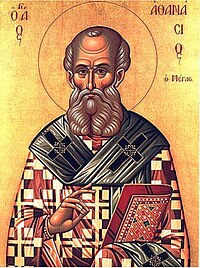
May 2, 2013 - St. Athanasius, Evangelization, the Unicity of the Church, and truth and goodness


Today is the feast day of St. Athanasius, whose chops as an opponent of heresy are second to none; and for that reason, and because of some of the reading I've been doing for the conclusion of our Christology class, as well as some recent news stories in which the Church is unnecessarily type-cast as the antagonist, I have been pondering a bit this phenomenon of increasing open, vocal, assertive, brazen anti-Christian rhetoric and posturing.  It certainly verges on discrimination, although it's not yet formally entrenched anywhere in the US, merely materially ascendant in certain places.


Dominus Iesus (2000) hit the nail squarely on the head in listing, in a very general sort of way, the nature of the erroneous thinking involved here:


4. The Church's constant missionary proclamation is endangered today by relativistic theories which seek to justify religious pluralism, not only de facto but also de iure (or in principle). As a consequence, it is held that certain truths have been superseded; for example, the definitive and complete character of the revelation of Jesus Christ, the nature of Christian faith as compared with that of belief in other religions, the inspired nature of the books of Sacred Scripture, the personal unity between the Eternal Word and Jesus of Nazareth, the unity of the economy of the Incarnate Word and the Holy Spirit, the unicity and salvific universality of the mystery of Jesus Christ, the universal salvific mediation of the Church, the inseparability "while recognizing the distinction" of the kingdom of God, the kingdom of Christ, and the Church, and the subsistence of the one Church of Christ in the Catholic Church.

The roots of these problems are to be found in certain presuppositions of both a philosophical and theological nature, which hinder the understanding and acceptance of the revealed truth. Some of these can be mentioned: the conviction of the elusiveness and inexpressibility of divine truth, even by Christian revelation; relativistic attitudes toward truth itself, according to which what is true for some would not be true for others; the radical opposition posited between the logical mentality of the West and the symbolic mentality of the East; the subjectivism which, by regarding reason as the only source of knowledge, becomes incapable of raising its "gaze to the heights, not daring to rise to the truth of being"; the difficulty in understanding and accepting the presence of definitive and eschatological events in history; the metaphysical emptying of the historical incarnation of the Eternal Logos, reduced to a mere appearing of God in history; the eclecticism of those who, in theological research, uncritically absorb ideas from a variety of philosophical and theological contexts without regard for consistency, systematic connection, or compatibility with Christian truth; finally, the tendency to read and to interpret Sacred Scripture outside the Tradition and Magisterium of the Church.

The question that I think this applies equally to, alongside the theological argument of the document itself, is why does this sort of thinking lead to specifically anti-Christian views, rather than merely to abandonment of Christianity in the cultural mainstream?  

One part of the answer is, as always, merely power.  The Church is pretty much the only coherent, readily articulated, and systematic point of view that stands against all of the "-isms" of the modern world, which are a threat to man or to the dignity of man.  And those various "-isms" would love to be able to defeat the Church in some way, both to be seen as more powerful, and to remove a strong opponent to their untrammelled domination.

But I think we shouldn't underestimate the consequences of muddled thought in and of itself.  Moral relativism is taught daily in our public schools, sometimes overtly, often by default; subjectivism is everywhere, with its stupid but powerful idea that truth is best recognized by an observable emotional response; the problem of "metaphysical emptying" is everywhere, quite apart from its Christological and ecclesiological implications, teaching people to accept lower order goods and to accept division in place of unity; eclecticism makes rational argumentation much harder than it needs to be; and so forth.  The net effect of all of these incomplete or inadequate ways of thinking is that most people are more or less convinced that what's good for them (often in a reductive and/or immediate sense) is the same as the common good; and therefore if others disagree with them, these others must be opposed to them, in the manner of trying to deny them some good.

St. Athanasius, for all his trials and struggles for the apostolic faith of the Church, didn't have this problem to deal with.  His opponents were, by and large, at least rational.  Arius thought he was solving the difficult problem of divine impassibility in the Incarnation.  Constantius thought he was doing what was good and necessary for the unity of the Empire.  That they were mistaken about these things didn't mean they couldn't be reasoned with, and indeed, eventually, the process of rational argument did secure the apostolic teaching and the rejection of Arianism fairly definitively.

In our evangelization today, at the individual level, I think we still need to do this.  How we talk about the faith, about our worldly and spiritual experiences, our consistency of word and action, and so on, constitute a kind of argument about most basic principles which is readily apparent to those around us.  And since people are not usually attracted by philosophy (a systematic presentation of the truth as ideas) but by holiness (a very different but no less systematic presentation of the truth in action), this is the right way to proceed. 

For those who think we are opposed to them personally merely because we disagree with them about ideas, it is the witness of consistent and joyful imitation of Christ by those who are known to them which has a chance to convince of our goodwill, even if conversion never follows. 

But at the wider level, this kind of personal approach doesn't work.  Here the clash of ideas and perceptions happens in a separate way from our personal witness.  Consistency and joy still matter here, but somehow it needs to be translated to that more impersonal level.  Here, martyrial witness is a powerful kind of argument.  Those who are willing to suffer for Christ (in whatever sense; in other words, to carry the Cross in daily life, without complaint, even when it is unjust) are appealing in this sense.  But the appeal rests on the coherence of the tradition or identity - in this case, the apostolic Tradition and the identity of bearing Christ's name as Christians.  If that tradition and identity is not generally perceived as internally coherent - in other words, if Christians are generally perceived to be disloyal to their own tradition, for whatever reason - at one level, it doesn't even matter if it's true or not - then the quality of the witness is badly undermined.

So as St. Athanasius knew so well, a well-formed Church is really necessary for the project of evangelization.  The weakness of our evangelization in the West in the past three-four generations is a symptom of insufficient internal coherence, consistency, joy, and zeal in bearing the Name and the Cross of our Redeemer.  John Paul II wrote the same:

Difficulties both internal and external have weakened the Church's missionary thrust toward non-Christians, a fact which must arouse concern among all who believe in Christ. For in the Church's history, missionary drive has always been a sign of vitality, just as its lessening is a sign of a crisis of faith. (Redemptoris Missio, 2)

The Catechism of the Catholic Church is a major step in the right direction.  So is a coherent anthropology at the root of our formation programs (four pillars of human, spiritual, intellectual, and pastoral formation).  So is the plethora of solid and orthodox Bible studies which use well all the tools available to us, without abusing the historical critical method in the manner which leads to supplanting Christian identity with some mere political ideology.  So is the new Missal's use of a consciously sacral language for worship.  So is Friday abstinence and the daily Rosary, as universally shared elements of a clear, Catholic identity.  And so on...  these are the things, when used well and often, that build up our conviction, our faith, our zeal, and therefore our ability to evangelize the increasingly unfamiliar world around us.


Thursday, February 21, 2013

The "Myth" of Early Christian Persecution?

The Cardinal Newman Society news feed has this item today, about Notre Dame theology professor, Dr. Candida Moss, promoting her new book, "The Myth of Persecution: How Early Christians Invented a Story of Martyrdom."  Here is her promotional:


Perhaps it would be an overreaction to this promotional material to express my surprise at what appears to be such a boldly revisionist project coming out of Notre Dame's theology department.  I've not read this book, and have only read about her previous book on the early martyrs; so I make no judgments about Dr. Moss's scholarship.  Certainly, I believe she would agree that there's nothing "mythic" or "invented" about the mere fact of persecution of Christians in the Roman Empire in the second and third centuries.  Consider, for example, Trajan's law criminalizing Christianity "for the name;" the numerous judicial records of exactly such trials and the death, imprisonment, or exiling of actual Christians that resulted; the mid-third-century imperial laws (Decius, Valerian) against Christian clergy, possession of the Christian scriptures, and so forth; the persecution of Diocletian and his successors in the East; none of these things have ever been in doubt as what actually happened.  (The question of why Roman authorities treated Christian in such ways is a separate one.  I'd agree with her that it wasn't "merely because they refused to deny Christ."  But why does she think these facts happened?)

This historical layer of the "Church of the martyrs" certainly does, as Dr. Moss claims, underlie in a persistent way the attitudes of Christians of other times and places to all sorts of circumstances.  In this sense, one could say there is a "myth" being formed.  But that's hardly unusual; all coherent groups of every kind, not only religious, recount shared experiences to reinforce identity and commitment.  There's no implication here, generally, that "myth" in this sense means "not true," or "distorting the historical record," or "politicized," or the like.  So it's difficult to see, based only on this promotional material and the rather provocative title, why it might follow that those implications are pertinent in this case.

But the promotion of the book as such, distinct from its scholarly content, does indeed seem to me obviously ideological ("... and they're not similarly persecuted today.")  Here is an advertisement for an upcoming lecture on the same, to be given in Washington DC in March.  Note the way in which word choice is used here to create an effect, and to qualify the meaningfulness of historical facts, in the direction of the very modern agenda already revealed in the video [my comments]:

According to cherished [w/c] church tradition, early Christians were uniquely [neither historians nor the Church have held the general position that only Christians were persecuted in the Roman Empire in Late Antiquity; one has only to look at e.g. Domitian] and systematically [the imperial laws against Christians in 251, 257, and 303-10 were as systematic as things got for the time] persecuted by a brutal [w/c] Roman Empire. Vast [w/c] numbers of believers were thrown to the lions or routinely [w/c] tortured or burned alive. In spite of these horrors, so the story goes [are we now to believe that no Christians were martyred by the Roman state?], these heroes of the early church chose to die rather than renounce their faith in God [indeed so; some Christians, then as now, possessed such courage and fidelity]. Such stories form part of the teaching of the church to the present day, inspiring some to acts of like courage in the face of modern hardships [this was and is an explicit goal in remembering the acts of the martyrs, just as the imitation of holiness is an explicit goal of remembering the lives of the saints]. Yet there is also the troubling [w/c] use of this heritage to silence the voices of those who act outside the perceived orthodoxies of the day [note the implication that all orthodox teachings are merely "perceived" and "of the day"].

In this lecture, Professor Candida Moss will address the true history [never before told! hidden for hundreds of year!] of persecution in the early church, and show how this history includes exaggerations and forgeries [this too is well known; yet we are able to evaluate the historical evidence and reliably hold that some subset of the evidence* is not exaggerated, forged, or added in later centuries] that eventually became part of the rhetoric [w/c] of the church. Moss will also address the question of the legacy [what she refers to in the trailer above as "dangerous," "especially in the language of the religious and political right"] of this history; a legacy that has animated the acts of some within the religious world to exclude [w/c; the great sin of post-modernity] those who would challenge [w/c] their hegemony [w/c].

What I find most arresting in this is how blatantly partisan such an avenue of promotion is, while still holding out the promised scholarship as properly scientific history.  Because we know, of course, that rational, right-thinking progressives never make use of a religious heritage to suggest false or unhistorical connections between the past and the present:


(Any allusion to other historical persons, living, dead, or resurrected from the dead, is purely a figment of the viewer's bigoted imagination.)
Just in the promotional material, then, one seems meant to conclude that, since the Roman Empire is not really a persecutor of Christians, but made to seem so by (some) Christians intent on preserving their "hegemony," so too the modern states of the West can and should similarly exclude Christian persons and Christian ideas (the "dangerous" "religious and political right") from the public square.  One cannot suggest that such exclusion might seem to violate otherwise compelling norms of law and fundamental rights, in a manner reminiscent of the history of persecution of Christians at other times and places, because of the implication that this is not really "persecution," for the same reasons it wasn't in late antique Rome.  And it's left dangling as a further implication that such exclusion is necessary, lest Christians rebuild that same hegemony that (the now well-worn ideology continues) has been dismantled, at such heroic cost, by the forces of egalitarian Reason in the last three or four centuries.

This maneuver (again, just in the promotional material, since I haven't read the book itself), strikes me as highly damaging to the faith of believers.  It calls into serious doubt the accepted meaning of an important period of the Church's history, and therefore also the authority of the tradition (or even Tradition) which has accepted and "mythologized" (if you like) that meaning.  It challenges the use of that authority by the current leaders of the Church (in the Catholic Church, at least, the apostolic authority of the bishops) who have been increasingly outspoken against precisely that impetus of exclusion, common in the West for two generations.  And it undermines the solidarity of Christians with the victims of much worse injustices (many of them, of course, Christians themselves) by falsely dividing different forms of abuse of power according to ideological preferences. 

I hope the book itself will offer much better than this; this is certainly not exemplary of the love of truth and pietas to one's students which Notre Dame and Yale taught me.

* Herbert Musurillo, The Acts of the Christian Martyrs (Oxford, 1972), is an excellent example of exactly such an effort to sift true historical accounts of early Christian martyrs from later pious fictions, and is generally accepted by historians as basically accurate.

Monday, December 17, 2012

Cultural Hypocrisy

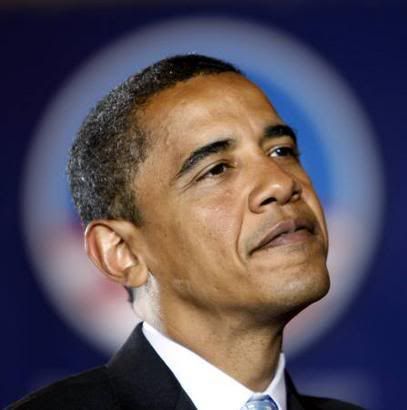
President Obama's speech from Sandy Hook on Sunday night exposes the fundamental hypocrisy of our culture.  Here's a salient quote:

It comes as a shock at a certain point where you realize, no matter how much you love these kids, you can’t do it by yourself.  That this job of keeping our children safe, and teaching them well, is something we can only do together, with the help of friends and neighbors, the help of a community, and the help of a nation.  And in that way, we come to realize that we bear a responsibility for every child because we’re counting on everybody else to help look after ours; that we’re all parents; that they’re all our children.  This is our first task — caring for our children.  It’s our first job.  If we don’t get that right, we don’t get anything right.  That’s how, as a society, we will be judged.  And by that measure, can we truly say, as a nation, that we are meeting our obligations?  Can we honestly say that we’re doing enough to keep our children — all of them — safe from harm? [emphasis added]


This is, of course, a fundamental truth.  The whole point of "culture" is to raise children into virtuous, competent adults, and to reinforce by the continuous formation of adults the same virtues being passed on, in a manner consistent enough across time and space to be a shared and unifying vision of the Good.  Successful cultures are successful, stable, and enduring exactly in these terms.  People come to share this commitment to the Good that is envisioned, because it is demonstrably a Good, and because it tests positively against human experience.

But in this speech, Obama moves too easily from truth to truism, and thence to misdirection.

The truism is that threats of violence against our children come from outside, from disordered elements of the culture (like mental illness, or the apparent randomness of many forms of violence):

We gather here in memory of twenty beautiful children and six remarkable adults.  They lost their lives in a school that could have been any school; in a quiet town full of good and decent people that could be any town in America....  As these difficult days have unfolded, you’ve also inspired us with stories of strength and resolve and sacrifice.  We know that when danger arrived in the halls of Sandy Hook Elementary, the school’s staff did not flinch, they did not hesitate....

This dichotomy is partly true, at the level of personal experience, and yet wholly false, morally.  Obama alludes to this falsity when he says:

[T]his job of keeping our children safe, and teaching them well, is something we can only do together, with the help of friends and neighbors, the help of a community, and the help of a nation.  And in that way, we come to realize that we bear a responsibility for every child because we’re counting on everybody else to help look after ours; that we’re all parents; that they’re all our children.

But if that's true, then there's not an "us" who try to protect children from violence and raise them in virtue, and a "them" who try the opposite.  Those who harm our more vulnerable members are also "us."  But from  the ambiguity of the superficial truism, the speech is able to misdirect:

In the coming weeks, I will use whatever power this office holds to engage my fellow citizens — from law enforcement to mental health professionals to parents and educators — in an effort aimed at preventing more tragedies like this.  Because what choice do we have?  We can’t accept events like this as routine.  Are we really prepared to say that we’re powerless in the face of such carnage, that the politics are too hard?  Are we prepared to say that such violence visited on our children year after year after year is somehow the price of our freedom?

The misdirection here is actually three-fold.

First, there is the straw man of opposing "freedom" with "preventing more tragedies like this."  Politically, this is a false dichotomy because freedom - true freedom, virtuous freedom, not license (as "freedom" is often cast) - is what makes a culture strong and resilient.  Only a society characterized by humility, fortitude, and prudence is capable of reining in the impulses to violent brutality, without resorting to strict tyranny.  Morally, this is a straw man because moral freedom is essential to love, and to the meaningfulness.  Without moral freedom, life just is; neither good nor evil, but simply to be endured.

Second, there is the implied "big government" thinking, that only (or perhaps, best) the federal government is equipped to deal effectively with this problem.  This is typical of this president's work (bailouts, Obamacare, etc).  This is misdirection in this context to the extent that it belies the need for vigorous subsidiarity in making and enforcing good laws, and so forth.  (The whole question of proper care for the mentally ill can be hooked onto this point.)

Third, and most blatantly, there is the elephant in the room of abortion, and indeed of the whole contraceptive mentality of behavior without natural consequence.  Mr. Obama said, "Can we honestly say that we’re doing enough to keep our children — all of them — safe from harm?"  Abortion is the most grievous form of violence visited upon our children - in scale (roughly 3000 children murdered daily), in social damage (emotional consequences, lives and relationships gravely harmed, etc), and in moral damage (abortion justifies other grave evils, because if this person's humanity can be denied, then so too can this one's).  Abortion is a fatal cancer at the heart of our culture.

A society that teaches people that actions don't have natural consequences is doomed.  Likewise, a society that teaches that some people aren't really human.  A healthy society, by contrast, teaches natural virtue, respect for human dignity regardless of "utility" or circumstances, and the truth that love requires self-sacrifice.  A society that doesn't "accept events like this as routine" is one that also condemns abortion, adultery, promiscuity, infidelity; that also upholds chastity, the sanctity of marriage, and the high dignity of the vocation to parenthood.  Hence my opening comment about fundamental hypocrisy.  It is viciously hypocritical to condemn violence against children in a school, and to propose sweeping societal changes to counter it, while also promoting systematic, devastating violence against children in the womb, and resisting efforts to counter it.

Tuesday, November 27, 2012

Papal Nuncio, Archbishop Vigano, on Persecution of the Church in the Modern World - updated 11/28

Earlier in November, the Institute for Church Life at the University of Notre Dame hosted a conference on the current global persecution of Christians.  Archbishop Vigano, the Apostolic Nuncio to the United States, was the keynote speaker.  (Additional presentations available.)  Here's his excellent, accurate, and unapologetic talk (and as PDF):


Here's his thesis (italic text indicates quotation from the PDF linked above): [I]t is crucial to see that in the world of the present age, persecution of the faithful can manifest itself in a variety of forms, some obvious, but others less so. While it is necessary to remind ourselves of the obvious, we must also consider the not-so-obvious, for great danger to the future of religious freedom lies with religious persecution that appears inconsequential or seems benign but in fact is not. (emphasis added)

In this talk, he separates the interrelated ideas of martyrdom, persecution, and religious freedom.  Martyrdom, he notes, depends on two things: the fidelity of the believer who refuses to compromise the demands of the faith, and the intention of the persecutor: [T]he intention underlying the objectives of the persecutor is important to understand: it was to eradicate the public witness to Jesus Christ and His Church. An accompanying objective can be the incapacitation of the faith by enticing people to renounce their beliefs, or at least their public manifestations, rather than undergo great hardships that will be, or can be, applied if believers persist in their resistance to apostasy. The plan is straightforward: if the faith persists, so will the hardships. (emphasis added)  He also notes that the "hardships" can be not only legal or physical, but also social (ridicule, social isolation, marginalization).

Persecution is a slightly larger set of actions than those that end in martyrdom: Persecution is typically associated with the deeds preceding those necessary to make martyrs for the faith. While acts of persecution can mirror those associated with martyrdom, other elements can be directed to sustaining difficulty, annoyance, and harassment that are designed to frustrate the beliefs of the targeted person or persons rather than to eliminate these persons. It would seem, then, that the objective of persecution is to remove from the public square the beliefs themselves and the public manifestations without necessarily eliminating the persons who hold the beliefs. The victimization may not be designed to destroy the believer but only the belief and its open manifestations. From the public viewpoint, the believer remains but the faith eventually disappears. (emphasis added)  This is just the same distinction between "public" and "private" faith that we are seeing, as an attempt to change the meaning of the First Amendment's guarantee of freedom of religion (i.e., limiting it to freedom of worship only, but not freedom of practice of all the moral consequences of that worship).

In opposition to martyrdom and persecution, Religious freedom is the exercise of fidelity to God and His Holy Church without compromise.  He rightly makes the classic distinction, best made by St. Augustine in the "City of God," between the "two cities" of God and of man: At the core of this fidelity is the desire to be a good citizen of the two cities where we all live: the City of Man and the City of God.  Baptism makes us citizens of the City of God, but we remain "sojourners" in the world.  Worldly justice, then, requires making the worldly city resemble more (it will never do so perfectly) the true freedom and true justice of the heavenly city.  Freedom of religion, then, is simply that set of attitude and priorities, enshrined into positive law to the extent necessary, that allows one to be "good citizens" of both cities at the same time.  Without religious freedom, the inherent difference between the two cities results in opposition, hostility, and therefore persecution and martyrdom.

Abp Vigano puts his finger right on this point: The problem of persecution begins with this reluctance to accept the public role of religion in these affairs, especially but not always when the protection of religious freedom involves beliefs that the powerful of the political society do not share.  This is precisely the heart of the issue.  A secular worldview assumes that religion is, in itself, problematic for the "city of man."  It rejects that religion in general, and Christianity in particular, ought to influence the culture, the laws, the State, etc., in the direction of "resembling more" Christ's true freedom and true justice.  Thus, the more forceful or radical the secular view, the more it is at odds with the Church; the less it can value religious freedom (replacing it with mere "freedom of worship" and vacuous "toleration"), and the more likely it is to persecute Christians, even to the point of martyrdom.

Abp Vigano lists several current examples of that sort of persecution, not yet to the point of martyrdom, and builds to this crescendo: An Englishman who found his way to the United States, Christopher Dawson (who became a Catholic in his early adulthood) still reminds us that the modern state, even the democratic one, can exert all kinds of pressure on authentic religious freedom. Dawson insightfully explained that the modern democratic state can join the totalitarian one in not being satisfied with “passive obedience” when “it demands full cooperation from the cradle to the grave.” He identified the challenges that secularism and secular societies can impose on Christians which surface on the cultural and the political levels. Dawson thus warned that “if Christians cannot assert their right to exist” then “they will eventually be pushed not only out of modern culture, but out of physical existence.” He acknowledged that this was not only a problem in the totalitarian and non-democratic states, but “it will also become the issue in England and America if we do not use our opportunities while we still have them.” (citing Christopher Dawson, “The Challenge of Secularism”, Catholic World (1956); emphasis added)

He then cites the same point made by Pope John Paul II in Christifideles Laici (1988) and Centesimus Annus (1991), and concludes very strongly: We are still a far cry from fully embracing the Holy Father’s encouraging exhortation [i.e. Christifideles Laici] when we witness in an unprecedented way a platform being assumed by a major political party, having intrinsic evils among its basic principles, and Catholic faithful publicly supporting it. There is a divisive strategy at work here, an intentional dividing of the Church; through this strategy, the body of the Church is weakened, and thus the Church can be more easily persecuted.  His last two paragraphs are an exhortation to resist this division, remain united to the life-giving vine that is Christ, and to protect religious freedom by living the Faith deeply and authentically in every area of our life.

Update (11/28) - The Holy Father touched on the theme of making the city of man resemble more the city of God, in his Wednesday audience today.  His approach is that of evangelization: Speaking about God, therefore, means enabling others to understand through words and acts that God is not a competitor in our existence but rather its true guarantor, the guarantor of the greatness of the human person. Thus we return to the beginning: speaking about God means communicating, with power and simplicity, through words and the life we lead, that which is essential: the God of Jesus Christ, the God Who showed us a love so great that He took on human flesh, died and rose again for us; the God Who asks us to follow Him and to allow ourselves to be transformed by His immense love in order to renew our lives and our relationships; the God Who gave us the Church, to allow us to journey together and, through the Word and the Sacraments, to renew the entire City of Man so that it might become the City of God.  Anthony Esolen also had a relevant article in Crisis Magazine recently.


Wednesday, October 17, 2012

Homily for Oct 17 - St. Ignatius, Bishop and Martyr

In the second century, the Roman Empire had a growing problem.  There were increasing numbers of these "Christians" everywhere, and they just would not cooperate with how the Empire did things.  And the Romans simply could not understand why the Christians held themselves apart like that.

Emperor Trajan
About the year 106, the Emperor Trajan, in thanksgiving for a great military victory, passed a law that all the people of Syria should offer a sacrifice to the traditional Roman gods.  But in the middle of Syria was the capital, Antioch, and the Bishop of Antioch was Ignatius.  St. Ignatius preached loudly, in his pulpit and in the streets, that Christians could not obey this law.

The Romans simply did not understand this.  Why couldn't the Christians do what everybody else did - offer the public sacrifice once, and then go home and follow their own religion in private?  Why couldn't the Christians compartmentalize their faith, like everybody else?

In our own time, our government increasingly acts the same way toward Christians.  There are many examples, but one of the most important instances is the HHS Mandate: that all employers must offer their employees, in their health insurance plans, the benefits - and "benefits" are in quotation marks - of contraception, sterilization, and chemical abortions.  And our government simply doesn't understand why we Christians cannot compartmentalize our faith, and perform our economic duties over here, in accordance with the law, and our religious duties over there, in private, however we want.

In the Gospel today, Jesus teaches us that, "Unless a grain of wheat falls to the ground and dies, it remains only a grain of wheat.  But if it dies, it brings forth much fruit." (Jn 12:24-5)  St. Ignatius used this very Gospel passage in a letter to the Church in Rome.  He pointed to himself, saying, "I am the grain of wheat."  He called the teeth of the wild animals which would kill him in the arena, the "millstones" grinding the wheat into bread, a bread like Christ's own Body, that would nourish the faith of others.  He wanted to be that bread, to nourish the Church and to change the Roman world.

St. Ignatius in the arena
And that's exactly what he did as a martyr.  The witness of his death for the crime of being a Christian and not committing idolatry nourished the faith of others.  It took two hundred years, and thousands of martyrs dying for Christ, to change the Roman Empire, but it happened.  In the fourth century, the Roman Empire became the Christian Roman Empire. 


That's why, when our own government was founded in the 18th century, it could be founded as a Christian government.  But if we want to keep it a Christian government and a Christian country, we need to change the hearts and minds of our neighbors, by the witness of our lives.  We may not be called to "red" martyrdom, but we still preach about Christ, or not, by the actions of our lives every day.  Our actions show what are our priorities, and the daily witness of our charity shows whether we love God and neighbor. 

We are the only Christ, that those who don't yet know Him, can learn about Him by.  We are the grains of wheat, and our daily witness for Him grinds us into bread.  Will we be a tasteless and worthless bread of no value?  Or will we be the bread that we really are as the Body of Christ - the bread that nourishes the faith of others?

Thursday, May 17, 2012

An excellent example of what martyrdom really means, here and now - Updated 5/24

I saw this both on Facebook and on Fr. Z's WDTPRS.  The original is here. Quite apart from the specific issue of defending traditional marriage, which is of course crucial to a healthy society, this video shows what martyrdom in the United States today really looks like.  Christians who are willing to speak up in public for traditional social values and mores (i.e., in favor of the sanctity and dignity and necessity of life, marriage, children, virtue, and so forth) are being targeted with significant forms of moral violence ("haters," "bigots," etc., and the consequences in loss of friends, loss of jobs or opportunities, etc.), and even physical (as below) violence.  So far, the moral violence far outweighs the physical, but for how long?


This kind of public attitude in favor of forcibly silencing one view, merely because that view is deemed unacceptable by a self-appointed cultural elite, is of one piece with the more formal and deliberate (attempted) attacks on the rights of conscience and the free exercise of religion we're also currently seeing.  Popular intolerance of divergent views justifies and strengthens political attacks on religion; these in turn feed popular resentments, especially by trying to make people committed to God seem intransigent and unreasonable merely for their fidelity.  This kind of cultural/political "feedback loop" is obviously very dangerous, the more so as it becomes more impervious to reason.

For us as clergy (or as future clergy), the challenge is two-fold.  First, we need to cultivate and practice a fidelity to the Church and her teachings, and a courage for the proclamation of the Gospel, that will allow us to be God's true servants even in the face of such a cost.  We do no one a favor by changing or silencing the truths of salvation in Jesus Christ, even when others don't want to hear them.  Second, we need to proclaim the Gospel and defend its truth, without demonizing those who demonize us.  If we engage in similar moral violence, we appear hypocritical and undermine the apostolic mission we are trying to carry out.  Both of these challenges require that we seek deeper prayer, interior life, and union with Christ as our foundation.

Update (5/24) - Another, related, kind of martyrdom: a prohibition on being able to celebrate the holy sacrifice of the Mass with prison inmates.  The story makes it sound like the priest is the primary victim, but in fact, those who are deprived of his priestly service are even more "martyred."

Wednesday, May 2, 2012

Homily, Memorial of St. Athanasius (May 2)

This is more or less what I preached today, for the Memorial of St. Athanasius; it's not word for word, but I think it's pretty close.  The Gospel is John 12:44-50.

There are two kinds of unity we experience in this life. 

The first is the kind that Jesus is talking about in today's Gospel.  It is the unity of light with light, and against darkness.  It is the unity of God the Son with God the Father in their one divinity.  It is the unity of Jesus with us also, in His humanity.  It is the kind of unity we call "communion."

The invitation to communion with Jesus in the Church is given to everyone.  But, as Jesus says, not everyone accepts it.  Jesus does not condemn those who reject His word.  But in the same way that light is clearly divided from darkness, His word judges those who do not accept.  When a light is turned on, it is on, and there is no darkness; when the light is off, it is off, and there is no light.  This is how His word judges; either one accepts it, and is united with Christ, or not.

The second kind of union we experience in our families, towns, and nation.  It is a political and social unity, of the kind we call "community."

"Community" is not the same as "communion."  At its best, political or social unity can reflect the light of Christ from our communion with Him.  We want to have a Christian nation, built on the foundation of His light and His word.  We want to have Christian families, built on the same foundation.  But that foundation only comes from communion.  It's not inherently part of our communities.

So, when our communities go bad, they can go very bad indeed.  At their worst, when communities do not reflect the light of Christ, all the grave social evils of history, and of today, creep in: evils such as slavery, racism, abortion, the erosion of marriage, and the trampling of religious freedom.  These are the works of darkness, not of the light.

St. Athanasius, whose feast we celebrate today, is a great example to us of how to fight against the darkness in our communities.  He was a great champion of the light and the truth of Christ, when the government of his day, the Roman Emperor Constantius, adopted the falsehood of Arianism to promote political unity.  Arianism denies the full divinity of Christ; and so it denies that "whoever sees me, sees the one who sent me."  It denies the communion of the Son with the Father, and therefore of the Son with us.  Athanasius would not agree to this falsehood as a basis for public policy, and denounced it constantly - so much so that he was exiled from his see on five separate occasions, totally 17 years.  This was a heavy cost to pay, but he paid it willingly, because he kept his communion with Christ and the Church as his solid foundation.

Our own government today is doing exactly the same thing - attempting to build political unity on falsehood.  The HHS Mandate threatens our religious freedom.  It tries to play our community against our communion, which is always a sign of the darkness creeping in.  Our bishops are fighting against this, fighting to keep the light of Christ reflecting in our community, too. 

One of the things that supported St. Athanasius was the faith of his people.  I ask you to support our bishops.  You do this most and best just as you are right now - by coming to Holy Mass, and receiving the sacraments, especially Confession and the Eucharist; by contemplating the Word of God, and praying on it at home; by living your faith courageously with your family, and at work, and in the world.  This is what we are called to by our baptism; and when we live this way, as holy people of God, we enable our bishops to be more courageous and forthright in defending the light and the truth of Christ.

May the example of St. Athanasius strengthen our faith in the light and the truth of Christ, and encourage us to live it with more zeal every day.

Friday, September 24, 2010

"I'm a Christian, kill me too!!"

In 258, when Bishop Cyprian was arrested and tried for being a Christian, his sentencing in the marketplace of the great city of Carthage was witnessed by many thousands of citizens, including no doubt many hundreds of his flock. (We have the court stenographer's record of the trial.) As the soldiers led him away in chains to be executed, dozens and dozens of Christians started chasing them down the road, shouting, "I'm a Christian, kill me too!!" In fear of what might happen if they killed so many, the soldiers beat them and chased them off before martyring the great bishop.

This is not only exemplary faith, of course, but also the fruit of how that faith was lived out. Christians at that time knew they faced the possibility of martyrdom, both literal and figurative. The world was overtly, violently hostile to Christ, far more so than today's anti-Christian sentiment. They were therefore taught in their catechesis and in sermons to prepare for it. They were taught that love for God, Christian virtue, meant being so attached already to what is promised for the next life, that persecution and struggle in this life cannot injure it. They took literally what St. Paul says, "What can separate us from the love of God?" Nothing, certainly, in this life!

The technical name for that attitude was detachment - Greek, "apotasso," Latin, "renuntiatio."

What do we renounce today? What part of the world are we sacrificing, knowingly, in order to belong to Christ?

My own participation in this year's 40 Days for Life campaign and kickoff has brought this question forcefully to mind this week. What is the depth of my love for these poor? Would I be there for those innocent little ones, if the police were ready to drag me off to a severe beating, imprisonment, exile, or even death? Would I still run after them and their mothers -- so often lied to, scared, and compelled by others into such a "choice" -- crying with more perfect charity, "I'm a Christian, kill me too!!" Can I have such love in my heart, even when our pro-life speech and witness is protected, not persecuted?

Few of us will ever have to answer that question in fact. But all of us should be preparing for it.

Tuesday, August 10, 2010

St. Lawrence, Deacon and Martyr

"[T]he wicked persecutor’s wrath was vented on Laurentius the deacon, who was pre-eminent not only in the performance of the sacred rites, but also in the management of the church’s property, promising himself double spoil from one man’s capture: for if he forced him to surrender the sacred treasures, he would also drive him out of the pale of true religion. And so this man, so greedy of money and such a foe to the truth, arms himself with double weapon: with avarice to plunder the gold; with impiety to carry off Christ. He demands of the guileless guardian of the sanctuary that the church wealth on which his greedy mind was set should be brought to him. But the holy deacon showed him where he had them stored, by pointing to the many troops of poor saints, in the feeding and clothing of whom he had a store of riches which he could not lose, and which were the more entirely safe that the money had been spent on so holy a cause. The baffled plunderer, therefore, frets, and blazing out into hatred of a religion, which had put riches to such a use… "(Pope St. Leo the Great, Sermon 85, 2-3).

St. Lawrence witnessed with his death what he lived with his life: that boundless love for our Lord Jesus Christ which chooses the good of others above one's own good. St. Leo instructs us with the antithesis between the prefect, "so greedy of money and such a foe of the truth," and St. Lawrence, "pre-eminent in the sacred rites and in managing the Church's property," -- managed not by conserving material goods, but by transforming material goods into imperishable heavenly goods.

Last Sunday we heard the Gospel, "Where your treasure is, there is your heart." St. Lawrence makes the choice for Christ, for the Church, for virtue in serving "in the diaconia of liturgy, word, and charity." We make the same choice in thousands of little ways. How we make those choices, though they seem unimportant, shapes how we can make the Big Choice, when push comes to shove. That "Big Choice" we may have to face only once or twice in a lifetime. But if we're not practicing for it with the daily choices, we won't make it well.

May God give us the grace to grow daily in serving Him and His little ones.