Twice in as many months (e.g., here and here), Pope Francis has inveighed against "rigid" believers. He uses very negative language against this perceived phenomenon: “They appear good because they follow the Law; but behind, there is something that does not make them good. Either they're bad, hypocrites, or they are sick. They suffer!” Such people are "enslaved," they "lead a double life." They exhibit the opposite of the beatitudes: "Rigidity is not a gift of God. Meekness is; goodness is; benevolence is; forgiveness is. But rigidity isn’t!" He attaches the same label and language to those who know, love, and respect the traditional liturgy: "Pope Francis told Father Spadaro he wonders why some young people, who were not raised with the old Latin Mass, nevertheless prefer it. 'And I ask myself: Why so much rigidity? Dig, dig, this rigidity always hides something, insecurity or even something else. Rigidity is defensive. True love is not rigid.'"
Certainly, the temptation to this sort of "pharisaical" attitude exists in the Church. It is something always to be guarded against. Because of our sacramental forms and theology, it is easy at times to get caught up in the details of the liturgy, and miss the forest (interior and spiritual realities) for the trees (exterior and physical forms, words, symbols). Likewise with the nuances of our moral theology. One can, in this sense, fall into "rigidity." And it is true that rigidity is not loving, and that rigidity resists Christ and grace.
But there is another sort of "rigidity" not often adverted to, although it appears to be far more common, currently. It consists in putting one's own will before God's, insisting that one is right while Tradition, the Church, the Bible, and God Himself must be wrong. St. James says, "Submit yourself to God... If you judge the law, you are not subject to the law." (Jms 4:7, 11). Those who are rigid in this sense judge the law of faith, and do not submit to God in their hearts.
The path of faith always involves conversion. After our initial conversion (which might be as an infant or child in Baptism), we continue to experience "ongoing conversion," as we strive over our whole life to conform our hearts and minds, our loves and desires, to those of Christ. To be united with Christ in this conformity, "putting on the mind of Christ" (Rom 2:12, etc), is precisely what it means to live as a Christian.
The heart experiencing conversion must be humble. It must recognize and accept (even when there is struggle actually to do - concupiscence is a real thing) that what the believer desires, of himself, is likely not what God desires for him, and therefore that one must learn to desire instead what God desires. This softness and pliability of the heart in respect to God's Law, Revelation, commandments and precepts, personal vocation, moral law, and Tradition is properly understood as a sign of strong faith. As the Rule of St. Benedict says in its very first words, "Listen carefully, my son, to the Master's instructions, and attend to them with the ear of your heart... The labor of obedience will bring you back to Him from whom you have drifted by the sloth of disobedience." This is the opposite of rigidity. (See e.g. the parable of the Pharisee and the publican, Lk 18:9-14.)
Rigidity, then, is not only clinging to the exterior forms of religion, which Pope Francis (rightly) decries. The willful rejection of Tradition is equally a form of rigidity (see e.g. Dei Verbum #7-8, etc). It is a hardness of heart with respect to God's calling the believer. It is spiritual pride, asserting in effect that this generation (or even this individual!) knows better what is good for souls than all prior generations, than all prior saints, doctors, mystics of the Church. I don't think it's too strong to say that there's more than a touch of idolatry, of self-worship, in this attitude. (It remains true that much of the rejection and loss of Tradition and faith in the last century is not willful, but from ignorance and weakness.)
Thus, one might correctly say: The idea that external or physical forms (e.g., the construction of a church, the placement of the Tabernacle, the beauty of vestments and statues, etc) don't matter to internal or spiritual realities (faith, union with God, repentance and conversion) is false (e.g. Sacrosanctum Concilium #8, 112-3, 122-5, etc). To cling to this idea in the face of Tradition and correction is to be rigid.
Idem: The idea that Christ did not and does not will the seven Sacraments for the Church, as the primary means of salvific grace for believers, is false (e.g. SC #5-8, Lumen Gentium #7, 11, etc). To cling stubbornly to the opposite idea, that we can meddle with the Sacraments or deny their efficacy, in the face of Tradition and correction, is to be rigid.
Idem: The ideas of moral relativism and religious indifferentism are false (e.g. Dominus Iesus, Fides et Ratio, etc). To insist, in the face of Tradition and correction, that they are true, is to be rigid.
And so forth.... In short, modernism is rigid, but Tradition properly received and loved ("the living faith of the dead," as one great Church historian noted) is life with Christ.
Showing posts with label faith and reason. Show all posts
Showing posts with label faith and reason. Show all posts
Wednesday, December 7, 2016
Friday, August 26, 2016
Lessons of the Early Church
I am the Catholic I am, in large part because of the martyrs of the early Church. Their faith shamed my lack of faith, and understanding why they felt it was worth sacrificing the world for the sake of Heaven gave me the impetus to return to the Church as the only way to salvation. Now, the Church needs their witness again, as the world around us seems primed to descend into a new paganism.
The Christian refusal to cooperate with pagan Roman society was rooted in three connected things: (1) The Roman Empire was inherently idolatrous. Civic participation required participation in pagan ritual worship. Oaths of office required the same, to be a soldier, a teacher, etc., not just for politicians. (2) The reality of (unjust) persecution. Romans persecuted Christians mostly because they saw Christian faith as "atheism" and "innovation," two things that threatened the stability and success of the Empire as a whole. But as Tertullian famously pointed out in his Apologeticum, forcing Christians to worship other gods by violence made that worship ineffective for the good of the Empire. (3) Idolatry and unjust persecution represented abuses of power by the Empire. All worldly authority comes ultimately from God, as Paul argued. Its uses must therefore conform at least to natural law standards of justice. That the Empire abused its power in these (and other) ways justified Christian non-participation.
This line of argument, which permeated Christian thought for two centuries, has been buried under other understandings of the Church's relationship to a world seemingly cooperative rather than repressive. The successful evangelization of the West and the creation of Christendom meant that we didn't need to think much about things that support a Christianity of non-participation. But we have this treasure somewhere in the attic, not entirely lost or forgotten. If we confront the increasingly hostile world only with the lessons of cooperative Christendom, we will probably lose. We need the lessons of conflict as well, distilled from that earlier Christian experience of martyrdom.
Here are three of those critical lessons.
1. The world can never provide an avenue of salvation. This should be obvious to Christ's disciples. Only God can forgive sins; only God can save souls; our ultimate homeland is not earth, but Heaven. But in contrast, it's a key plank of modernism, more or less obvious in all three of its branches (liberal democracy, Communism, and fascism), that the State aspires to become all-in-all, the "savior," in a sense. In fascism, it does so directly. In Communism, it does so as the mediating institution of the people's revolutionary will. In liberal democracy, it does so more subtly, as the mediating institution between conflicts of rights and powers; but over time, its mediation inevitably expands and coems to dominate everything else. In all three, "scientism" promises imminent salvation from all the suffering and evils of the world.
Any uncritical acceptance of modernism, then, implicitly accepts the (false) claim that the State exercises the highest and most decisive form of authority. This claim tends to be not merely political, but also moral (i.e., abusing God-given authority!). It rejects, more or less explicitly, a traditional, Bible-informed moral vision. Acceptance of modernism therefore also means accepting the relegation of religion to the private sphere only. The moral verities and priorities of the culture (which are, in terms of Christian Revelation, not true) come to be enforced as true, and any serious objection to them is firmly punished, at least socially (loss of status, respect, jobs, friends, etc), possibly legally (fines, jail, the police showing up in the middle of the night to investigate your family, etc), and even (sometimes) fatally.
If we accept, even implicitly, that the world offers salvation within itself, we cannot be Christians. We must stand firmly and intentionally in the core Christian claim of salvation through Christ alone. Short of martyrdom, we do this especially in our (public) worship. Worship focused on God (as in traditional modes) demonstrates our conviction, and teaches spiritual salvation. Worship focused on ourselves (as in "theater in the round" church design, or hymns all about us or making us speak in God's first person voice, etc.) opens the door to implicit acceptance of the lie of the world saves itself.
2. Forms of idolatry must be clearly rebuked. The Church of the martyrs taught clearly and consistently to all its members that cooperation with idolatry leads to loss of saving relationship with Christ. It wasn't just pagan rituals that were identified, it was a whole host of public or civic activities or positions that were inherently idolatrous - teachers and soldiers, attending theater or civic games, etc etc. This process of identifying and rebuking forms of participation in idolatry was very successful.
Pope St. John Paul II, for one example, did an excellent job throughout his pontificate (and even before) of doing the equivalent for us today. We don't tend to think in terms of "idolatry" today, but the moral equivalent corrupting the Church and society is "secularism" (and similar labels). A creeping domination of "secular" ideas in all spheres of life is intent on displacing any Biblical or natural-law-based cultural patrimony in the West. This is especially apparent at the moment in issues of sexuality and family, or education policy, for example. Pope St. John Paul II showed us how to parse the good and the bad in all such conflicts, and having identified the elements or ideas inconsistent with truth and therefore unacceptable to Christians, he rebuked ideas without condemning people.
The more we conform ourselves to the mores of the world, the more this creeping secularism insinuates itself into our faith. Pope St. John Paul II told us constantly, "Be not afraid!" Short of martyrdom, we can be clear and consistent in our rejection of modern forms of idolatry by fearlessly knowing the truth (virtue of faith), living the truth (virtue of hope), and speaking the truth (virtue of love) - always with charity and mercy. It is, in fact, the visibility of the true charity and mercy of Christ in our lives that can attract those mired in worldly idolatry.
3. Faith in Christ is the greatest treasure. If we look to the world for our salvation (even unconsciously), and fall into secular (idolatrous) modes of thinking, we will inevitably undervalue our faith. This doesn't necessarily mean we will lose our faith entirely, but we won't have much motive for living it out consistently. We will be "secular Christians," who, even when we go every Sunday to worship God, live the rest of the week as if Christ doesn't matter to us. We will be "formed by the culture" rather than "formed by the Church." We will have fallen into the trap of privatizing our faith - which is precisely what the totalizing, secular world demands of us.
Pope Benedict XVI understood this dynamic deeply. So much of his pontificate was aimed at enflaming our faith anew, at helping us realize just what an inestimable treasure faith in Christ actually is. Nobody is attracted to a faith that seems not to matter even to its regular practitioners! Only those who are on fire for God have the chance to spread the fire to others. Only those who, by how they live in every sphere of life, clearly value above other things the love of God can proclaim the value of that love.
If it's true, finally, that "the blood of the martyrs is the seed of the Church," then our evangelizing efforts can only bear fruit if we first die to self, and to the world, and live only in Christ.
 |
| Martyrdom of St. Polycarp - "Away with the atheists!" |
This line of argument, which permeated Christian thought for two centuries, has been buried under other understandings of the Church's relationship to a world seemingly cooperative rather than repressive. The successful evangelization of the West and the creation of Christendom meant that we didn't need to think much about things that support a Christianity of non-participation. But we have this treasure somewhere in the attic, not entirely lost or forgotten. If we confront the increasingly hostile world only with the lessons of cooperative Christendom, we will probably lose. We need the lessons of conflict as well, distilled from that earlier Christian experience of martyrdom.
Here are three of those critical lessons.
1. The world can never provide an avenue of salvation. This should be obvious to Christ's disciples. Only God can forgive sins; only God can save souls; our ultimate homeland is not earth, but Heaven. But in contrast, it's a key plank of modernism, more or less obvious in all three of its branches (liberal democracy, Communism, and fascism), that the State aspires to become all-in-all, the "savior," in a sense. In fascism, it does so directly. In Communism, it does so as the mediating institution of the people's revolutionary will. In liberal democracy, it does so more subtly, as the mediating institution between conflicts of rights and powers; but over time, its mediation inevitably expands and coems to dominate everything else. In all three, "scientism" promises imminent salvation from all the suffering and evils of the world.
 |
| Reductio ad absurdum of acceptance of modernism. |
 |
| A different acceptance of modernism - no less absurd. |
2. Forms of idolatry must be clearly rebuked. The Church of the martyrs taught clearly and consistently to all its members that cooperation with idolatry leads to loss of saving relationship with Christ. It wasn't just pagan rituals that were identified, it was a whole host of public or civic activities or positions that were inherently idolatrous - teachers and soldiers, attending theater or civic games, etc etc. This process of identifying and rebuking forms of participation in idolatry was very successful.
Pope St. John Paul II, for one example, did an excellent job throughout his pontificate (and even before) of doing the equivalent for us today. We don't tend to think in terms of "idolatry" today, but the moral equivalent corrupting the Church and society is "secularism" (and similar labels). A creeping domination of "secular" ideas in all spheres of life is intent on displacing any Biblical or natural-law-based cultural patrimony in the West. This is especially apparent at the moment in issues of sexuality and family, or education policy, for example. Pope St. John Paul II showed us how to parse the good and the bad in all such conflicts, and having identified the elements or ideas inconsistent with truth and therefore unacceptable to Christians, he rebuked ideas without condemning people.
March for Life 2013 - excellent example of rebuking without condemning
The more we conform ourselves to the mores of the world, the more this creeping secularism insinuates itself into our faith. Pope St. John Paul II told us constantly, "Be not afraid!" Short of martyrdom, we can be clear and consistent in our rejection of modern forms of idolatry by fearlessly knowing the truth (virtue of faith), living the truth (virtue of hope), and speaking the truth (virtue of love) - always with charity and mercy. It is, in fact, the visibility of the true charity and mercy of Christ in our lives that can attract those mired in worldly idolatry.
3. Faith in Christ is the greatest treasure. If we look to the world for our salvation (even unconsciously), and fall into secular (idolatrous) modes of thinking, we will inevitably undervalue our faith. This doesn't necessarily mean we will lose our faith entirely, but we won't have much motive for living it out consistently. We will be "secular Christians," who, even when we go every Sunday to worship God, live the rest of the week as if Christ doesn't matter to us. We will be "formed by the culture" rather than "formed by the Church." We will have fallen into the trap of privatizing our faith - which is precisely what the totalizing, secular world demands of us.
 |
| Pope Benedict XVI Adoring our Lord Jesus Christ |
If it's true, finally, that "the blood of the martyrs is the seed of the Church," then our evangelizing efforts can only bear fruit if we first die to self, and to the world, and live only in Christ.
Wednesday, December 4, 2013
Wednesday Homily - 4 December 2013, Memorial of St. John of Damascus
Today I felt called to preach about St. John of Damascus and the issue of Iconoclasm, as well as its modern variations (today's readings).
Most joyful Advent to you! Today is the memorial of St. John of Damascus, who was a priest in Damascus and a monk near Jerusalem for the last 40 or so years of his life.* He died about 760. He is most remembered for his development of the theology of the Incarnation, against Iconoclasm. Iconoclasm was a movement in the Greek Church in the 8th and 9th centuries, which took too literally the prohibition against images in the Old Testament. They literally "broke the icons," removing and destroying images from churches - icons, statues, crucifixes, and so on.
St. John recognized that this movement had some serious theological difficulties. He exposed these difficulties in relation to the Incarnation. He showed that, since Christ's human nature was real, and was the same as ours - "alike in all things but sin" - it was possible to depict the human nature in religious art. In other words, we not only can but should use the things God has given us to worship Him, from wood and stone up to Christ's own humanity. His deep arguments convinced people, and eventually overcame Iconoclasm. So it's in large part thanks to St. John of Damascus that our beautiful Cathedral here is full of such inspiring windows and statues.
But we should not think that Iconoclasm was only a problem in the Church a thousand years ago. It has continually popped up in history. For example, it surfaced again in the Reformation, especially in the denominations influenced by John Calvin, which even now tend to have little or no religious art [and for the same reason, a very shallow understanding of the sacraments - not said but relevant]. It's also one of the sources of our culture's willingness to disregard some people's full humanity. The Culture of Death is a form of iconoclasm, and the homosexual lobby is influenced in a similar way.
As Catholics, our responses to these issues are still informed by the work of St. John of Damascus. We can oppose these issues, too, by arguing from the Incarnation. Because we believe that Christ's human nature really is the same as ours - again, "alike in all things but sin" - we cannot accept as "just" that any person be denied the full protection of their humanity. Because we believe in the Incarnation, we will never find anything good in abortion or euthanasia or embryonic stem-cell research. These evils cannot go together with our Catholic faith, logically or theologically. In the same way, because we believe in the Incarnation, we cannot accept the various arguments that it does not matter how we use our bodies. It has to matter, if our bodies are related to Christ's body, and to our salvation.
As we continue with this Holy Mass and into this season of Advent, there are two things we can do. First, we can deepen our faith, as we are always called to do, using the ways the Church offers us: for example, studying and praying with the Scriptures, reading the Catechism, listening to Catholic radio and reading the Fathers, all so readily available to us in this digital age. The more we know our faith, the closer we can be to Jesus Christ, and the more open to all of His gifts of grace and mercy. This is how we learn to love both God and neighbor, just as Pope Francis is constantly calling us to do.
Second, we can imitate St. John of Damascus in his witness and charity. We can show the world the quality of our love and faith by how we live. What we say and what we do each day conveys to everyone around us what we really value. Let us display the grace and mercy of Christ we have received, especially in what we are willing to tolerate - namely, the human weaknesses of our brothers and sisters, which is always redeemable - and in what we refuse to accept and condone - namely, the evils that are contrary to our faith. We can always make the distinction for our neighbor between weakness and evil, and be merciful without being indifferent, just as we pray God always is with us.
By growing in our faith and by the witness of our lives, we receive and share the coming salvation of our Lord Jesus Christ.
* Actually, I misspoke; he was a city counselor in Damascus, and left there about 730 to become a monk at St. Sabas's monastery near Jerusalem, and was ordained there.
** Icon from Russian Orthodox Cathedral of St. John the Baptist in Washington, DC: www.stjohndc.org
 | |
| source** |
St. John recognized that this movement had some serious theological difficulties. He exposed these difficulties in relation to the Incarnation. He showed that, since Christ's human nature was real, and was the same as ours - "alike in all things but sin" - it was possible to depict the human nature in religious art. In other words, we not only can but should use the things God has given us to worship Him, from wood and stone up to Christ's own humanity. His deep arguments convinced people, and eventually overcame Iconoclasm. So it's in large part thanks to St. John of Damascus that our beautiful Cathedral here is full of such inspiring windows and statues.
But we should not think that Iconoclasm was only a problem in the Church a thousand years ago. It has continually popped up in history. For example, it surfaced again in the Reformation, especially in the denominations influenced by John Calvin, which even now tend to have little or no religious art [and for the same reason, a very shallow understanding of the sacraments - not said but relevant]. It's also one of the sources of our culture's willingness to disregard some people's full humanity. The Culture of Death is a form of iconoclasm, and the homosexual lobby is influenced in a similar way.
 | |
| www.cathedralpb.com |
As we continue with this Holy Mass and into this season of Advent, there are two things we can do. First, we can deepen our faith, as we are always called to do, using the ways the Church offers us: for example, studying and praying with the Scriptures, reading the Catechism, listening to Catholic radio and reading the Fathers, all so readily available to us in this digital age. The more we know our faith, the closer we can be to Jesus Christ, and the more open to all of His gifts of grace and mercy. This is how we learn to love both God and neighbor, just as Pope Francis is constantly calling us to do.
Second, we can imitate St. John of Damascus in his witness and charity. We can show the world the quality of our love and faith by how we live. What we say and what we do each day conveys to everyone around us what we really value. Let us display the grace and mercy of Christ we have received, especially in what we are willing to tolerate - namely, the human weaknesses of our brothers and sisters, which is always redeemable - and in what we refuse to accept and condone - namely, the evils that are contrary to our faith. We can always make the distinction for our neighbor between weakness and evil, and be merciful without being indifferent, just as we pray God always is with us.
By growing in our faith and by the witness of our lives, we receive and share the coming salvation of our Lord Jesus Christ.
* Actually, I misspoke; he was a city counselor in Damascus, and left there about 730 to become a monk at St. Sabas's monastery near Jerusalem, and was ordained there.
** Icon from Russian Orthodox Cathedral of St. John the Baptist in Washington, DC: www.stjohndc.org
Friday, July 5, 2013
New Encyclical, "Lumen Fidei"
Today the new encyclical on faith (completing the set with Pope Benedict's two on charity and one on hope) is released in English. I'll put a link in the side-bar, as well. Here's the clear theme:
4. There is an urgent need, then, to see once again that faith is a light, for once the flame of faith dies out, all other lights begin to dim. The light of faith is unique, since it is capable of illuminating every aspect of human existence. A light this powerful cannot come from ourselves but from a more primordial source: in a word, it must come from God. Faith is born of an encounter with the living God who calls us and reveals his love, a love which precedes us and upon which we can lean for security and for building our lives. Transformed by this love, we gain fresh vision, new eyes to see; we realize that it contains a great promise of fulfilment, and that a vision of the future opens up before us. Faith, received from God as a supernatural gift, becomes a light for our way, guiding our journey through time. On the one hand, it is a light coming from the past, the light of the foundational memory of the life of Jesus which revealed his perfectly trustworthy love, a love capable of triumphing over death. Yet since Christ has risen and draws us beyond death, faith is also a light coming from the future and opening before us vast horizons which guide us beyond our isolated selves towards the breadth of communion. We come to see that faith does not dwell in shadow and gloom; it is a light for our darkness. Dante, in the Divine Comedy, after professing his faith to Saint Peter, describes that light as a "spark, which then becomes a burning flame and like a heavenly star within me glimmers". It is this light of faith that I would now like to consider, so that it can grow and enlighten the present, becoming a star to brighten the horizon of our journey at a time when mankind is particularly in need of light.
More on this encyclical when I can.
4. There is an urgent need, then, to see once again that faith is a light, for once the flame of faith dies out, all other lights begin to dim. The light of faith is unique, since it is capable of illuminating every aspect of human existence. A light this powerful cannot come from ourselves but from a more primordial source: in a word, it must come from God. Faith is born of an encounter with the living God who calls us and reveals his love, a love which precedes us and upon which we can lean for security and for building our lives. Transformed by this love, we gain fresh vision, new eyes to see; we realize that it contains a great promise of fulfilment, and that a vision of the future opens up before us. Faith, received from God as a supernatural gift, becomes a light for our way, guiding our journey through time. On the one hand, it is a light coming from the past, the light of the foundational memory of the life of Jesus which revealed his perfectly trustworthy love, a love capable of triumphing over death. Yet since Christ has risen and draws us beyond death, faith is also a light coming from the future and opening before us vast horizons which guide us beyond our isolated selves towards the breadth of communion. We come to see that faith does not dwell in shadow and gloom; it is a light for our darkness. Dante, in the Divine Comedy, after professing his faith to Saint Peter, describes that light as a "spark, which then becomes a burning flame and like a heavenly star within me glimmers". It is this light of faith that I would now like to consider, so that it can grow and enlighten the present, becoming a star to brighten the horizon of our journey at a time when mankind is particularly in need of light.
More on this encyclical when I can.
Thursday, June 27, 2013
Thoughts and round-up of thoughts on yesterday's Supreme Court decisions about marriage
No doubt you have already read or heard about the two decisions yesterday, United States V. Windsor (striking down that part of DOMA which defined "marriage" and "spouse" as used in federal statutes), and Hollingsworth v. Perry (dismissing the suit brought by citizens of California to protect their own Constitution from the refusal of elected officials to uphold the law, Proposition 8, as passed). Bishop Nickless's response is apt, for starters:
The Supreme Court of the United States announced two important decisions about the future of marriage in our country. In a 5-4 decision in United States v. Windsor, the Supreme Court struck down part of the Defense of Marriage Act (DOMA) as unconstitutional. In a separate 5-4 decision in Hollingsworth v. Perry, the Court dismissed the case, finding that the plaintiffs lacked standing to bring the suit.
We are, of course, most disappointed at the failure of the Court to uphold the dignity of marriage in both cases. If not corrected, the Court’s implicit repudiation of the role of both state and federal governments to regulate the institution of marriage for the sake of children’s wellbeing (and eventual moral health as citizens) will have long-lasting deleterious effects on our already tattered social fabric.
Marriage is not just any sexual relationship between consenting adults, nor the bestowal of social recognition and approval on such a relationship by government or society. Marriage has a clear nature, prior to the creation of positive laws to regulate it. Marriage is one specific and unique relationship: namely, the complementary union of the whole life of one man and one woman, for the sake of begetting children, and the good of the husband and wife. It is, of its nature, permanent, exclusive, total, and fruitful. Good laws recognize and defend the unique nature of marriage and the special privileges of parents and children that result from it. Such laws are “good” precisely because they foster what is best for children, and thereby for all of society.
We of the Roman Catholic Church, along with all those of every faith and of no faith who also recognize the unique dignity and purpose of marriage, will continue to pray and work, peacefully but unrelentingly, for the preservation in law and society of what marriage really is, and for the protection of all children unable to protect themselves.
There is a reference here to how abortion and contraception contribute to the destruction of marriage, because they make the activity of marriage only about the spouses - indeed, only about the satisfaction of a very narrow appetite - and not about the end (namely children) to which that activity is ordered, of its nature. So if that's all that marriage means, it is quite reasonable that two men, or two women, or any number of men and women in any combination, ought to be able to have legal recognition of the manner in which they choose, publicly and formally, to seek satisfaction for the sexual appetite. This becomes a reductio ad absurdum, but in our already absurd society, no one hears.
But the problems with the two decisions are much deeper than the failure to recognize the innate nature of marriage as such, the failure to protect parents and children, or the rejection of the idea that government has a vested interest in the health of families because healthy families produce healthy children, on the whole, and thus foster the common good. The worst aspects of these decisions are not problems of fact, but of vision: they are not decisions of law, but of ideology. Quite apart from the issue of marriage itself - and it's no small thing that the Court has, at every level, refused to recognize that marriage has its own nature, prior to the law - there is another underlying issue of democratic process, and the activism of legislating, indeed of moralizing, from the bench. Justice Scalia in his dissent in Windsor excoriates the majority for this:
The Court is eager—hungry—to tell everyone its view of the legal question at the heart of this case. Standing in the way is an obstacle, a technicality of little interest to anyone but the people of We the People, who created it as a barrier against judges’ intrusion into their lives. They gave judges, in Article III, only the “judicial Power,” a power to decide not abstract questions but real, concrete “Cases” and “Controversies.” Yet the plaintiff and the Government agree entirely on what should happen in this lawsuit. They agree that the court below got it right; and they agreed in the court below that the court below that one got it right as well. What, then, are we doing here?
The answer lies at the heart of the jurisdictional portion of today’s opinion, where a single sentence lays bare the majority’s vision of our role. The Court says that we have the power to decide this case because if we did not, then our “primary role in determining the constitutionality of a law” (at least one that “has inflicted real injury on a plaintiff ”) would “become only secondary to the President’s.” Ante, at 12. But wait, the reader wonders—Windsor won below, and so cured her injury, and the President was glad to see it. True, says the majority, but judicial review must march on regardless, lest we “undermine the clear dictate of the separation-of-powers principle that when an Act of Congress is alleged to conflict with the Constitution, it is emphatically the province and duty of the judicial department to say what the law is.” Ibid. (internal quotation marks and brackets omitted).
That is jaw-dropping. It is an assertion of judicial supremacy over the people’s Representatives in Congress and the Executive. It envisions a Supreme Court standing (or rather enthroned) at the apex of government, empowered to decide all constitutional questions, always and every- where “primary” in its role.
Moreover, the decisions themselves appear to be contradictory. The rules seem to bend in one direction in one case, to allow a third party to have standing (despite the fact, as Scalia points out, that there is no disagreement and no remaining injury, following the original judgment), while bending in the opposite direction to refuse a third party to have standing (despite the fact that the adversarial relationship is clearly present, and the additional fact, on which our whole constitutional theory rests, that the people always retain sovereignty over their elected officials). One scratches one's head trying to figure out how this is not merely arbitrary interpretation of law and precedents to achieve a predetermined outcome.
Finally, one of the best responses I've seen is this one, begging for more consistent teaching and practice of the faith by those most visible as leaders of the Church, namely, bishops and priests. The same goes for us as deacons, to the extent that we too are visible leaders (albeit in a slightly different sense) and official representatives (in the very same sense) of the Church. Permanent deacons have a special opportunity as married clergy (as nearly all of us are) to witness to the sanctity of marriage, to preach it in every sense (action, catechesis, and liturgical preaching), and to lead the Church's much-needed revival of the virtues of marriage. Buckle up, brothers, we are being called to the front lines.
The Supreme Court of the United States announced two important decisions about the future of marriage in our country. In a 5-4 decision in United States v. Windsor, the Supreme Court struck down part of the Defense of Marriage Act (DOMA) as unconstitutional. In a separate 5-4 decision in Hollingsworth v. Perry, the Court dismissed the case, finding that the plaintiffs lacked standing to bring the suit.
We are, of course, most disappointed at the failure of the Court to uphold the dignity of marriage in both cases. If not corrected, the Court’s implicit repudiation of the role of both state and federal governments to regulate the institution of marriage for the sake of children’s wellbeing (and eventual moral health as citizens) will have long-lasting deleterious effects on our already tattered social fabric.
Marriage is not just any sexual relationship between consenting adults, nor the bestowal of social recognition and approval on such a relationship by government or society. Marriage has a clear nature, prior to the creation of positive laws to regulate it. Marriage is one specific and unique relationship: namely, the complementary union of the whole life of one man and one woman, for the sake of begetting children, and the good of the husband and wife. It is, of its nature, permanent, exclusive, total, and fruitful. Good laws recognize and defend the unique nature of marriage and the special privileges of parents and children that result from it. Such laws are “good” precisely because they foster what is best for children, and thereby for all of society.
We of the Roman Catholic Church, along with all those of every faith and of no faith who also recognize the unique dignity and purpose of marriage, will continue to pray and work, peacefully but unrelentingly, for the preservation in law and society of what marriage really is, and for the protection of all children unable to protect themselves.
There is a reference here to how abortion and contraception contribute to the destruction of marriage, because they make the activity of marriage only about the spouses - indeed, only about the satisfaction of a very narrow appetite - and not about the end (namely children) to which that activity is ordered, of its nature. So if that's all that marriage means, it is quite reasonable that two men, or two women, or any number of men and women in any combination, ought to be able to have legal recognition of the manner in which they choose, publicly and formally, to seek satisfaction for the sexual appetite. This becomes a reductio ad absurdum, but in our already absurd society, no one hears.
But the problems with the two decisions are much deeper than the failure to recognize the innate nature of marriage as such, the failure to protect parents and children, or the rejection of the idea that government has a vested interest in the health of families because healthy families produce healthy children, on the whole, and thus foster the common good. The worst aspects of these decisions are not problems of fact, but of vision: they are not decisions of law, but of ideology. Quite apart from the issue of marriage itself - and it's no small thing that the Court has, at every level, refused to recognize that marriage has its own nature, prior to the law - there is another underlying issue of democratic process, and the activism of legislating, indeed of moralizing, from the bench. Justice Scalia in his dissent in Windsor excoriates the majority for this:
The Court is eager—hungry—to tell everyone its view of the legal question at the heart of this case. Standing in the way is an obstacle, a technicality of little interest to anyone but the people of We the People, who created it as a barrier against judges’ intrusion into their lives. They gave judges, in Article III, only the “judicial Power,” a power to decide not abstract questions but real, concrete “Cases” and “Controversies.” Yet the plaintiff and the Government agree entirely on what should happen in this lawsuit. They agree that the court below got it right; and they agreed in the court below that the court below that one got it right as well. What, then, are we doing here?
The answer lies at the heart of the jurisdictional portion of today’s opinion, where a single sentence lays bare the majority’s vision of our role. The Court says that we have the power to decide this case because if we did not, then our “primary role in determining the constitutionality of a law” (at least one that “has inflicted real injury on a plaintiff ”) would “become only secondary to the President’s.” Ante, at 12. But wait, the reader wonders—Windsor won below, and so cured her injury, and the President was glad to see it. True, says the majority, but judicial review must march on regardless, lest we “undermine the clear dictate of the separation-of-powers principle that when an Act of Congress is alleged to conflict with the Constitution, it is emphatically the province and duty of the judicial department to say what the law is.” Ibid. (internal quotation marks and brackets omitted).
That is jaw-dropping. It is an assertion of judicial supremacy over the people’s Representatives in Congress and the Executive. It envisions a Supreme Court standing (or rather enthroned) at the apex of government, empowered to decide all constitutional questions, always and every- where “primary” in its role.
Moreover, the decisions themselves appear to be contradictory. The rules seem to bend in one direction in one case, to allow a third party to have standing (despite the fact, as Scalia points out, that there is no disagreement and no remaining injury, following the original judgment), while bending in the opposite direction to refuse a third party to have standing (despite the fact that the adversarial relationship is clearly present, and the additional fact, on which our whole constitutional theory rests, that the people always retain sovereignty over their elected officials). One scratches one's head trying to figure out how this is not merely arbitrary interpretation of law and precedents to achieve a predetermined outcome.
Finally, one of the best responses I've seen is this one, begging for more consistent teaching and practice of the faith by those most visible as leaders of the Church, namely, bishops and priests. The same goes for us as deacons, to the extent that we too are visible leaders (albeit in a slightly different sense) and official representatives (in the very same sense) of the Church. Permanent deacons have a special opportunity as married clergy (as nearly all of us are) to witness to the sanctity of marriage, to preach it in every sense (action, catechesis, and liturgical preaching), and to lead the Church's much-needed revival of the virtues of marriage. Buckle up, brothers, we are being called to the front lines.
Tuesday, June 11, 2013
Fr. Robert Spitzer, SJ, on the foundations of Apologetics for youth and young adults
Fr. Robert Spitzer, SJ, is a physicist with a clear view of the proper relationship of faith and reason. He's also a wonderfully engaging and delightful presenter. This video of his talk at the 2012 Napa Institute (found at the Sacred Page) is an excellent foray into one of the more urgent areas of Apologetics:
Fr. Spitzer is right on the money when he says that we must address the foundational questions first. He lists three: the existence of God, the problem of suffering, and the historicity of Jesus Christ. (One could also add to this list the question about what kind of church was/is intended by Christ.) He really only gets to talk about the first one in this presentation, because of time, but I hope that our formation program has pointed to, if not taught more fully, some of the enduring answers to the others also. (The classes on the Catechism, Apologetics, Moral Theology, and Christology, and the dash of Philosophy we're able to do, all touch on these three fundamental questions to some degree; and of course our Scripture and Ecclesiology classes address the fourth.)
He's also founded the Magis Center for Reason and Faith to provide resources for parents, catechists, and adult learners. It looks like there's quite a bit here that would be useful in some homiletical situations, too.
Fr. Spitzer is right on the money when he says that we must address the foundational questions first. He lists three: the existence of God, the problem of suffering, and the historicity of Jesus Christ. (One could also add to this list the question about what kind of church was/is intended by Christ.) He really only gets to talk about the first one in this presentation, because of time, but I hope that our formation program has pointed to, if not taught more fully, some of the enduring answers to the others also. (The classes on the Catechism, Apologetics, Moral Theology, and Christology, and the dash of Philosophy we're able to do, all touch on these three fundamental questions to some degree; and of course our Scripture and Ecclesiology classes address the fourth.)
He's also founded the Magis Center for Reason and Faith to provide resources for parents, catechists, and adult learners. It looks like there's quite a bit here that would be useful in some homiletical situations, too.
Thursday, February 21, 2013
The "Myth" of Early Christian Persecution?
The Cardinal Newman Society news feed has this item today, about Notre Dame theology professor, Dr. Candida Moss, promoting her new book, "The Myth of Persecution: How Early Christians Invented a Story of Martyrdom." Here is her promotional:
Perhaps it would be an overreaction to this promotional material to express my surprise at what appears to be such a boldly revisionist project coming out of Notre Dame's theology department. I've not read this book, and have only read about her previous book on the early martyrs; so I make no judgments about Dr. Moss's scholarship. Certainly, I believe she would agree that there's nothing "mythic" or "invented" about the mere fact of persecution of Christians in the Roman Empire in the second and third centuries. Consider, for example, Trajan's law criminalizing Christianity "for the name;" the numerous judicial records of exactly such trials and the death, imprisonment, or exiling of actual Christians that resulted; the mid-third-century imperial laws (Decius, Valerian) against Christian clergy, possession of the Christian scriptures, and so forth; the persecution of Diocletian and his successors in the East; none of these things have ever been in doubt as what actually happened. (The question of why Roman authorities treated Christian in such ways is a separate one. I'd agree with her that it wasn't "merely because they refused to deny Christ." But why does she think these facts happened?)
This historical layer of the "Church of the martyrs" certainly does, as Dr. Moss claims, underlie in a persistent way the attitudes of Christians of other times and places to all sorts of circumstances. In this sense, one could say there is a "myth" being formed. But that's hardly unusual; all coherent groups of every kind, not only religious, recount shared experiences to reinforce identity and commitment. There's no implication here, generally, that "myth" in this sense means "not true," or "distorting the historical record," or "politicized," or the like. So it's difficult to see, based only on this promotional material and the rather provocative title, why it might follow that those implications are pertinent in this case.
But the promotion of the book as such, distinct from its scholarly content, does indeed seem to me obviously ideological ("... and they're not similarly persecuted today.") Here is an advertisement for an upcoming lecture on the same, to be given in Washington DC in March. Note the way in which word choice is used here to create an effect, and to qualify the meaningfulness of historical facts, in the direction of the very modern agenda already revealed in the video [my comments]:
What I find most arresting in this is how blatantly partisan such an avenue of promotion is, while still holding out the promised scholarship as properly scientific history. Because we know, of course, that rational, right-thinking progressives never make use of a religious heritage to suggest false or unhistorical connections between the past and the present:
Just in the promotional material, then, one seems meant to conclude that, since the Roman Empire is not really a persecutor of Christians, but made to seem so by (some) Christians intent on preserving their "hegemony," so too the modern states of the West can and should similarly exclude Christian persons and Christian ideas (the "dangerous" "religious and political right") from the public square. One cannot suggest that such exclusion might seem to violate otherwise compelling norms of law and fundamental rights, in a manner reminiscent of the history of persecution of Christians at other times and places, because of the implication that this is not really "persecution," for the same reasons it wasn't in late antique Rome. And it's left dangling as a further implication that such exclusion is necessary, lest Christians rebuild that same hegemony that (the now well-worn ideology continues) has been dismantled, at such heroic cost, by the forces of egalitarian Reason in the last three or four centuries.
This maneuver (again, just in the promotional material, since I haven't read the book itself), strikes me as highly damaging to the faith of believers. It calls into serious doubt the accepted meaning of an important period of the Church's history, and therefore also the authority of the tradition (or even Tradition) which has accepted and "mythologized" (if you like) that meaning. It challenges the use of that authority by the current leaders of the Church (in the Catholic Church, at least, the apostolic authority of the bishops) who have been increasingly outspoken against precisely that impetus of exclusion, common in the West for two generations. And it undermines the solidarity of Christians with the victims of much worse injustices (many of them, of course, Christians themselves) by falsely dividing different forms of abuse of power according to ideological preferences.
I hope the book itself will offer much better than this; this is certainly not exemplary of the love of truth and pietas to one's students which Notre Dame and Yale taught me.
* Herbert Musurillo, The Acts of the Christian Martyrs (Oxford, 1972), is an excellent example of exactly such an effort to sift true historical accounts of early Christian martyrs from later pious fictions, and is generally accepted by historians as basically accurate.
Perhaps it would be an overreaction to this promotional material to express my surprise at what appears to be such a boldly revisionist project coming out of Notre Dame's theology department. I've not read this book, and have only read about her previous book on the early martyrs; so I make no judgments about Dr. Moss's scholarship. Certainly, I believe she would agree that there's nothing "mythic" or "invented" about the mere fact of persecution of Christians in the Roman Empire in the second and third centuries. Consider, for example, Trajan's law criminalizing Christianity "for the name;" the numerous judicial records of exactly such trials and the death, imprisonment, or exiling of actual Christians that resulted; the mid-third-century imperial laws (Decius, Valerian) against Christian clergy, possession of the Christian scriptures, and so forth; the persecution of Diocletian and his successors in the East; none of these things have ever been in doubt as what actually happened. (The question of why Roman authorities treated Christian in such ways is a separate one. I'd agree with her that it wasn't "merely because they refused to deny Christ." But why does she think these facts happened?)
This historical layer of the "Church of the martyrs" certainly does, as Dr. Moss claims, underlie in a persistent way the attitudes of Christians of other times and places to all sorts of circumstances. In this sense, one could say there is a "myth" being formed. But that's hardly unusual; all coherent groups of every kind, not only religious, recount shared experiences to reinforce identity and commitment. There's no implication here, generally, that "myth" in this sense means "not true," or "distorting the historical record," or "politicized," or the like. So it's difficult to see, based only on this promotional material and the rather provocative title, why it might follow that those implications are pertinent in this case.
But the promotion of the book as such, distinct from its scholarly content, does indeed seem to me obviously ideological ("... and they're not similarly persecuted today.") Here is an advertisement for an upcoming lecture on the same, to be given in Washington DC in March. Note the way in which word choice is used here to create an effect, and to qualify the meaningfulness of historical facts, in the direction of the very modern agenda already revealed in the video [my comments]:
According to cherished [w/c] church tradition, early
Christians were uniquely [neither historians nor the Church have held the general position that only Christians were persecuted in the Roman Empire in Late Antiquity; one has only to look at e.g. Domitian] and systematically [the imperial laws against Christians in 251, 257, and 303-10 were as systematic as things got for the time] persecuted by a brutal [w/c] Roman
Empire. Vast [w/c] numbers of believers were thrown to the lions or routinely
[w/c] tortured or burned alive. In spite of these horrors, so the story goes [are we now to believe that no Christians were martyred by the Roman state?],
these heroes of the early church chose to die rather than renounce
their faith in God [indeed so; some Christians, then as now, possessed such courage and fidelity]. Such stories form part of the teaching of the church
to the present day, inspiring some to acts of like courage in the face
of modern hardships [this was and is an explicit goal in remembering the acts of the martyrs, just as the imitation of holiness is an explicit goal of remembering the lives of the saints]. Yet there is also the troubling [w/c] use of this
heritage to silence the voices of those who act outside the perceived
orthodoxies of the day [note the implication that all orthodox teachings are merely "perceived" and "of the day"].
In this lecture, Professor Candida Moss will
address the true history [never before told! hidden for hundreds of year!] of persecution in the early church, and show
how this history includes exaggerations and forgeries [this too is well known; yet we are able to evaluate the historical evidence and reliably hold that some subset of the evidence* is not exaggerated, forged, or added in later centuries] that eventually
became part of the rhetoric [w/c] of the church. Moss will also address the
question of the legacy [what she refers to in the trailer above as "dangerous," "especially in the language of the religious and political right"] of this history; a legacy that has animated the
acts of some within the religious world to exclude [w/c; the great sin of post-modernity] those who would
challenge [w/c] their hegemony [w/c].
What I find most arresting in this is how blatantly partisan such an avenue of promotion is, while still holding out the promised scholarship as properly scientific history. Because we know, of course, that rational, right-thinking progressives never make use of a religious heritage to suggest false or unhistorical connections between the past and the present:
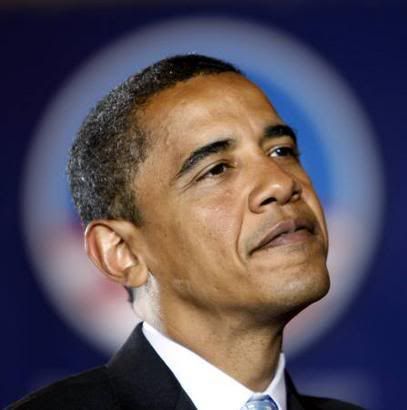 | |
| (Any allusion to other historical persons, living, dead, or resurrected from the dead, is purely a figment of the viewer's bigoted imagination.) |
This maneuver (again, just in the promotional material, since I haven't read the book itself), strikes me as highly damaging to the faith of believers. It calls into serious doubt the accepted meaning of an important period of the Church's history, and therefore also the authority of the tradition (or even Tradition) which has accepted and "mythologized" (if you like) that meaning. It challenges the use of that authority by the current leaders of the Church (in the Catholic Church, at least, the apostolic authority of the bishops) who have been increasingly outspoken against precisely that impetus of exclusion, common in the West for two generations. And it undermines the solidarity of Christians with the victims of much worse injustices (many of them, of course, Christians themselves) by falsely dividing different forms of abuse of power according to ideological preferences.
I hope the book itself will offer much better than this; this is certainly not exemplary of the love of truth and pietas to one's students which Notre Dame and Yale taught me.
* Herbert Musurillo, The Acts of the Christian Martyrs (Oxford, 1972), is an excellent example of exactly such an effort to sift true historical accounts of early Christian martyrs from later pious fictions, and is generally accepted by historians as basically accurate.
Wednesday, January 2, 2013
Homily for Wednesday, January 2, Memorial of Saints Basil the Great and Gregory of Nazianzus
 | |
| St. Basil the Great, from Orthodoxwiki.org |
But this faith also contains the great mysteries. As we continue in this Christmas season, we are face to face with the deepest mysteries of the Incarnation and of the Trinity. These two great mysteries are at the heart of our faith, and they always seem to give the greatest opportunity for falling into error.
In the fourth century, the biggest crisis in the Church was the crisis of Arianism. Now the Arians, you'll remember, claimed that God the Son was not God in the same way that God the Father is God; that he was basically a creature. Every time we say in the Creed that Jesus Christ is "consubstantial" with the Father, we're saying that the Son and the Father share the very same divine essence, that they are both divine in the very same way. We're rebuking the ideas of the Arians.
The two saints whose memorial we celebrate today, Basil and Gregory, did so much in the fourth century to defend the faith of the Apostles. As bishops and preachers and theologians, Basil and Gregory taught with great power and compassion the true meanings of these mysteries of the Incarnation and the Trinity. They rejected the ideas of the Arians, and they both suffered for it, at a time when political authorities were choosing sides in the theological debates of the Church.
Let me offer just one example of how they taught. St. Basil wrote a treatise called "On the Holy Spirit," a powerful, influential work. (If you just think for a moment of the differences between the Nicene Creed's paragraph on the Holy Spirit, and the Apostles' Creed, all of what's added about the Holy Spirit, what the Church believes and knows about Him, is clearly stated in this little book.) But his treatise was also an argument against the Arians, and his basic argument went like this:
When we think about the relationship of the Son to the Father, our thinking is muddied by the fact of the Incarnation, of Jesus's humanity. So let's look at it in terms of the Holy Spirit. Does it make any sense, in terms of the apostolic faith, or in terms of Scripture, to say about the Holy Spirit what the Arians say about the Son, that he's not of the same substance as the Father? No, it doesn't. How can we say that the Holy Spirit is Lord and Giver of Life, if he is not fully and equally divine with the Father? But if that's true of the Holy Spirit, it must be true of the Son also, or else there's no Trinity.
 |
| St. Gregory Nazianzen, from ewtn.com |
[I can't remember how I said it, but I finished with a very brief and positive exhortation to hold and believe the fullness of the apostolic, Catholic faith - it is, after all, the Year of Faith (though I neglected to mention it this time).]
Friday, July 20, 2012
It's Friday... what's happening out there?
Here's a bit of a round-up of a few interesting things.
Robert George of Princeton has an excellent essay on how changing the definition of marriage must in practice also entail a loss of freedom for those who uphold traditional marriage:
Since most liberals and even some conservatives, it seems, apparently have no understanding at all of the conjugal conception of marriage as a one-flesh union—not even enough of a grasp to consciously consider and reject it—they uncritically conceive marriage as sexual-romantic domestic partnership, as if it just couldn’t possibly be anything else. This is despite the fact that the conjugal conception has historically been embodied in our marriage laws, and explains their content (not just the requirement of spousal sexual complementarity, but also rules concerning consummation and annulability, norms of monogamy and sexual exclusivity, and the pledge of permanence of commitment) in ways that the sexual-romantic domestic partnership conception simply cannot. Still, having adopted the sexual-romantic domestic partnership idea, and seeing no alternative possible conception of marriage, they assume—and it is just that, an assumption, and a gratuitous one—that no actual reason exists for regarding sexual reproductive complementarity as integral to marriage. After all, two men or two women can have a romantic interest in each other, live together in a sexual partnership, care for each other, and so forth. So why can’t they be married? Those who think otherwise, having no rational basis, discriminate invidiously. By the same token, if two men or two women can be married, why can’t three or more people, irrespective of sex, in polyamorous “triads,” “quadrads,” etc.? Since no reason supports the idea of marriage as a male-female union or a partnership of two persons and not more, the motive of those insisting on these other “traditional” norms must also be a dark and irrational one.
Thus, advocates of redefinition are increasingly open in saying that they do not see these disputes about sex and marriage as honest disagreements among reasonable people of goodwill. They are, rather, battles between the forces of reason, enlightenment, and equality—those who would “expand the circle of inclusion”—on one side, and those of ignorance, bigotry, and discrimination—those who would exclude people out of “animus”—on the other. The “excluders” are to be treated just as racists are treated—since they are the equivalent of racists. Of course, we (in the United States, at least) don’t put racists in jail for expressing their opinions—we respect the First Amendment; but we don’t hesitate to stigmatize them and impose various forms of social and even civil disability upon them and their institutions. In the name of “marriage equality” and “non-discrimination,” liberty—especially religious liberty and the liberty of conscience—and genuine equality are undermined.
Note how the arguments in favor of redefinition of marriage are, at root, irrational and arbitrary; and note how that irrationality translated into intolerance of those who defend traditional marriage. I think George is correct in his analysis. From this he concludes that we must continue resolutely to defend marriage, "evangelizing" as it were about this. For us as clergy or future clergy, "evangelization" is exactly the right word, since we don't separate our arguments from faith and from reason, in practice. But the arguments from reason for what marriage really is need to be used as often as possible.
On a related note, Joe Heschmeyer (a shameless papist) at Shameless Popery lists three arguments against atheism from Pope Benedict. These are nice capsules of even more profound arguments, and are presented in a very accessible way - the Holy Father is an excellent teacher! (Joe's posts aren't too shabby either.)
Lastly, here are two parts of a four part series from San Antonio, on Martha Fernandez-Sardina's talk show, featuring Martha (who spoke at our 2011 Ministries Conference) and the irrepressible Deacon Harold Burke-Sivers (who has also spoken here in the Diocese previously), about Verbum Domini. Some great stuff coming out in these two talks; well worth a viewing. (I can't find the first two parts, and I don't know if Martha had a different guest for those.)
PS - Please join me in praying for the repose of the souls of those killed in the theater shooting in Colorado, and for the healing and consolation of those injured, and of all family members, and for the conversion of the shooter.
Robert George of Princeton has an excellent essay on how changing the definition of marriage must in practice also entail a loss of freedom for those who uphold traditional marriage:
Since most liberals and even some conservatives, it seems, apparently have no understanding at all of the conjugal conception of marriage as a one-flesh union—not even enough of a grasp to consciously consider and reject it—they uncritically conceive marriage as sexual-romantic domestic partnership, as if it just couldn’t possibly be anything else. This is despite the fact that the conjugal conception has historically been embodied in our marriage laws, and explains their content (not just the requirement of spousal sexual complementarity, but also rules concerning consummation and annulability, norms of monogamy and sexual exclusivity, and the pledge of permanence of commitment) in ways that the sexual-romantic domestic partnership conception simply cannot. Still, having adopted the sexual-romantic domestic partnership idea, and seeing no alternative possible conception of marriage, they assume—and it is just that, an assumption, and a gratuitous one—that no actual reason exists for regarding sexual reproductive complementarity as integral to marriage. After all, two men or two women can have a romantic interest in each other, live together in a sexual partnership, care for each other, and so forth. So why can’t they be married? Those who think otherwise, having no rational basis, discriminate invidiously. By the same token, if two men or two women can be married, why can’t three or more people, irrespective of sex, in polyamorous “triads,” “quadrads,” etc.? Since no reason supports the idea of marriage as a male-female union or a partnership of two persons and not more, the motive of those insisting on these other “traditional” norms must also be a dark and irrational one.
Thus, advocates of redefinition are increasingly open in saying that they do not see these disputes about sex and marriage as honest disagreements among reasonable people of goodwill. They are, rather, battles between the forces of reason, enlightenment, and equality—those who would “expand the circle of inclusion”—on one side, and those of ignorance, bigotry, and discrimination—those who would exclude people out of “animus”—on the other. The “excluders” are to be treated just as racists are treated—since they are the equivalent of racists. Of course, we (in the United States, at least) don’t put racists in jail for expressing their opinions—we respect the First Amendment; but we don’t hesitate to stigmatize them and impose various forms of social and even civil disability upon them and their institutions. In the name of “marriage equality” and “non-discrimination,” liberty—especially religious liberty and the liberty of conscience—and genuine equality are undermined.
Note how the arguments in favor of redefinition of marriage are, at root, irrational and arbitrary; and note how that irrationality translated into intolerance of those who defend traditional marriage. I think George is correct in his analysis. From this he concludes that we must continue resolutely to defend marriage, "evangelizing" as it were about this. For us as clergy or future clergy, "evangelization" is exactly the right word, since we don't separate our arguments from faith and from reason, in practice. But the arguments from reason for what marriage really is need to be used as often as possible.
On a related note, Joe Heschmeyer (a shameless papist) at Shameless Popery lists three arguments against atheism from Pope Benedict. These are nice capsules of even more profound arguments, and are presented in a very accessible way - the Holy Father is an excellent teacher! (Joe's posts aren't too shabby either.)
Lastly, here are two parts of a four part series from San Antonio, on Martha Fernandez-Sardina's talk show, featuring Martha (who spoke at our 2011 Ministries Conference) and the irrepressible Deacon Harold Burke-Sivers (who has also spoken here in the Diocese previously), about Verbum Domini. Some great stuff coming out in these two talks; well worth a viewing. (I can't find the first two parts, and I don't know if Martha had a different guest for those.)
PS - Please join me in praying for the repose of the souls of those killed in the theater shooting in Colorado, and for the healing and consolation of those injured, and of all family members, and for the conversion of the shooter.
Tuesday, August 24, 2010
Moral Theology 3 - Aquinas on Law cont'd: Qu. 90, art 4
Aquinas finishes his qu. 90, on the nature or essence of law, with Article 4: “Whether promulgation is essential to a law?”
As usual, wrong answer first: “It seems promulgation is not essential to a law,” because:
Objection 1: natural law binds without formal promulgation;
Objection 2: law binds or obliges not only those to whom it is promulgated, but also others;
Objection 3: some of those others are future persons who will be subject to the law, but promulgation takes place only in the present.
On the contrary, from Gratian’s (“The Jurist”) Decretals (a major compilation of canon law in the 12th cent.), “laws are established when they are promulgated.”
Given what he’s said about the rational (and therefore objective and universal) nature of law, it follows that laws that remain unpromulgated can’t be objective, and therefore can’t be law. Gratian is correct, in other words. If law is a “rule and measure,” Aquinas argues, then it must be applied in some way in order to regulate and measure. The promulgation is the application of the yardstick to the situation. Without the promulgation, the yardstick is only leaning in the corner, not doing anything.
Aquinas goes on to note that promulgation is not only functionally necessary for law, it’s also part of the nature/essence/definition. He puts all these four articles together thus:
Law is nothing other than “an ordinance of reason for the common good, made by him who has care of the community, and promulgated.” That is, law is rational, implying also objective and universal; law is properly made by the sovereign, not by private interests; law is for the common good, implying that partisan laws are unjust, along with various forms of discriminatory laws; and law must be promulgated.
From this, his replies to the objections are fairly obvious.
Again, remember that his use of terms can be a bit different than ours, especially in things like “common good.”
Discussion: What do you think about this definition of law? Does it work today? If not, what would be a better definition? Do the laws we make at national, state, and local levels generally aim at this standard? If not, why not? What are the implications here for what we call “checks and balances”?
As usual, wrong answer first: “It seems promulgation is not essential to a law,” because:
Objection 1: natural law binds without formal promulgation;
Objection 2: law binds or obliges not only those to whom it is promulgated, but also others;
Objection 3: some of those others are future persons who will be subject to the law, but promulgation takes place only in the present.
On the contrary, from Gratian’s (“The Jurist”) Decretals (a major compilation of canon law in the 12th cent.), “laws are established when they are promulgated.”
Given what he’s said about the rational (and therefore objective and universal) nature of law, it follows that laws that remain unpromulgated can’t be objective, and therefore can’t be law. Gratian is correct, in other words. If law is a “rule and measure,” Aquinas argues, then it must be applied in some way in order to regulate and measure. The promulgation is the application of the yardstick to the situation. Without the promulgation, the yardstick is only leaning in the corner, not doing anything.
Aquinas goes on to note that promulgation is not only functionally necessary for law, it’s also part of the nature/essence/definition. He puts all these four articles together thus:
Law is nothing other than “an ordinance of reason for the common good, made by him who has care of the community, and promulgated.” That is, law is rational, implying also objective and universal; law is properly made by the sovereign, not by private interests; law is for the common good, implying that partisan laws are unjust, along with various forms of discriminatory laws; and law must be promulgated.
From this, his replies to the objections are fairly obvious.
Again, remember that his use of terms can be a bit different than ours, especially in things like “common good.”
Discussion: What do you think about this definition of law? Does it work today? If not, what would be a better definition? Do the laws we make at national, state, and local levels generally aim at this standard? If not, why not? What are the implications here for what we call “checks and balances”?
Saturday, August 21, 2010
Moral Theology 2 - Aquinas on Law cont'd: Qu. 90, art 2-3
II-Ie.90.2: Whether law is always something directed to the common good?
Having offered in Article 1 a definition of law as a rational, objective “rule and measure of acts” which operates on the will to regulate and form, Aquinas now turns in Article 2 to another fundamental question. As usual, he starts with the wrong answer: “It would seem that the law is not always directed to the common good as to its end.”
Objection 1, from the difference between individual goods and the common good: concrete laws aim at some individual good, but not at the common good per se.
Objection 2, from the same, but with reference to the human actor: concrete human actions regulated by laws aim at particular goods, not the common good per se.
Objection 3, from authority: “Isidore [St. Isidore of Seville] says (Etym. v, 3): ‘If the law is based on reason, whatever is based on reason will be a law.’ But reason is the foundation not only of what is ordained to the common good, but also of that which is directed private good.” Therefore law might aim at either private or common good, and therefore not always the common good.
You might predict already that this difference between the private and the common good is going to be part of the answer as well. Specifically, how are they related? Is it possible to aim at the private good, without also implying a contribution to the common good? Modern notions of “the common good” and “the private good” generally allow that implication to be absent. But, remember that he’s not working with a modern definition of the “private good,” which opposes the private good of individuals against each other. He’s not Hobbes or Rousseau, positing a “zero-sum game.” To be good, even the private good must exclude real harm of others, and be compatible, not in competition, with the private good of others. The appearance of competition or exclusion comes rather from human imperfection and sin, than from the imperfection of law as such.
And indeed, this is the argument he deploys. Individual goods are related to the common good as parts to the whole, or as imperfect to perfect. Because individual laws aim at individual goods specifically as part of the common good, law as a whole must aim at the totality of individual goods, which is the common good.
He continues in Article 3 with the same thrust: Whether the reason of any man is competent to make laws? In other words, how is law in its nature related to the individual?
Wrong answer first: “It seems the reason of any man is competent to make laws.”
Objection 1, from Paul: Gentiles don’t have the OT Law, so they are “a law unto themselves.” (Rom 2:14). He means this generally, and so man’s reason can make laws.
Objection 2, from Aristotle: the intention of lawmaking is to lead men to virtue (by forming good habits and inhibiting the formation of vices), which (at least in a natural sense) any person can in theory do for another.
Objection 3, from analogy: the governor of a state makes laws for a state; the head of a household makes laws for the household in the same way.
These objections are pretty forceful. For us in the modern world, the analogy argument is particularly potent, because who wouldn’t agree with the basic justice of a “rule of law” and accountability of the lawmakers to their subjects? And to have that kind of basic structure of justice, you need the human competence to make law. You assume it, in fact, because without it the whole modern project of classical liberalism (democracy, no legally-privileged aristocracy, parliamentary rule, religious freedom, personal freedom for the sake of the common good, and so on) just falls apart.
So how does Aquinas respond to these objections? He starts with his “on the contrary,” another interesting quote from the same Isidore: “A law is an ordinance of the people [the sovereign], whereby something is sanctioned by the Elders [the governing elite, whether they form a class or not] together with the Commonalty [the citizen-voters].” In other words, a law must be accepted to be law; it must be agreed to, as part of the shared vision of the common good and how to get there.
This is a fundamental point, even to the objections. Even if you argue for a basic human competence to make laws, you’re still presuming that this understanding of law includes its legitimacy, along with its rationality and its goodness.
But what this means, he argues in his “I answer that,” is that the only “person” competent to make legitimate (and therefore just) laws is the sovereign. And the sovereign is not a human person at all, but a “body politic.” Even in the case of monarchy, when the sovereign is reduced to one in the person of the king, one still distinguishes between the king as a person, and the king as sovereign. (This is why the power of monarchical kingship can in fact be shared, as by Diocletian, or as by crowning an heir even before the king’s death, for example in order to prevent a civil war.) This was a basic point of medieval political theory, and its echoes in our familiar system of representative democracy surprise us only in the antiquity of their origins.
In saying, then, that any man’s reason is not competent to make laws, Aquinas is not saying that only God may make laws – he’ll get to the relationship between human and divine law in qu. 91 – but rather that laws made by just any man are necessarily arbitrary, rather than sovereign and legitimate; and if they are arbitrary, then they are neither rational, nor aimed at the common good, and therefore not truly law at all.
Having offered in Article 1 a definition of law as a rational, objective “rule and measure of acts” which operates on the will to regulate and form, Aquinas now turns in Article 2 to another fundamental question. As usual, he starts with the wrong answer: “It would seem that the law is not always directed to the common good as to its end.”
Objection 1, from the difference between individual goods and the common good: concrete laws aim at some individual good, but not at the common good per se.
Objection 2, from the same, but with reference to the human actor: concrete human actions regulated by laws aim at particular goods, not the common good per se.
Objection 3, from authority: “Isidore [St. Isidore of Seville] says (Etym. v, 3): ‘If the law is based on reason, whatever is based on reason will be a law.’ But reason is the foundation not only of what is ordained to the common good, but also of that which is directed private good.” Therefore law might aim at either private or common good, and therefore not always the common good.
You might predict already that this difference between the private and the common good is going to be part of the answer as well. Specifically, how are they related? Is it possible to aim at the private good, without also implying a contribution to the common good? Modern notions of “the common good” and “the private good” generally allow that implication to be absent. But, remember that he’s not working with a modern definition of the “private good,” which opposes the private good of individuals against each other. He’s not Hobbes or Rousseau, positing a “zero-sum game.” To be good, even the private good must exclude real harm of others, and be compatible, not in competition, with the private good of others. The appearance of competition or exclusion comes rather from human imperfection and sin, than from the imperfection of law as such.
And indeed, this is the argument he deploys. Individual goods are related to the common good as parts to the whole, or as imperfect to perfect. Because individual laws aim at individual goods specifically as part of the common good, law as a whole must aim at the totality of individual goods, which is the common good.
He continues in Article 3 with the same thrust: Whether the reason of any man is competent to make laws? In other words, how is law in its nature related to the individual?
Wrong answer first: “It seems the reason of any man is competent to make laws.”
Objection 1, from Paul: Gentiles don’t have the OT Law, so they are “a law unto themselves.” (Rom 2:14). He means this generally, and so man’s reason can make laws.
Objection 2, from Aristotle: the intention of lawmaking is to lead men to virtue (by forming good habits and inhibiting the formation of vices), which (at least in a natural sense) any person can in theory do for another.
Objection 3, from analogy: the governor of a state makes laws for a state; the head of a household makes laws for the household in the same way.
These objections are pretty forceful. For us in the modern world, the analogy argument is particularly potent, because who wouldn’t agree with the basic justice of a “rule of law” and accountability of the lawmakers to their subjects? And to have that kind of basic structure of justice, you need the human competence to make law. You assume it, in fact, because without it the whole modern project of classical liberalism (democracy, no legally-privileged aristocracy, parliamentary rule, religious freedom, personal freedom for the sake of the common good, and so on) just falls apart.
So how does Aquinas respond to these objections? He starts with his “on the contrary,” another interesting quote from the same Isidore: “A law is an ordinance of the people [the sovereign], whereby something is sanctioned by the Elders [the governing elite, whether they form a class or not] together with the Commonalty [the citizen-voters].” In other words, a law must be accepted to be law; it must be agreed to, as part of the shared vision of the common good and how to get there.
This is a fundamental point, even to the objections. Even if you argue for a basic human competence to make laws, you’re still presuming that this understanding of law includes its legitimacy, along with its rationality and its goodness.
But what this means, he argues in his “I answer that,” is that the only “person” competent to make legitimate (and therefore just) laws is the sovereign. And the sovereign is not a human person at all, but a “body politic.” Even in the case of monarchy, when the sovereign is reduced to one in the person of the king, one still distinguishes between the king as a person, and the king as sovereign. (This is why the power of monarchical kingship can in fact be shared, as by Diocletian, or as by crowning an heir even before the king’s death, for example in order to prevent a civil war.) This was a basic point of medieval political theory, and its echoes in our familiar system of representative democracy surprise us only in the antiquity of their origins.
In saying, then, that any man’s reason is not competent to make laws, Aquinas is not saying that only God may make laws – he’ll get to the relationship between human and divine law in qu. 91 – but rather that laws made by just any man are necessarily arbitrary, rather than sovereign and legitimate; and if they are arbitrary, then they are neither rational, nor aimed at the common good, and therefore not truly law at all.
Thursday, August 19, 2010
Moral Theology 1 - Aquinas on Law
Starting your reading of the Summa Theologica with this question (II-Ie.90.1, if you’re keeping score) is not a terribly painful place to begin. His first question on the law is: “Whether law is something pertaining to reason?” In other words, is there something inherently rational and objective about the law, or is it arbitrary, or is it merely self-referential?
Remember, here, Plato’s insistence that justice (we’ll come back to how justice relates to law) can’t only be the limited, somewhat erratic, merely human kind of justice we strive for at our best – much less the “might makes right” kind of justice so often actually acted on. Remember also the status of “Law” in the Scriptures, as revealed by God for a certain end. This is the foundational heritage Aquinas receives, and he has no interest at all in changing it. What he’s trying to do is define it, using an Aristotelian language and framework.
First, the objections: “It seems that law is not something pertaining to reason.” (This is the wrong answer, but he tries to establish it first, as I explained about his method in class.)
Objection 1, from St. Paul: “I see another law in my members, etc.” He takes this quite literally: if law is “in” the members, it can’t be inherently rational, since reason is not anything “in” any bodily organ.
Objection 2, from the nature of reason: reason is composed of power, habit, and act (he’s taking this from Aristotle, of course). But law is not any of power, habit, or act, for the reasons he lists. So it’s not inherently related to reason.
Objection 3, from the nature of law: law moves its subjects to right action, that is to say, in their will. Therefore law pertains to will, not to reason.
None of these objections, probably, will strike us as particularly forceful or concrete. Frankly, I think he’s fishing for objections here, because, given what he’s already established all through the first part and most of the first-of-the-second part, it should be pretty obvious that law, taken as an ideal or type, is derived from the Logos, therefore it is indeed something pertaining to reason. Indeed, his “on the contrary” doesn’t even need to cite a more authoritative source than the Summa itself! But he’s trying to be completely consistent in his method, so he proceeds as usual.
In fact, Objection 2 is not that weak a counter-argument. If the nature of reason does not overlap with the nature of law at all, then how can they pertain to each other in any way? But of course, the rebuttal is also fairly self-evident: law acts on the subject through reason’s power (law limits it), habit (law forms it), and act (law regulates it).
His “I answer that” always introduces the meat of the argument. “Law is a rule and measure of acts, whereby man is induced to act or is restrained from acting…” with respect to some end (toward a good, away from an evil). But the nature of man is reason, and the end of man is toward perfect reason (he doesn’t say so here, but of course we know this is the Logos). So reason itself is the fundamental “rule and measure” of all man’s acts; therefore law, as part of that “rule and measure,” pertains to reason.
Then he replies to the objections. To objection 1, he distinguishes the literal “in” versus the metaphorical “in.” To objection 2, he rebuts as above, laying out with considerable precision exactly what parts of the rational faculties are involved, and how. This is pretty meaty, itself. To objection 3, he notes the rational nature of the will itself.
So we conclude, then, not only that the law pertains to reason, but also have an idea of how it pertains. It is referential to the Logos; that is, law is, in its own nature, divine, and we know it by means of “natural law” and “revealed law,” exactly parallel to “natural revelation” and “special revelation” of other aspects of the divine Will and Persons. Law is non-arbitrary, therefore, and has an objective content that can be known. (He’ll get into that much more in question 91.) Law acts on the will of the subject, both directing (“Hey, there, Will, you should eat vegetables before dessert.”) and limiting (“Will, if you grab that cookie, you’ll get 5 lashes!”).
Ultimately, all of this hangs on his definitions of what reason is (the Logos, and its reflections in the created world, both personally, in my reason, and impersonally, in the intelligibility of stuff), and what law is ("a rule and measure of acts"). His definition of reason is pretty secure. But do you agree with his definition of law? What other definitions are possible, and do they still lead to the same conclusion, or to a different one?
Remember, here, Plato’s insistence that justice (we’ll come back to how justice relates to law) can’t only be the limited, somewhat erratic, merely human kind of justice we strive for at our best – much less the “might makes right” kind of justice so often actually acted on. Remember also the status of “Law” in the Scriptures, as revealed by God for a certain end. This is the foundational heritage Aquinas receives, and he has no interest at all in changing it. What he’s trying to do is define it, using an Aristotelian language and framework.
First, the objections: “It seems that law is not something pertaining to reason.” (This is the wrong answer, but he tries to establish it first, as I explained about his method in class.)
Objection 1, from St. Paul: “I see another law in my members, etc.” He takes this quite literally: if law is “in” the members, it can’t be inherently rational, since reason is not anything “in” any bodily organ.
Objection 2, from the nature of reason: reason is composed of power, habit, and act (he’s taking this from Aristotle, of course). But law is not any of power, habit, or act, for the reasons he lists. So it’s not inherently related to reason.
Objection 3, from the nature of law: law moves its subjects to right action, that is to say, in their will. Therefore law pertains to will, not to reason.
None of these objections, probably, will strike us as particularly forceful or concrete. Frankly, I think he’s fishing for objections here, because, given what he’s already established all through the first part and most of the first-of-the-second part, it should be pretty obvious that law, taken as an ideal or type, is derived from the Logos, therefore it is indeed something pertaining to reason. Indeed, his “on the contrary” doesn’t even need to cite a more authoritative source than the Summa itself! But he’s trying to be completely consistent in his method, so he proceeds as usual.
In fact, Objection 2 is not that weak a counter-argument. If the nature of reason does not overlap with the nature of law at all, then how can they pertain to each other in any way? But of course, the rebuttal is also fairly self-evident: law acts on the subject through reason’s power (law limits it), habit (law forms it), and act (law regulates it).
His “I answer that” always introduces the meat of the argument. “Law is a rule and measure of acts, whereby man is induced to act or is restrained from acting…” with respect to some end (toward a good, away from an evil). But the nature of man is reason, and the end of man is toward perfect reason (he doesn’t say so here, but of course we know this is the Logos). So reason itself is the fundamental “rule and measure” of all man’s acts; therefore law, as part of that “rule and measure,” pertains to reason.
Then he replies to the objections. To objection 1, he distinguishes the literal “in” versus the metaphorical “in.” To objection 2, he rebuts as above, laying out with considerable precision exactly what parts of the rational faculties are involved, and how. This is pretty meaty, itself. To objection 3, he notes the rational nature of the will itself.
So we conclude, then, not only that the law pertains to reason, but also have an idea of how it pertains. It is referential to the Logos; that is, law is, in its own nature, divine, and we know it by means of “natural law” and “revealed law,” exactly parallel to “natural revelation” and “special revelation” of other aspects of the divine Will and Persons. Law is non-arbitrary, therefore, and has an objective content that can be known. (He’ll get into that much more in question 91.) Law acts on the will of the subject, both directing (“Hey, there, Will, you should eat vegetables before dessert.”) and limiting (“Will, if you grab that cookie, you’ll get 5 lashes!”).
Ultimately, all of this hangs on his definitions of what reason is (the Logos, and its reflections in the created world, both personally, in my reason, and impersonally, in the intelligibility of stuff), and what law is ("a rule and measure of acts"). His definition of reason is pretty secure. But do you agree with his definition of law? What other definitions are possible, and do they still lead to the same conclusion, or to a different one?
Thursday, August 12, 2010
Fr. Barron on why we believe in God
This is relevant to what we've been thinking about revelation. It's also relevant to the Philosophy you second years are about to have, and to Christology later in the year for the 4th-years. It rests on an idea of natural theology, which is, I would repeat, an eminently reasonable assumption.
Maniple wave to Aggie Catholics.
Maniple wave to Aggie Catholics.
Wednesday, August 4, 2010
Models of Revelation - Excursus on Faith and Reason
One of the greatest strengths of the "traditional" view of theology (Patristic and Scholastic) is how the category of knowing which is "faith" is intrinsically related to the category of knowing which is "reason." This is the gist of the famous line that theology means "faith seeking understanding." All truth leads to Truth, therefore, and Truth must necessarily be one and universal.
These ideas about truth, knowledge, and so forth are not merely unprovable assumptions, for which other (equally valid because equally unprovable) assumptions might be substituted. Rather, they rest on a long tradition of observation, analysis, testing of hypothesis, and synthesis. They are proven, at least at the level of plausibility and self-coherence. They have stood the test of time (despite the contempt that modernity's irrationality holds them in). They are, in effect, conclusions of "natural theology."
Take, for example, the problem of defining "life" in "living" objects, as opposed to non-living objects. Reason tells us that the stuff is the same - the same elements of hydrogen, carbon, and oxygen, merely arranged differently here than there. Reason tells us, however, that there is clearly something different between living and non-living things. If you've ever seen a person or an animal die, you know that the difference is clearly visible, but not clearly quantifiable. Metaphors like "the light in the eyes" must be employed. In fact, reason tells us that the difference between living and non-living is not really a question of the arrangement of stuff (atoms, molecules) at all. It's something different.
In other words, experience, observation, and reason clearly "prove" the existence of something non-material. Its effects are observable; it itself is not directly observable. In terms of living objects, this non-material element can be called "soul." It expresses the vitality, motion, and ultimately rationality of different kinds of living things. But it can never be reduced only to material properties.
Coming at the problem from the angle of faith works essentially the same, but in reverse. The same observations about the material world, and the visible effects of the spiritual world therein, describe different kinds of relationships with God. Here "soul" is not a property or set of properties related to the observable differences in categories of objects, but defining spiritual realities that separate those same categories of objects in how that relate to God.
But these two aspects of the idea of "soul," from reason and from faith, are not to be seen as unrelated to each other. Together, they tell us more about "soul" than simply the juxtaposition of the two ways of knowing.
But for this to be true, that spiritual knowledge must be expressible in the form of a proposition (or more likely, a set of propositions). Even if the set of propositions is not complete in an absolute sense, it still must be relatively complete (relative to the extent of our ability to know at all), and accurate to the same extent. If this is not true, then "faith" knowledge is not related to "reason" knowledge, since the rules of logic (that is, propositional relationships) don't work there.
This is the heart of the propositional model in Dulles's schema. Of the five, only this model holds the intrinsic relationship of faith-knowledge and reason-knowledge; that is, that revelation is ultimately reasonable in itself. The historical model, and Dulles's theory of symbolic mediation, hold an extrinsic relationship between faith and reason. This can, in practice, be fairly close to the intrinsic relationship, but it's not really the same idea. At root, the existential, dialectic, and transcendent models all separate faith and reason from each other in modernist ways; this is why they are less successful at grasping revelation.
This is why I insisted in the previous post that there must be some non-ambiguous "rule" - an act, a word, or a symbol; or a combination of these, as in Exodus and the Passion - at the bedrock of revelation, prior to the mediation of the symbol(s). This "rule" must be expressible (to the extent of human knowing) as complete and accurate propositions. Even if the propositions are derived, and not taken as the primary content of the revelation itself, still the propositions are equal to the revelation in its relationship to the faith community: the propositions carry the revelation. I mean this concretely, not abstractly, because the propositions are not simply abstract, but concretely embedded in the liturgical life of the community (Passover and Mass, etc.). They are still explicit, however: they are acts, words, and symbols expressible as propositions. Therefore the meaning is not ambiguous and subject to change, and not derived from human sources, but given by God.
It is precisely in the knowing by both faith and reason that the certitude of revelation exceeds that of science (reason alone) or of individual inspiration (faith alone). It is precisely in the being carried by Tradition that the meaning remains stable and non-arbitrary. And it is precisely in the "faith seeking understanding" that we accept the invitation into God's own life, which is what revelation really is.
These ideas about truth, knowledge, and so forth are not merely unprovable assumptions, for which other (equally valid because equally unprovable) assumptions might be substituted. Rather, they rest on a long tradition of observation, analysis, testing of hypothesis, and synthesis. They are proven, at least at the level of plausibility and self-coherence. They have stood the test of time (despite the contempt that modernity's irrationality holds them in). They are, in effect, conclusions of "natural theology."
Take, for example, the problem of defining "life" in "living" objects, as opposed to non-living objects. Reason tells us that the stuff is the same - the same elements of hydrogen, carbon, and oxygen, merely arranged differently here than there. Reason tells us, however, that there is clearly something different between living and non-living things. If you've ever seen a person or an animal die, you know that the difference is clearly visible, but not clearly quantifiable. Metaphors like "the light in the eyes" must be employed. In fact, reason tells us that the difference between living and non-living is not really a question of the arrangement of stuff (atoms, molecules) at all. It's something different.
In other words, experience, observation, and reason clearly "prove" the existence of something non-material. Its effects are observable; it itself is not directly observable. In terms of living objects, this non-material element can be called "soul." It expresses the vitality, motion, and ultimately rationality of different kinds of living things. But it can never be reduced only to material properties.
Coming at the problem from the angle of faith works essentially the same, but in reverse. The same observations about the material world, and the visible effects of the spiritual world therein, describe different kinds of relationships with God. Here "soul" is not a property or set of properties related to the observable differences in categories of objects, but defining spiritual realities that separate those same categories of objects in how that relate to God.
But these two aspects of the idea of "soul," from reason and from faith, are not to be seen as unrelated to each other. Together, they tell us more about "soul" than simply the juxtaposition of the two ways of knowing.
But for this to be true, that spiritual knowledge must be expressible in the form of a proposition (or more likely, a set of propositions). Even if the set of propositions is not complete in an absolute sense, it still must be relatively complete (relative to the extent of our ability to know at all), and accurate to the same extent. If this is not true, then "faith" knowledge is not related to "reason" knowledge, since the rules of logic (that is, propositional relationships) don't work there.
This is the heart of the propositional model in Dulles's schema. Of the five, only this model holds the intrinsic relationship of faith-knowledge and reason-knowledge; that is, that revelation is ultimately reasonable in itself. The historical model, and Dulles's theory of symbolic mediation, hold an extrinsic relationship between faith and reason. This can, in practice, be fairly close to the intrinsic relationship, but it's not really the same idea. At root, the existential, dialectic, and transcendent models all separate faith and reason from each other in modernist ways; this is why they are less successful at grasping revelation.
This is why I insisted in the previous post that there must be some non-ambiguous "rule" - an act, a word, or a symbol; or a combination of these, as in Exodus and the Passion - at the bedrock of revelation, prior to the mediation of the symbol(s). This "rule" must be expressible (to the extent of human knowing) as complete and accurate propositions. Even if the propositions are derived, and not taken as the primary content of the revelation itself, still the propositions are equal to the revelation in its relationship to the faith community: the propositions carry the revelation. I mean this concretely, not abstractly, because the propositions are not simply abstract, but concretely embedded in the liturgical life of the community (Passover and Mass, etc.). They are still explicit, however: they are acts, words, and symbols expressible as propositions. Therefore the meaning is not ambiguous and subject to change, and not derived from human sources, but given by God.
It is precisely in the knowing by both faith and reason that the certitude of revelation exceeds that of science (reason alone) or of individual inspiration (faith alone). It is precisely in the being carried by Tradition that the meaning remains stable and non-arbitrary. And it is precisely in the "faith seeking understanding" that we accept the invitation into God's own life, which is what revelation really is.
Subscribe to:
Posts (Atom)