Showing posts with label homily. Show all posts

Wednesday, July 8, 2015

Homily outline for Wednesday 7/8/15 - Evangelization

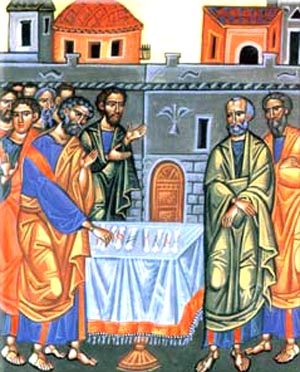
Here's today's Gospel (Mt 10:1-7):

https://en.wikipedia.org/wiki/File:Apostles_capp.JPG
Jesus summoned his Twelve disciples
and gave them authority over unclean spirits to drive them out
and to cure every disease and every illness.
The names of the Twelve Apostles are these:
first, Simon called Peter, and his brother Andrew;
James, the son of Zebedee, and his brother John;
Philip and Bartholomew,
Thomas and Matthew the tax collector;
James, the son of Alphaeus, and Thaddeus;
Simon the Cananean, and Judas Iscariot
who betrayed Jesus.

Jesus sent out these Twelve after instructing them thus,
“Do not go into pagan territory or enter a Samaritan town.
Go rather to the lost sheep of the house of Israel.
As you go, make this proclamation: ‘The Kingdom of heaven is at hand.’”


For my homily, I gave St. Jerome's two-point interpretation of this passage from the Catena Aurea.  Here's the quick summary.

First point - Scripture doesn't contradict itself.  So, this sending of the Apostles only to their fellow Jews is not in contradiction with the later sending to "all nations" (Mt 28:19).  Rather, it's two steps in the fulfillment of God's one plan for salvation.  The Jews already had their special status as God's preistly people, and the Revelation of Scripture, to prepare them for this proclamation of the Kingdom; and indeed, many of them did hear and respond, not least the Apostles themselves.  The Gentiles, lacking this relationship with God, would wait for the Resurrection to have the whole Gospel proclaimed to them.

Second point flows from this.  Since Scripture doesn't contradict itself, we can't read this passage as any kind of limit on where and when we ourselves proclaim the Kingdom.  We're sent everyone by our Baptism and Confirmation, and for the ordained, by our Orders.  But, St. Jerome says, the verse should be read spiritually, as an indication of how we proclaim.  If we live our lives in the manner of those who don't know Christ ("Gentiles"), or who have accepted only part of the Gospel ("Samaritans"), we can't evangelize effectively.  We have to live entirely as disciples of Christ, and evangelize from that standpoint first and foremost, by how we live.  Thus we may show in our daily actions, even before we may have a chance to speak, the joy, mercy, grace, and hope of Jesus Christ, to a world starving for His love.

Monday, January 19, 2015

Homily for Sunday 18 Jan 2015 (II post Epiphaniam)

This weekend, I preached at the 7:30 EF Mass.  The Collect is the same as the OF:

Omnipotens sempiterne Deus, qui celestia simul et terrena moderaris, supplicationes populi tui clementer exaudi: et pacem tuam nostris concede temporibus. Per Dominum nostrum...

Almighty ever-living God, who govern all things, both in Heaven and on earth, mercifully hear the pleading of your people and bestow your peace on our times. Through our Lord...

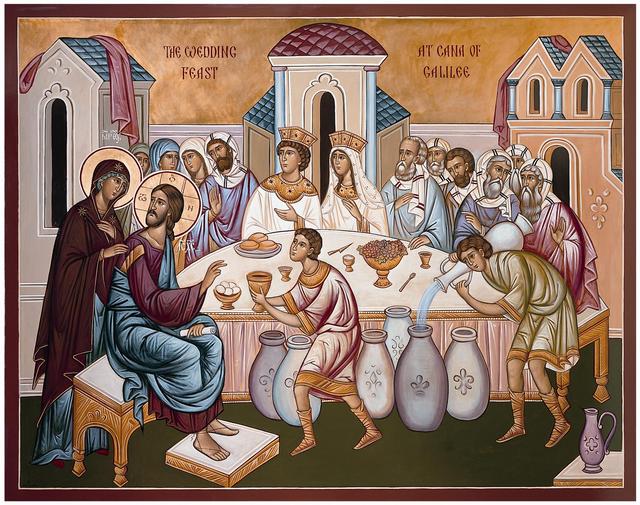
Given this plea for the divine gift of peace, and the proximity to the awful anniversary of the repugnant Roe v. Wade decision this Thursday (1/22), I chose to preach on the obvious topic. The Epistle is Rom 12:6-16, and I expounded on the verse, "Let your love be without pretense. Hate the evil, adhere to the good."  The Gospel is Jn 2:1-11, the wedding at Cana, and I preached the verses, "Do whatever He tells you," and "His disciples believed in Him."  Here's my homily, as closely as I can reconstruct it.

All across the country, this weekend and this week, in different places, hundreds of thousands of
March for Life 2014
people will be marching for life.  I read this week, we now have over 80 Marches, Vigils, and Rallies for Life taking place in different cities.  And hundreds of thousands more, perhaps even millions more, will be praying along with them for an end to abortion.

I'm sure I don't have to recount for you the terrible evil that abortion is.  I'm sure we know that abortion kills an innocent human being, a baby in the womb; and that it destroys the spiritual and emotional health of mothers and fathers, of entire families; and that it corrupts our culture and our laws, and justifies other kinds of evils, too.  Abortion is the most urgent, the gravest evil of our times, and it falls to us, to our generations, to fight it.

Our readings today give us inspiration and courage to carry out this moral struggle.

St. Paul tells us, "Let your love be without pretense.  Hate the evil, and adhere to the good."  For us, this means that we must root out from our hearts the pretenses, the compromises, the little evils and sins that we sometimes indulge in.  We must make regular examination of conscience, and go to Confession often, so that our hearts will be full of pure love.  If our love is true and pure in the little things, the daily things, then we can also love without pretense in the larger things.  This is very important, because the world wants to paint us as hypocrites.  We need to be able to show that our love and our actions are consistent, so that our witness can reveal the love of Christ.

Orthodox icon of the wedding at Cana
In the Gospel, the beautiful story of the wedding at Cana, St. John gives the words of Mary, "Do whatever He tells you."  We might notice that these are the last words the Gospels record Mary saying.  Her whole life of perfect faith, perfect obedience to the Father, perfect love for her Son, is, in a sense, summed up in these words: "Do whatever He tells you."  We, too, then, need to strive to imitate our blessed Mother's perfections, by constantly "doing whatever He tells" us.  This points us to our vocation - for the great majority of us, the vocation to married life and to parenthood.  There are also vocations to priestly life and religious life, of course, but most of us are called to marriage.

And in our married life, we are called to a holy, loving union that is both chaste and fruitful.  What this means for us, then, is that we must reject contraception in our Catholic marriages.  Contraception leads to abortion, through what we can call the "contraceptive lifestyle."  Pope Paul VI showed us this link in his encyclical, "Humanae Vitae."  When we contracept, we reject the will of God in our marital union.  Whether we understand this or not, we are making ourselves the masters of life and creation.  It's only a small step, then, to try to make ourselves the masters of death, also, to set ourselves up in the place of God, choosing who can live and who will die. 

Those who work for the culture of death know this link, too.  For example, make people who have left working for Planned Parenthood report that they want to have access to public schools, to teach our teenagers (and even younger children) to use contraception, because they know that contraception will lead to abortion, and they want that business.

We need to challenge this root of abortion, and make our Catholic marriages once again free of contraception.

And the last verse of the Gospel today: "His disciples believed in Him."  We need to pray for an end

St. John at the foot of the Cross (14th c., St. Michael and All Angels Parish, Wales)
to abortion.  We need to have greater faith, that the love and mercy of Jesus Christ can overcome the evil of abortion.  We need to live with greater hope and deeper prayer, in all the spiritual aspects of this struggle.  If we live with growing love for Christ in the Church and in her sacraments, and if we live with greater fidelity to our vocations, we will also have greater faith.  We will have hearts more open to receive His infinite mercy, and also more open to the need, the longing, for that mercy in the world around us, where we can share it by our faithful and loving actions. 

The daily witness we give to the power of His mercy, like the many March for Life events, is the way to change minds and hearts about the evils in the world.  Our hope and our joy in Jesus Christ are not just for ourselves, they are for others.  We can only share as much of that mercy, hope, faith, and joy as we are open to receive from our Savior.  But as we grow closer to the Lord, our hearts are more open, and we can receive more and offer more to those around us. 

If we are faithful in these ways, we will make a difference.  We will overcome the evil of abortion, by the power of Christ's love.  Our progress may be slow, because the evil is great, but we will advance.  We have this hope.  We have this faith.  So let Christ work in us, ever more deeply, so that our witness may be stronger, to overcome evil in the world.


Thursday, May 15, 2014

Apostolic Succession: Thoughts on the Feast of St. Matthias, 14 May

Yesterday was the Feast of St. Matthias, the one chosen in Acts 1:15-26 to take the place of Judas among the Twelve.  I preached on how this demonstrates Apostolic Succession, and what that means for our faith today.  This is an extended version of what I preached about, more in the form of reflections than the homily was.

Here's the text, according to the Douay-Rheims version:

In those days Peter rising up in the midst of the brethren, said (now the number of persons together was about an hundred and twenty): Men, brethren, the scripture must needs be fulfilled, which the Holy Ghost spoke before by the mouth of David concerning Judas, who was the leader of them that apprehended Jesus: Who was numbered with us, and had obtained part of this ministry...  For it is written in the book of Psalms: Let their habitation become desolate, and let there be none to dwell therein [Ps 69 (68):26]. And his bishopric [Vulg "episcopatum;" LXX "επισκοπήν, episcopen"] let another take [Ps 109 (108):8]. Wherefore of these men who have companied with us, all the time that the Lord Jesus came in and went out among us, Beginning from the baptism of John, until the day wherein he was taken up from us, one of these must be made a witness with us of his resurrection. And they appointed two, Joseph, called Barsabas, who was surnamed Justus, and Matthias. And praying, they said: Thou, Lord, who knowest the heart of all men, shew whether of these two thou hast chosen, To take the place of this ministry and apostleship, from which Judas hath by transgression fallen, that he might go to his own place. And they gave them lot, and the lot fell upon Matthias, and he was numbered with the eleven apostles.

This passage clearly shows us the criteria in the minds of the earliest disciples, including the Apostles, even before Pentecost, of what would come to be called "apostolic succession."  I've highlighted the key passages:
  • Peter rising up... - It's Peter's role as the leader of the Twelve to take this action.  Right from the beginning, Peter has a distinctive leadership among the Apostles, rooted in the events of Mt 16:18-19 ("You are Peter, and on this rock...") and Jn 21:15-17 ("Do you love me? Feed my sheep." (thrice)).  The first several chapters of Acts bear this out.  When Peter eventually becomes Bishop of Rome, this headship will be exercised by his successors, Linus, Cletus, Clement (e.g., in his Letter to the Corinthians), etc., and become the basis of papal authority over the whole Church.
  • ...the scripture must needs be fulfilled... - The action described here is explicitly understood to be divinely inspired, both in the action of the Holy Spirit among the community prompting Peter's leadership, the community's responses, and the eventual choice of Matthias - note, again, this is before Pentecost! - and in the Scriptural foundation now revealed to be a prophetic preparation for this moment.  God is in charge, and therefore the whole doctrine of apostolic succession is "of God."
  • And his bishopric let another take... - The divine shape of the office of bishop is, in is essence, also rooted in Scripture and in the use Christ and (here) the Holy Spirit make of it.  Peter uses Ps 109 to call the position held by Judas and now to be given to another the "episcopate."  In the Greek and in the Latin, the connotation is not generic, such as "manager" for us today is generic, but something with more specific, even if still flexible, outlines, function, and purpose.  
  • ...one of these must be made a witness... - part of the essence of the office being given is that of witness, of one who can proclaim the Good News and the Kingdom as an eyewitness and credible testifier.  
  • ...a witness with us... - the unity of the Twelve in this mission, among themselves and together with Peter their leader, is paramount.  This is still true today; see e.g., Lumen Gentium 18: "This Sacred Council, following closely in the footsteps of the First Vatican Council, with that Council teaches and declares that Jesus Christ, the eternal Shepherd, established His holy Church, having sent forth the apostles as He Himself had been sent by the Father; and He willed that their successors, namely the bishops, should be shepherds in His Church even to the consummation of the world. And in order that the episcopate itself might be one and undivided, He placed Blessed Peter over the other apostles..." etc.
  • ...a witness with us of his resurrection. - The bedrock of the Gospel is the Resurrection of Christ from the dead.  It's not just that Jesus worked miracles, or taught a moral law, or challenged corrupt or lax religious authority, but most especially that He died and rose for us, that makes Christianity what it is.  One cannot proclaim or follow Christ without proclaiming and following the (hope of) the Resurrection.  Knowing and following the Lord Jesus must make this kind of difference in one's life.  
  • ...take the place of this ministry and apostleship... - Again, Peter and the Apostles are giving this task of proclaiming a specific authority and shape with this sort of terminology.  Their role in the Church is different from that of other disciples, even if they are still disciples first, as Ignatius of Antioch would say (Letter to the Romans, 4).  "Ministry," in particular, although it can often be a more generic word, takes on a specific, non-generic connotation in relation to the Resurrection of Christ, and the proclamation of that Good News by the Church (see e.g. Paul's usage in Rom 15:16: "That I should be the minister of Christ Jesus among the Gentiles: sanctifying the gospel of God, that the oblation of the Gentiles may be made acceptable and sanctified in the Holy Ghost.")  Here, Gospel proclamation and Eucharistic sacrifice are explicitly linked in "the ministry of Christ."
  • ...he was numbered with the eleven apostles. - In other words, Matthias held an equal position with the other Apostles, under the leadership of Peter, even though he was given this position by them, and not, as they originally were or as Paul would be, by Christ Himself.  The fullness of Christ gifts to the Apostles are still held by Matthias - and by extension, by all those chosen by the Apostles and by their successors.
What all of this shows is the critical importance of the doctrine of apostolic succession for the Catholic faith.  Jesus Christ gave specific teachings, spiritual gifts and powers, and a share in His own authority to the Twelve.  They in turned passed the same "inheritance" on, intact and unchanged, to Matthias and others (e.g. Timothy, etc.).  They in turn used the gifts for the same purpose (i.e. "ministry," namely, proclamation of the Good News, leadership of the Church in unity under Peter and his eventual successors, and the sacraments (e.g., baptism, Acts 2:38; Confirmation, Acts 8:14-17; Eucharist, Acts 2:46, I Cor 11:20; anointing, Jas 5:14-15; ordaining by laying on of hands, Acts 6:6, I Tim 5:22; witnessing marriages "in the Lord," I Cor 7:39; forgiving sins (but private auricular confession becomes normal for the use of this power only later), Acts 3:19, 26; 4:4...).

Therefore, we must recognize the fact that the Church exists from its beginning in Christ, in its fullness!  (See CCC 771ff.)  Christ gives everything necessary to the Church, in the beginning, completely.  Now, granted, there is the historical work of "unpacking" the fullness of this gift, doctrinally, sacramentally and liturgically, and in evangelization of the whole world, and indeed that unpacking continues even today.  But it is the unfolding of what has already been given, not the creation or invention of new divine gifts and revelations.

It's precisely this apostolic succession that ensures that we're dealing with the same divine deposit of faith, and not inventing new things for ourselves.  This is the essential argument of Irenaeus against Gnosticism, for example, and it has been deployed many times.  If the Eucharist does not come from the hands of Christ Himself at the Last Supper, then the Church invented it, and it is not essential or divinely intended.  If Holy Orders do not come from the hands and will of Christ Himself, through the Apostles (choosing Matthias, choosing the Seven in Acts 6, Paul choosing Timothy, etc), then the Church invented these roles and rules, and they are not essential or divinely intended.  And so forth.  This is exactly what we mean when we say in the Creed that we believe the Church to be "apostolic" as one of its defining realities.

This doctrine is part of the faith we receive in baptism, but it is not, in the strict sense, a "mystery."  It is not impenetrable, nor does it exceed reason to consider in what way, precisely, as recorded in the New Testament and as lived out in the history of the Church, the concrete and tangible gifts of ministry were given by Christ to the Apostles, and were used by them in the first three decades of the Church, and were handed on intact by them to their successors, to be used still further for the building up of the Church, and so on.  It is entirely rational and historical to grasp this part of the faith, and to apply it to the realities of the seven Sacraments, the Church's worship in general, the moral life, and the life of charity.  The great apologists of the second century - e.g., Irenaeus, Justin Martyr, Tertullian, Clement of Alexandria - did exactly that in defending apostolicity against both Roman (pagan) syncretism and Gnostic mythologization, and others since have imitated them.

But contrast this understanding of faith against the most common assumption or model of the modern world, namely, "evolution."  Modern thought implicitly assumes that everything follows the pattern of evolution gleaned from biology - of more primitive things becoming more complex over time, following certain common patterns and driven not by clear purpose or teleology, but by "survival" or "fitness" in a specific context, or by mere self-perpetuation in some form.  Nearly every example of adaptation or change over time is squeezed in this evolutionary model, regardless of whether that actually helps understanding or not.
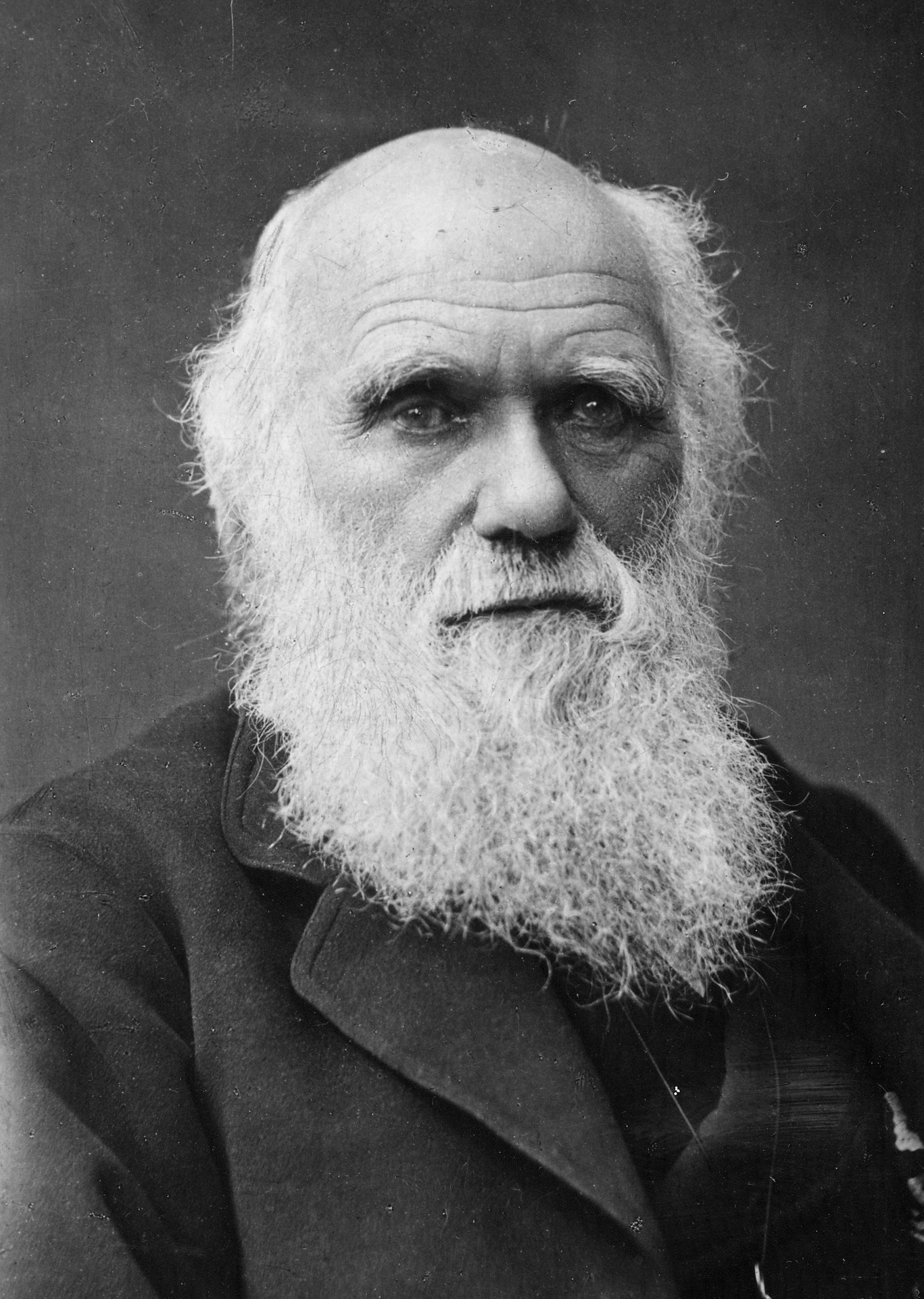
Darwin might look like a prophet, but he's a poor theologian.
In terms of Church history, the imposition of the evolutionary model since the 19th century has led to many "non-traditional" arguments and conclusions, some of which are extremely damaging to the faith.  For a lesser example, arguments that Mark's Gospel is earlier than Matthew's essentially boil down to the claim that it must be earlier because it's shorter (= the more primitive form). (There's a bit more to the argument than that, especially that so much of Mark is in Matthew, but not as much in reverse.  Still, some good arguments for Matthew's being earlier are not given as much attention, because they don't fit the model.)  There are many other, more serious ways in which the imposition of the evolutionary model distorts our understanding of faith.  Most insidious is the idea that opposes "the Jesus of history" (primitive form) against "the Christ of faith" (later complex form), and ends with denying the divinity of Jesus itself!

In terms of the doctrine of apostolic succession, especially, the evolutionary model is completely the wrong one to use.  Still, it is all too common to assume that more primitive forms of ministry must have preceded later forms, such that, in the first decades of the Church, it's not really possible to talk of "bishops," of Peter as "Pope," of the "sacraments" (apart from baptism, and the "breaking of bread," which is not yet the "Eucharist"), of a coherent body of doctrine (apart from a few elements labelled "the primitive kerygma"), etc.  The dissimilarities between the earliest Church and the "post-Apostolic" Church are just too great, it is argued, to use these later terms and institutions to describe what's going on in the "primitive form" of the earliest Church.  If these fit even in the earliest Church, then they're not really primitive forms - but, it's just impossible (it is assumed) to explain how fully developed forms of things can exist without more primitive predecessors.

But the problem with this conclusion is precisely that it is not consonant with faith in Christ, as noted above.  If Christ did not will and give the essential aspects of these things to the Apostles, then they are not constitutive of the Church!  If they are not willed and given by Christ to the Apostles, then there is no divine power behind them.  Baptism doesn't really wash away sins, it's just a symbol.  Priestly ordination doesn't really give a man a sacred power to change bread and wine into Christ's own Body and Blood, it's just a symbol of leadership, possibly even a corrupt and politicized one.  The faith which is proclaimed doesn't have to be the same one that was proclaimed by earlier generations of Christians; it can even contradict what was previously believed.  Even Scripture itself is undermined, since divine authorship is incompatible with the evolutionary model, and the Canon of the New Testament is therefore a political side-effect of Church history, and thus also one which a new politics could redefine.  In the end, imposing an evolutionary model on the Church destroys apostolic succession and many other central doctrines, and makes us all into feckless false believers in empty, meaningless symbols.

I ended my homily with an exhortation to ask the intercession of St. Matthias and the other Apostles to increase our faith and strengthen our witness.  If we don't believe in a robust doctrine of the Church and her dependance on Christ and the Apostles, if we don't accept that there is a true and unchanging apostolic deposit of faith which we must believe, live, and transmit to others unchanged, then in the end, we don't really believe in Christ as "the one Mediator between God and men."  God save us from such a puny and selfish thing!
"Christ taking leave of the Apostles," Duccio di Buoninsegna ca. 1311, in the Museo dell'Opera del Duomo, Siena


Monday, March 10, 2014

Homily for 3/9, First Sunday of Lent

via stpeterslist.com 
The great Catholic author and master of wit of a hundred years ago, G. K. Chesterton, was once famously asked, "What's wrong with the world?"  Without hestitation, he pointed to himself and responded, "I am."  This answer is universally true on more than one level, but it's especially true in showing a great humility and in embracing the doctrine of original sin.

In our first reading, we have the occasion of that original sin, the Fall of Adam and Eve.  They disobeyed God's command not to eat from the Tree of the Knowledge of Good and Evil.  They failed to trust God's promises, and they believed the devil's lies, and so they disobeyed, and fell.  And as St. Paul says in the second reading, this sin had great consequences for all of us: "By the disobedience of one man, sin entered the world, and with sin, death."

This doctrine of original sin is central to so many of the teachings of our Catholic faith.  Original sin
Matteo de Nassaro, slate bas-relief ca. 1501, via commons.wikimedia.com
is why we baptize people into the Church as soon as we reasonably can.  Baptism washes away original sin, and we don't want people to wait for that healing.  Original sin is why we receive the Holy Eucharist as often as we can, and not just once in our life, to be united with our Lord Jesus Christ in His real Body and Blood, soul and divinity.  And the consequences of original sin include all of our own sins, our capacity to sin every day.  And therefore we have the Sacrament of Penance always available to us, to receive again and again God's great mercy and forgiveness.  And likewise we have the Church's moral teachings and the examples of the saints to strengthen and encourage us in the daily struggle against sin.  Without the doctrine of original sin, so much of our faith would really make no sense.

Yet we live in a time and a culture which tries so hard to deny the reality of original sin.  The devil is still lying to us!  He wants to make us fall, as he made Adam and Eve fall, and the best weapon he has to do so is to deaden our sense of sin.  And so our world denies original sin and its consequences.  It does so in very many ways, but I'd like us to consider just one of those ways right now.

The world tries to claim that what makes something right and true is if it comes out from the depths of one's heart.  The world rejects God as illuminating what is right and wrong, rejects the Bible, rejects Tradition, rejects the wisdom of the past.  None of these, and no other person, the world wants us to think, can tell us what is right and wrong, but only what is in our heart.  Therefore, if you want something strongly enough, it must be right to want it.  Now obviously, there is a grain of truth in this idea.  There are many deep desires in our hearts that are good, love and forgiveness in the imitation of Jesus Christ foremost among them.  But also obviously, there are many desires in our hearts that are equally deep, that are not at all good.  We are all capable of many kinds of anger and violence and damaging the dignity of other people.  Clearly, having a desire to harm someone else doesn't make harming them right.

As an example of this dynamic of the mystery of sin, consider the pornography which fills our culture.  The world wants to say that there's nothing wrong with pornography, that it's simply normal.  The people who make pornography are doing so freely, and don't seem to be harmed by it.  The people who consume the pornography are expressing a personal desire by doing so.  So where's the harm, or the sin? 

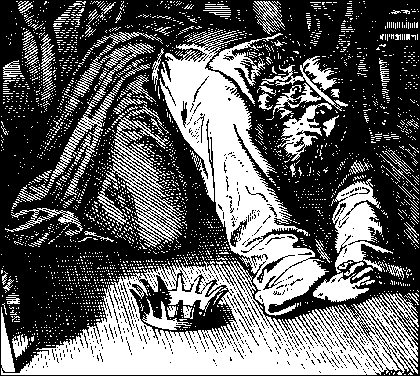
King David praying - maybe Psalm 51?
But with our Catholic understanding of original sin and the mystery of sin, we can see that all this is another lie by the devil.  Pornography is not victimless, not harmless, and not normal.  Those who make it suffer in a number of different ways.  And those who consume it also suffer in various other ways.  [I didn't enumerate in the homily, but we know what these effects are.]  It degrades the human dignity of both of them, and it becomes a constant temptation to see other people as mere objects of desire.  Pornography is the Fall in a nutshell.  And we can see this even in our first reading.  Adam and Eve do gain a true knowledge of good and evil by eating from that tree - it's not the way God promised to give this gift to them, but it's still true knowledge.  And as soon as they do, the very first thing they realize is that they are naked.

This season of Lent, just beginning, is a precious gift to each of us, an opportunity to examine our hearts and our lives in the light of Christ.  Has the world's denial of sin encroached on our faith?  Do we make worldly excuses for our sins?  Is there some part of our life where we are still dead because of sin?  Do we perhaps resist the holy desire for Christlike purity in mind and heart?  Now is the time to let the light of Christ, the mercy that flowed from His side on the Cross, begin to heal that darkness.  Jesus Christ conquers sin and death, refusing every temptation of the devil.  His Gospel is good news!  It's good news for us because it means that we too don't have to be mastered by sin, or defined by our sins.  In Him we can say no to sin - not by our own strength, because we are weak, but in Him, in His perfect power and mercy and forgiveness.  Now is the time to examine our lives and echo Chesterton's humble admission, to beg our Savior Jesus Christ for His mercy.  Each of us can say that we are truly a sinner, in great need of His mercy, but longing to be healed and freed from our sins.  In this Lent, God invites us to accept totally the words we heard just the other day, on Ash Wednesday: Repent, and believe in the Gospel.

Wednesday, February 12, 2014

Homily for 12 Feb 2014, Wednesday of the Fifth Week in Ordinary Time

The Old Testament reading today is the visit of the Queen of Sheba to King Solomon, 1 Kgs 10:1-10.  Here's the homily I preached, as well as I can remember and reconstruct.
Lavinia Fontana. The Visit of the Queen of Sheba to Solomon. c. 1600. Dublin, National Gallery of London.

In our first reading today, King Solomon stands as a type of Christ.  We are particularly invited in this
passage to consider first his wisdom, like that of Christ.  King Solomon's wisdom of course was exceptional, although merely human, while Christ's wisdom is divine and perfect.  But Solomon's wisdom is of God, and points us toward the more perfect wisdom of our Lord.  Because of his wisdom, he kept his kingdom in peace for many years, and gave justice and good laws.  Christ does the same, more perfectly, for His Church and for His kingdom.

We're also invited to consider Solomon as the builder of the temple in Jerusalem.  Again, he foreshadows the temple Christ builds, which is His Church, His own Body.  We want to participate in the worship that takes place in Christ's temple, and so here we are at this Holy Mass.

This passage also offers us the figure of the Queen of Sheba.  She is a more worldly ruler than Solomon, very rich and powerful and successful in her own kingdom.  But she's not a negative example of the world, because she does come to Solomon to exchange gifts and confirm peace.  Rather, she stands in relation to Solomon in very much the way we stand in relation to Christ.  She's heard of his extraordinary wisdom, his goodness and justice, and she's interested, but she can't quite believe that all this could be completely true.  We too sometimes hesitate to believe fully in the perfect wisdom, mercy, and goodness of Jesus Christ - although we have faith, certainly; yet sometimes we're reluctant to lower our guard, to set aside our reservations, and give ourselves totally to Christ.  Like her, it may seem to us that the forgiveness or the providence of Christ is just too good to be true.

So the queen comes to Solomon to test him, to see if he really is what has been reported.  And she is convinced by what she finds, and so she gives him all the gifts that she has prepared for him, if it turns out to be true.  We can do the same.  We don't need to test Christ, but we can come to him and listen to His wisdom, to His Word, and see how it satisfies us.  We can come before Him with our faith, and strive to set aside our worldly defenses and hesitations.  We can do the hard work of deeper interior conversion in order to be more open to Him, to His grace and His perfect will.  And we do this especially in prayer, and in the sacraments.

The Adoration of the Magi *
When we do this, we usually see that Christ really is our perfect king and savior.  What is reported of Him is not exaggerated!  He is the one, the only one, who can offer us pure mercy, the redemption of our sins.  And therefore, like the queen, we should give Him the gifts we have prepared.  It's significant that she gives to Solomon gifts of gold and spices - the same gifts which the Magi offer to the infant Christ in Bethlehem.  In both cases, the gift of gold represents Christ's kingship, and therefore to give Christ our gold is to give Him our allegiance and obedience.  Because He is our only savior, to grow in faith means to grow in our readiness and willingness to do only His will, to follow His laws which He enacts through His Church.

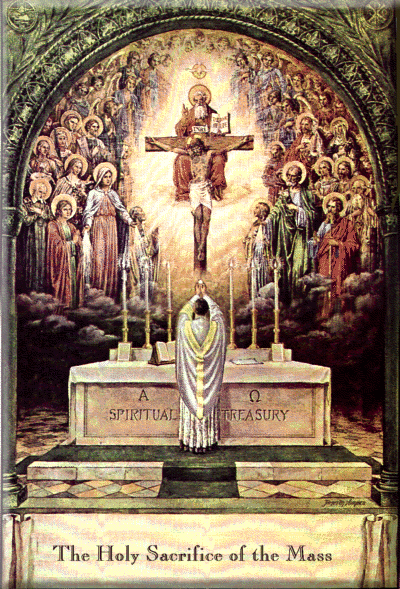
source **
In the same way, the gift of spices represents Christ's priesthood, His saving sacrifice of the Cross and
His holy passion.  To give Christ our spices is to participate in His priesthood, especially through the sacraments, which again, He offers us only through His Church.  Because He is the one High Priest, to grow in faith means to grow in desire for His grace and mercy in receiving and living out all the sacraments, as well as to grow in prayer and devotions.

When we do this - when we expose ourselves to Christ in order to receive more deeply all His gifts for us, and then give back to Him a deeper faith, obedience, and devotion - then we also show the love and mercy of God to all those around us.  We show why the ways of the world don't lead to salvation or real happiness, and what a difference it truly makes to be close to our Lord Jesus Christ.  We show this by the quality of our lives.  We preach simply and without confrontation, heart directly to heart, about our true faith and joy in Christ, our Lord and Savior.

So let us pray to the Holy Spirit for the courage to be defenseless before Jesus Christ.  Let us pray that we may receive everything He wills to give us, and that we may willingly give back to Him everything we have and are.  In this way, may we always offer the light of Christ to those in darkness.


* http://bible-belt-catholic.blogspot.com/2012/01/magis-new-work.html 
** http://catholicapologetics.info/library/directory/holymass.gif

Wednesday, December 4, 2013

Wednesday Homily - 4 December 2013, Memorial of St. John of Damascus

Today I felt called to preach about St. John of Damascus and the issue of Iconoclasm, as well as its modern variations (today's readings).

source**
Most joyful Advent to you!  Today is the memorial of St. John of Damascus, who was a priest in Damascus and a monk near Jerusalem for the last 40 or so years of his life.*  He died about 760.  He is most remembered for his development of the theology of the Incarnation, against Iconoclasm.  Iconoclasm was a movement in the Greek Church in the 8th and 9th centuries, which took too literally the prohibition against images in the Old Testament.  They literally "broke the icons," removing and destroying images from churches - icons, statues, crucifixes, and so on.

St. John recognized that this movement had some serious theological difficulties.  He exposed these difficulties in relation to the Incarnation.  He showed that, since Christ's human nature was real, and was the same as ours - "alike in all things but sin" - it was possible to depict the human nature in religious art.  In other words, we not only can but should use the things God has given us to worship Him, from wood and stone up to Christ's own humanity.  His deep arguments convinced people, and eventually overcame Iconoclasm.  So it's in large part thanks to St. John of Damascus that our beautiful Cathedral here is full of such inspiring windows and statues.

But we should not think that Iconoclasm was only a problem in the Church a thousand years ago.  It has continually popped up in history.  For example, it surfaced again in the Reformation, especially in the denominations influenced by John Calvin, which even now tend to have little or no religious art [and for the same reason, a very shallow understanding of the sacraments - not said but relevant].  It's also one of the sources of our culture's willingness to disregard some people's full humanity.  The Culture of Death is a form of iconoclasm, and the homosexual lobby is influenced in a similar way.

www.cathedralpb.com 
As Catholics, our responses to these issues are still informed by the work of St. John of Damascus.  We can oppose these issues, too, by arguing from the Incarnation.  Because we believe that Christ's human nature really is the same as ours - again, "alike in all things but sin" - we cannot accept as "just" that any person be denied the full protection of their humanity.  Because we believe in the Incarnation, we will never find anything good in abortion or euthanasia or embryonic stem-cell research.  These evils cannot go together with our Catholic faith, logically or theologically.  In the same way, because we believe in the Incarnation, we cannot accept the various arguments that it does not matter how we use our bodies.  It has to matter, if our bodies are related to Christ's body, and to our salvation.

As we continue with this Holy Mass and into this season of Advent, there are two things we can do.  First, we can deepen our faith, as we are always called to do, using the ways the Church offers us: for example, studying and praying with the Scriptures, reading the Catechism, listening to Catholic radio and reading the Fathers, all so readily available to us in this digital age.  The more we know our faith, the closer we can be to Jesus Christ, and the more open to all of His gifts of grace and mercy.  This is how we learn to love both God and neighbor, just as Pope Francis is constantly calling us to do.

Second, we can imitate St. John of Damascus in his witness and charity.  We can show the world the quality of our love and faith by how we live.  What we say and what we do each day conveys to everyone around us what we really value.  Let us display the grace and mercy of Christ we have received, especially in what we are willing to tolerate - namely, the human weaknesses of our brothers and sisters, which is always redeemable - and in what we refuse to accept and condone - namely, the evils that are contrary to our faith.  We can always make the distinction for our neighbor between weakness and evil, and be merciful without being indifferent, just as we pray God always is with us.

By growing in our faith and by the witness of our lives, we receive and share the coming salvation of our Lord Jesus Christ.


* Actually, I misspoke; he was a city counselor in Damascus, and left there about 730 to become a monk at St. Sabas's monastery near Jerusalem, and was ordained there.
** Icon from Russian Orthodox Cathedral of St. John the Baptist in Washington, DC: www.stjohndc.org

Wednesday, November 20, 2013

Homily for Wednesday of 33rd Week, 11/20/13

Today I preached from the first reading, 2 Mac 7:1, 20-31.

Almost every religion of the world believes in some sort of afterlife.  Most people are willing to believe in the possibility that the soul survives the death of the body.  But what makes Judaism and Christianity unique on this point is that we believe, not just in a life for the soul after our death, but that the body also has an eternal destiny. 

In this first reading, we see the core of the Jewish belief.  This is one of the key places in the Old Testament, where the idea of a bodily resurrection is revealed, especially in the words of the devout mother, "Therefore... the Creator of the universe ... in his mercy, will give you back both breath and life..."  The breath is the soul, and the life is the body, which in some mysterious way not yet understood, also continues after death.  Both are raised and saved by God.  This belief prepared for the Resurrection of Jesus Christ, not only in His divinity and His human soul, but also in His human body - as we see, for example, when He shows Himself to the Apostle Thomas, with the wounds of the Passion still marked in His flesh.  It is the same body!  The same flesh that He carried in His earthly life was the flesh of His Resurrection.  This is not without change - as St. Paul says, our flesh will be changed "from corruption to incorruption," so that in Heaven our bodies, like Christ's, will no longer be subject to weakness, injury, age, and so on.  But it remains the same body.

This is part of the promise of our faith in Jesus Christ, in His Resurrection.  Mary is one of the very few for whom this has already been fulfilled.  Before Mass, we prayed the Glorious Mysteries, including the mystery of the Assumption: Mary is already taken up into Heaven in her body, and glorified in her body.  This is by way of promise to all of us, that God wants this as part of His eternal gift to us.  And so we say this in the Creed: "I believe in the resurrection of the body, and the life everlasting." 

[For the sake of time, I skipped this transition, which I hope was understood: namely, that this belief in the resurrection of the body necessitates the understanding that the person is not the soul, wearing the body in some temporary fashion, and discarding it at death, but rather the person is the union of soul and body.  This also means, of course, certain things about life beginning at conception, and the redemptive possibilities in suffering, and so on.]  There are a number of things that flow from this belief, but here let me just mention two.

First, since the body is destined for its resurrection, what we do to or with the body in this life really does matter.  Most especially, there is no way to reconcile this belief with abortion or euthanasia.  It is simply a contradiction to say on the one hand that the body is meant for Heaven, and that the person is the union of the body and the soul; and to say on the other hand that we can treat people or their bodies as disposable.  There simply is no way that these evil practices can be made compatible with our Catholic faith.  [One could obviously say much more here about pro-abortion politicians trying to claim the pro-life label, or about how the "personally opposed, but..." arguments all fail, and so on; but, desiring a shorter homily, I demurred.]

Second, we are invited to pray for the dead.  The general resurrection hasn't happened yet.  Apart from Jesus and Mary [and Elijah], all the dead are still waiting to be reunited with their restored bodies.  And so our prayers for them now can still be effective.  We can and do hope and pray that our own beloved dead, and all the dead, when they are reunited with the flesh, will also be glorified with Jesus Christ, and be eternally saved.  Especially in this month of November, we are reminded in a special way to pray for the dead, for forgiveness of sins and their eternal blessedness, body and soul in Heaven.

Tuesday, August 13, 2013

Homily, 19th Sunday in Ordinary Time, 11 August 2013

This is, as best I recall, what I preached on Sunday on these readings.

There are a great many ideas of faith in the world, that are inaccurate, or misleading, or just wrong.  Let me note briefly just two of them.  The first is the idea of faith as sentimentality.  This shows up, for example, in false moral ideas that reduce right and wrong to feelings, and that therefore end up trying to justify grave moral evils based on how it makes them feel, or makes someone else feel.  The second is the idea of faith in what has been called "the god of the gaps;" that is, that what science can know about how the universe is, really is certain knowledge; and that faith, then, is a way of knowing, without great certainty, what lies outside the boundaries of scientific knowledge.  But since scientific knowledge is always growing, eventually what is known by faith is replaced by something else, known by science.  So, this kind of faith always leads to scepticism.


Neither of these ideas is real faith.  The problem with both of these ideas is that they do not give us a relationship with God, but only with ourselves, with human sentiment, knowledge, or opinion.  In contrast, all of our readings today show what a real idea of faith looks like.  And in this sense, the most important line in this set of readings is right at the beginning of the Gospel: "Do not be afraid," Jesus tells his disciples, "for it pleases my Father to give you the kingdom" of Heaven.  It pleases God our Father to give us salvation.  God wants us to be with Him in Heaven!  This is what real faith looks like: the idea that it pleases God to save us.

In the second reading, we have the example of Abraham, the "father of faith."  He is called the father of our faith because he offered to God total trust, that what God was promising would indeed be done.  Because of his great trust in the goodness of what God wanted for him, he was willing to leave his home and take his family into a foreign and unknown land, without protection - something that, at that time, was about as risky a thing as could be imagined.  Because of his great trust in God, he was able to flourish there, and even, as we know from Scripture, to offer extravagant hospitality to strangers.  And we know all the things that he was able to accept from God, including the sacrifice of his only son, Isaac, by which God tested his faith, not so that Isaac would die, but so that He should make the great promise to provide the lamb for the sacrifice.

And the first reading evokes the faith of Moses leading Israel out from their slavery - their physical
slavery to Egypt and their moral slavery to sin.  This faith is expressed in "oaths," in the great Covenant which God makes with Israel.  God binds Himself to do certain things, in order to save His people, and in return, God's people also bind themselves to do certain other things, ritually and morally.  This is what the ritual of the Passover constantly expressed.  But this binding, this commitment, is not about force or threats or coercion by God.  It's about love: God wants us to be saved, and in order to be saved, He must do things so that we can also do things.  God gives Israel the Law, although the Law is not itself salvation; and God gives them the land, although this is but the promise of our true home in Heaven; and God gives them the Temple, again, so that He could also give us the true Lamb of the sacrifice.

Abraham and Moses had great faith, faith that expressed itself in total trust in His goodness, and in great obedience to the terms of the Covenant, and in the waiting for the coming of the Lamb.  We, too, are invited to have faith that looks like this: trust, and obedience, and adoration of the Lamb, our Lord Jesus Christ.  We know that He is the true Lamb of God, and that He alone sets us free from sin and brings us to Heaven, where the Father wants us to be.

In the Gospel, Jesus points to Himself as the perfect example of trusting, obedient faith.  "Amen, I say to you, he will gird himself, have them recline at table, and proceed to wait on them."  When does Jesus do this for His disciples?  He does it at the Last Supper, at the Passover when He truly becomes the sacrificial Lamb for us.  The Last Supper is also the first Holy Mass.  And still today, in every Holy Mass, Jesus Himself puts on the servant's apron, and gets down on His knees for us, in order to give us Himself, the Lamb, in the Holy Eucharist.


Our faith needs to have the same shape as this.  Because of our faith, we must have such trust in God, such trust that what He wants for us is really what is good for us, because whatever He wants for us in this life is meant to get us to be with Him in Heaven.  And because of our faith, we must live according to the oaths of the Covenant, sealed in the blood of the Lamb.  We must live by the moral law and the Gospel, and come to the sacraments of the Church, and pray and give alms, reaching out to the poor and needy as their servants.  I say "must," again, not in the way of threat or force, but of love: God loves us so much that He wants us to be with Him in Heaven, and He gives us the sacrifice of His only Son, Jesus our Lamb, so that we can get there; and if we love Him even a little in return, we will want for ourselves what He wants for us.  This love, this desire, is what real faith always looks like.


And if we have even a taste of this real faith, we want it, not only for ourselves, but also for others.  God wants them to get to Heaven too!  Therefore we constantly offer them the example of our faith - of our trust in God, like Abraham's trust, that gives us life and joy; our faithful obedience, like that of Moses, that brings us back to the Church again and again, and lifts us up with hope; our compassion and hospitality to the needs of others, like Christ washing the feet of His disciples, that puts our love into action every day.  In the face of a world that has no faith, we offer this faith, this real faith in Jesus Christ, in these ways.

As we continue with this Holy Mass, and especially as we continue in this Year of Faith, let us strive the imitate more fully these great examples of faith: the trust of Abraham, the obedience of Moses, the loving service of our Lord Jesus Christ.  Ask the Holy Spirit to make your faith stronger, to put the fire of His love into your heart, and into your life.  Pray for faith, and then share your faith.  It pleases God our Father to give us faith.  May we follow Him all the way home to Heaven.

Monday, July 22, 2013

Homily - 16th Sunday in Ordinary Time, July 21, 2013

As best I recall, this is what I preached at the 5 pm Mass on Sunday.  I may be condensing a bit from what I actually preached.  Although I didn't mention it in the homily, I chose to preach on this topic because of NFP Awareness Week this week, 7/21-28.

The obvious theme in today's readings is hospitality.  And these readings give us nice and clear examples of what the fruits of hospitality are meant to be. 

In his eagerness to serve the three strangers, Abraham first shows us gratitude.  As St. Paul says, "Name something you have that you have not received."  Everything we have comes to us a gift from God - our very life, our vocations, certainly all of our material possessions.  Abraham understands this.  And he understands that what we have received is meant not only for our own good, but also for the good of others.  And so he is quick to express gratitude to God for his prosperity, by offering food and water and shade to the strangers who come to his tent.

The second fruit of hospitality is fruitfulness.  In receiving the word of the coming birth of his son, NOW, after years of wanting and hoping for the fulfillment of this promise, Abraham receives a fruitful increase to his hospitality.  This is true for us as well, either materially or spiritually.  When we give, we are rewarded even more, in some way.

And Mary sitting at the feet of Jesus shows the third fruit of hospitality, which is contemplation.  Hospitality brings us, like Mary, to His feet, so that we can hear His voice and see His holy face in serving others.

All of us are called by our baptism to practice this kind of hospitality.   God wants us to be grateful for all the gifts He has given us, and to use all them, both for our own good and salvation, and for that of others. God wants us to be materially and spiritually fruitful, in our work and in our prayer, and in every part of our life.  And God really wants us to know Him and to love Him with our whole being. 

Now, contrast this, what the Bible says about hospitality, with what the world says about hospitality.  Everywhere in the world we look, every time we turn on the TV or the internet or the radio or open a magazine, the world tries to tell us how we must be.  And in particular, the world tells us that in place of hospitality, we must have contraception.

Contraception is the opposite of hospitality.  We can see that here, in these readings.  Point by point, contraception contradicts all of the fruits of hospitality.  In place of gratitude, contraception makes us selfish.  Practicing contraception leads us to demand what is meant to be given as the free gift of love.  Of course contraception is the opposite of fruitfulness; and this is just as true of spiritual fruitfulness as of bodily fruitfulness.  And contraception, being a serious sin, never leads us to contemplate the face or the voice of our Lord Jesus Christ in the one we love.

But we know that God is most merciful and forgiving.  He "desires not the death of the sinner."  And He calls us every day to turn away from sin in our life, and seek His forgiveness, and really change and become the holy people He wants us to be.  We know the means of this constant journey of conversion - daily prayer, and the grace of the sacraments, especially of the Sacrament of Reconciliation.  Every day, every moment, is an opportunity for each of us to hear and respond to His call, to love in a better way, as we follow the example of Jesus Christ and the saints. [I think I had a few more sentences rounding out this exhortation, but I can't remember exactly how I closed.]

Wednesday, July 3, 2013

Homily for Feast of St. Thomas, 3 July 2013

Today I preached mostly on the Gospel, St. John's account of "doubting Thomas." Here's what I said, as best I recall.  Pope Francis's homily can be found here.

When Pope St. Gregory the Great preached on today's Gospel, he made the distinction between knowledge and faith.  St. Thomas saw Jesus with the eyes of his body, and so he recognized Jesus as Risen and alive.  But in a separate act, he also saw Jesus with the eyes of his soul, and recognized who it was who was really standing before him: God, the Son of God. 

There are a great many people today who are able to see with the eyes of the body, but who refuse to see with the eyes of the soul.  I'm thinking for example of people who support abortion; they can see even with the eyes of the body what harm abortion does - taking the life of an innocent child, morally damaging a mother and often a father as well, and also other people - but yet they don't recognize the moral evil.  I'm also thinking of those who don't support the traditional meaning of marriage.  They can see how important marriage really is to children and to the common good, but yet they are willing to support many things that harm marriage.  And many other examples could be listed.

The evidence of God is there, in front even of the eyes of our bodies, but there are people who refuse to make the move St. Thomas made, to go from seeing physically to seeing with the eyes of the soul, to recognize who it is who confronts us and calls us every day.  They cannot see Jesus Christ with their soul, because they do not have faith, or they do not have hope, or they do not know joy.

This is what we have to offer them.  The responsorial psalm tells us, "Go out to all the world and tell the Good News."  We are called to share the Gospel, to share our faith and hope and joy, with everyone.  We have to give them a reason to believe!  The world can't do this.  The world gives us no reason to hope, or to love or know joy, or to have any kind of faith.  But we have what they truly want, what Jesus Christ has given us, if only they could recognize what they truly need.  We have to offer it to them.

The best way to do that is always the way of humility, as St. Gregory also loved to say.  The way of humility is the way of the Cross.  It means following Jesus all the way to the end.  Sometimes, humility can mean giving up a friendship because the price of keeping the friendship is losing the Faith.  Sometimes humility means being willing to be last or less, in our family or at work, because we don't seek the power the world prizes.  Sometimes it means being unpopular, because we don't seek the world's popularity as important.  Very often it means being willing to say No to something evil, even when the whole world, it seems, is trying to say Yes to it.

But always, humility means we don't hold ourselves up with pride about our faith, as if we're special because have something that "those poor slobs" don't have.  Rather, when we share the reasons for our faith, we share something as a gift.  We don't crush people with the Faith, we offer it with gentleness, with joy.  Someone is only going to recognize Jesus Christ in our faith if what we offer is not about us, convincing them or dominating them or "winning them over."

But when we offer faith and hope, with humility and joy, we have a chance of helping people to see with the eyes of the soul: to see good and evil, to see the presence of God, to respond to the love of God.  We have to give people reasons to have hope, to love Jesus Christ.  Only then will they be able to see, and say, "My Lord and my God!"

Tuesday, March 19, 2013

Holy Mass of Inauguration of the Petrine Ministry of Pope Francis (first of the name)

Courtesy of Vatican Radio, full video of this morning's inaugural Mass for Pope Francis:


And from the same source, full text (in English translation) of his homily:

Dear Brothers and Sisters, I thank the Lord that I can celebrate this Holy Mass for the inauguration of my Petrine ministry on the solemnity of Saint Joseph, the spouse of the Virgin Mary and the patron of the universal Church. It is a significant coincidence, and it is also the name-day of my venerable predecessor: we are close to him with our prayers, full of affection and gratitude.

I offer a warm greeting to my brother cardinals and bishops, the priests, deacons, men and women religious, and all the lay faithful. I thank the representatives of the other Churches and ecclesial Communities, as well as the representatives of the Jewish community and the other religious communities, for their presence. My cordial greetings go to the Heads of State and Government, the members of the official Delegations from many countries throughout the world, and the Diplomatic Corps.

In the Gospel we heard that “Joseph did as the angel of the Lord commanded him and took Mary as his wife” (Mt 1:24). These words already point to the mission which God entrusts to Joseph: he is to be the custos, the protector. The protector of whom? Of Mary and Jesus; but this protection is then extended to the Church, as Blessed John Paul II pointed out: “Just as Saint Joseph took loving care of Mary and gladly dedicated himself to Jesus Christ’s upbringing, he likewise watches over and protects Christ’s Mystical Body, the Church, of which the Virgin Mary is the exemplar and model” (Redemptoris Custos, 1).

How does Joseph exercise his role as protector? Discreetly, humbly and silently, but with an unfailing presence and utter fidelity, even when he finds it hard to understand. From the time of his betrothal to Mary until the finding of the twelve-year-old Jesus in the Temple of Jerusalem, he is there at every moment with loving care. As the spouse of Mary, he is at her side in good times and bad, on the journey to Bethlehem for the census and in the anxious and joyful hours when she gave birth; amid the drama of the flight into Egypt and during the frantic search for their child in the Temple; and later in the day-to-day life of the home of Nazareth, in the workshop where he taught his trade to Jesus.

How does Joseph respond to his calling to be the protector of Mary, Jesus and the Church? By being constantly attentive to God, open to the signs of God’s presence and receptive to God’s plans, and not simply to his own. This is what God asked of David, as we heard in the first reading. God does not want a house built by men, but faithfulness to his word, to his plan. It is God himself who builds the house, but from living stones sealed by his Spirit. Joseph is a “protector” because he is able to hear God’s voice and be guided by his will; and for this reason he is all the more sensitive to the persons entrusted to his safekeeping. He can look at things realistically, he is in touch with his surroundings, he can make truly wise decisions. In him, dear friends, we learn how to respond to God’s call, readily and willingly, but we also see the core of the Christian vocation, which is Christ! Let us protect Christ in our lives, so that we can protect others, so that we can protect creation!

The vocation of being a “protector”, however, is not just something involving us Christians alone; it also has a prior dimension which is simply human, involving everyone. It means protecting all creation, the beauty of the created world, as the Book of Genesis tells us and as Saint Francis of Assisi showed us. It means respecting each of God’s creatures and respecting the environment in which we live. It means protecting people, showing loving concern for each and every person, especially children, the elderly, those in need, who are often the last we think about. It means caring for one another in our families: husbands and wives first protect one another, and then, as parents, they care for their children, and children themselves, in time, protect their parents. It means building sincere friendships in which we protect one another in trust, respect, and goodness. In the end, everything has been entrusted to our protection, and all of us are responsible for it. Be protectors of God’s gifts!

Whenever human beings fail to live up to this responsibility, whenever we fail to care for creation and for our brothers and sisters, the way is opened to destruction and hearts are hardened. Tragically, in every period of history there are “Herods” who plot death, wreak havoc, and mar the countenance of men and women.

Please, I would like to ask all those who have positions of responsibility in economic, political and social life, and all men and women of goodwill: let us be “protectors” of creation, protectors of God’s plan inscribed in nature, protectors of one another and of the environment. Let us not allow omens of destruction and death to accompany the advance of this world! But to be “protectors”, we also have to keep watch over ourselves! Let us not forget that hatred, envy and pride defile our lives! Being protectors, then, also means keeping watch over our emotions, over our hearts, because they are the seat of good and evil intentions: intentions that build up and tear down! We must not be afraid of goodness or even tenderness!

Here I would add one more thing: caring, protecting, demands goodness, it calls for a certain tenderness. In the Gospels, Saint Joseph appears as a strong and courageous man, a working man, yet in his heart we see great tenderness, which is not the virtue of the weak but rather a sign of strength of spirit and a capacity for concern, for compassion, for genuine openness to others, for love. We must not be afraid of goodness, of tenderness!

Today, together with the feast of Saint Joseph, we are celebrating the beginning of the ministry of the new Bishop of Rome, the Successor of Peter, which also involves a certain power. Certainly, Jesus Christ conferred power upon Peter, but what sort of power was it? Jesus’ three questions to Peter about love are followed by three commands: feed my lambs, feed my sheep. Let us never forget that authentic power is service, and that the Pope too, when exercising power, must enter ever more fully into that service which has its radiant culmination on the Cross. He must be inspired by the lowly, concrete and faithful service which marked Saint Joseph and, like him, he must open his arms to protect all of God’s people and embrace with tender affection the whole of humanity, especially the poorest, the weakest, the least important, those whom Matthew lists in the final judgment on love: the hungry, the thirsty, the stranger, the naked, the sick and those in prison (cf. Mt 25:31-46). Only those who serve with love are able to protect!

In the second reading, Saint Paul speaks of Abraham, who, “hoping against hope, believed” (Rom 4:18). Hoping against hope! Today too, amid so much darkness, we need to see the light of hope and to be men and women who bring hope to others. To protect creation, to protect every man and every woman, to look upon them with tenderness and love, is to open up a horizon of hope; it is to let a shaft of light break through the heavy clouds; it is to bring the warmth of hope! For believers, for us Christians, like Abraham, like Saint Joseph, the hope that we bring is set against the horizon of God, which has opened up before us in Christ. It is a hope built on the rock which is God.

To protect Jesus with Mary, to protect the whole of creation, to protect each person, especially the poorest, to protect ourselves: this is a service that the Bishop of Rome is called to carry out, yet one to which all of us are called, so that the star of hope will shine brightly. Let us protect with love all that God has given us!

I implore the intercession of the Virgin Mary, Saint Joseph, Saints Peter and Paul, and Saint Francis, that the Holy Spirit may accompany my ministry, and I ask all of you to pray for me! Amen.

Wednesday, January 2, 2013

Homily for Wednesday, January 2, Memorial of Saints Basil the Great and Gregory of Nazianzus

St. Basil the Great, from Orthodoxwiki.org
In the first reading, the Apostle John warns us against falling for any of the big lies about Jesus not being the Messiah, or about the Son's relationship with the Father.  Indeed, the faith which the Apostles handed down, and which is still preached and handed down in the Church today, is this: Jesus is the one, true Christ; he is truly God and truly man; and he really lived among us as one of us - was truly born, lived and died, and rose to life again.  This is the foundation of the Gospel and of the Church.

But this faith also contains the great mysteries.  As we continue in this Christmas season, we are face to face with the deepest mysteries of the Incarnation and of the Trinity.  These two great mysteries are at the heart of our faith, and they always seem to give the greatest opportunity for falling into error.

In the fourth century, the biggest crisis in the Church was the crisis of Arianism.  Now the Arians, you'll remember, claimed that God the Son was not God in the same way that God the Father is God; that he was basically a creature.  Every time we say in the Creed that Jesus Christ is "consubstantial" with the Father, we're saying that the Son and the Father share the very same divine essence, that they are both divine in the very same way.  We're rebuking the ideas of the Arians.

The two saints whose memorial we celebrate today, Basil and Gregory, did so much in the fourth century to defend the faith of the Apostles.  As bishops and preachers and theologians, Basil and Gregory taught with great power and compassion the true meanings of these mysteries of the Incarnation and the Trinity.  They rejected the ideas of the Arians, and they both suffered for it, at a time when political authorities were choosing sides in the theological debates of the Church.

Let me offer just one example of how they taught.  St. Basil wrote a treatise called "On the Holy Spirit," a powerful, influential work.  (If you just think for a moment of the differences between the Nicene Creed's paragraph on the Holy Spirit, and the Apostles' Creed, all of what's added about the Holy Spirit, what the Church believes and knows about Him, is clearly stated in this little book.)  But his treatise was also an argument against the Arians, and his basic argument went like this:

When we think about the relationship of the Son to the Father, our thinking is muddied by the fact of the Incarnation, of Jesus's humanity.  So let's look at it in terms of the Holy Spirit.  Does it make any sense, in terms of the apostolic faith, or in terms of Scripture, to say about the Holy Spirit what the Arians say about the Son, that he's not of the same substance as the Father?  No, it doesn't.  How can we say that the Holy Spirit is Lord and Giver of Life, if he is not fully and equally divine with the Father?  But if that's true of the Holy Spirit, it must be true of the Son also, or else there's no Trinity.

St. Gregory Nazianzen, from ewtn.com
This was not the only point against Arianism that needed to be made, but this was, and still is, a very convincing argument about the Trinity.  St. Basil and St. Gregory are still relevant to us in this way.  We live in a culture that tries to claim that the faith is irrational, that we believe things only because the Church tells us to believe.  Certainly we respect the authority of the Church in matters of the faith, but we also believe because we can think through and understand to some extent even the great mysteries.  St. Basil's argument shows an example of this.  Though our reason is finite and the mysteries are greater than what we can understand, still, what we do understand is true.  And so the things that we believe, we not only believe, but also know as true.

[I can't remember how I said it, but I finished with a very brief and positive exhortation to hold and believe the fullness of the apostolic, Catholic faith - it is, after all, the Year of Faith (though I neglected to mention it this time).]

Wednesday, October 17, 2012

Homily for Oct 17 - St. Ignatius, Bishop and Martyr

In the second century, the Roman Empire had a growing problem.  There were increasing numbers of these "Christians" everywhere, and they just would not cooperate with how the Empire did things.  And the Romans simply could not understand why the Christians held themselves apart like that.

Emperor Trajan
About the year 106, the Emperor Trajan, in thanksgiving for a great military victory, passed a law that all the people of Syria should offer a sacrifice to the traditional Roman gods.  But in the middle of Syria was the capital, Antioch, and the Bishop of Antioch was Ignatius.  St. Ignatius preached loudly, in his pulpit and in the streets, that Christians could not obey this law.

The Romans simply did not understand this.  Why couldn't the Christians do what everybody else did - offer the public sacrifice once, and then go home and follow their own religion in private?  Why couldn't the Christians compartmentalize their faith, like everybody else?

In our own time, our government increasingly acts the same way toward Christians.  There are many examples, but one of the most important instances is the HHS Mandate: that all employers must offer their employees, in their health insurance plans, the benefits - and "benefits" are in quotation marks - of contraception, sterilization, and chemical abortions.  And our government simply doesn't understand why we Christians cannot compartmentalize our faith, and perform our economic duties over here, in accordance with the law, and our religious duties over there, in private, however we want.

In the Gospel today, Jesus teaches us that, "Unless a grain of wheat falls to the ground and dies, it remains only a grain of wheat.  But if it dies, it brings forth much fruit." (Jn 12:24-5)  St. Ignatius used this very Gospel passage in a letter to the Church in Rome.  He pointed to himself, saying, "I am the grain of wheat."  He called the teeth of the wild animals which would kill him in the arena, the "millstones" grinding the wheat into bread, a bread like Christ's own Body, that would nourish the faith of others.  He wanted to be that bread, to nourish the Church and to change the Roman world.

St. Ignatius in the arena
And that's exactly what he did as a martyr.  The witness of his death for the crime of being a Christian and not committing idolatry nourished the faith of others.  It took two hundred years, and thousands of martyrs dying for Christ, to change the Roman Empire, but it happened.  In the fourth century, the Roman Empire became the Christian Roman Empire. 


That's why, when our own government was founded in the 18th century, it could be founded as a Christian government.  But if we want to keep it a Christian government and a Christian country, we need to change the hearts and minds of our neighbors, by the witness of our lives.  We may not be called to "red" martyrdom, but we still preach about Christ, or not, by the actions of our lives every day.  Our actions show what are our priorities, and the daily witness of our charity shows whether we love God and neighbor. 

We are the only Christ, that those who don't yet know Him, can learn about Him by.  We are the grains of wheat, and our daily witness for Him grinds us into bread.  Will we be a tasteless and worthless bread of no value?  Or will we be the bread that we really are as the Body of Christ - the bread that nourishes the faith of others?

Thursday, August 2, 2012

Preaching conference resources available

This summer, Cecilia and I were able to attend a conference on preaching at our alma mater.  It was a very good conference, and most of the presentations have been posted on You-tube by the Institute for Church Life (search for "Notre Dame preaching conference we preach Christ crucified" for the full list).  Not all are of equal quality, of course, but here are a few among the best ones we heard:

Fr. Robert Barron

Fr. Jeremy Driscoll, OSB

Dr. John Cavadini

Bishop Ricardo Ramirez, CSB (homily)


Wednesday, June 20, 2012

Homily notes from Wednesday of 11th Week

I didn't write out my homily today and I won't be able to reproduce it verbatim, but here's a summary/approximation of what I said.  The Gospel is a good one, and I touch on it, but mostly I was digging into this line from the Psalm: "Love the Lord, all you His faithful ones!" (Ps 31:24).

I started by talking about the worldly view of love as primarily an emotion.  There's a grain of truth in this, of course; love does include our emotions, and we do feel differently about people and things we love.  But limiting love to an emotion imposes two grave dangers.  First, it justifies infidelity when the feeling changes; so I talked very briefly about the scourge of divorce and fornication.  Second, it justifies grave moral evils, like abortion, under a false sense of compassion - as if it could ever, somehow, help a mother to kill her child.

Then, against this worldly view, I gave the classic definition of St. Thomas Aquinas (I don't think I mentioned him by name), that love is the choice to prefer the other's good to one's own.  I stuck with the example of the love between a husband and a wife, and talked about how a good husband chooses his wife's good, even when he doesn't necessarily feel like it.  I mentioned material good, in working hard to support the family, and in taking care of his wife when she's sick.  I mentioned spiritual good, in working not to be a source of temptation to sin for her, and in praying for her, and so forth.

Then I added that love always has a sacrificial character to it.  In choosing to love my wife faithfully, I am making the choice not to love in that way any other woman.  It's a giving up of something that might feel good, for a much greater good.  (It ran through my mind as I was saying this, that the celibacy of the priesthood is another good example of the same kind of sacrifice; but that didn't make it off my tongue.)  I may have given another little example here, but I don't recall exactly what I said.

Then I dug even deeper into this character of fidelity and sacrifice, and talked about love as the image of God's love.  God's love, being perfect and infinite, spills over into creation, even to creating each of us as a unique, individual person.  The most complete form of human love, that between a husband and wife, spills over in the same way, in creating new life; this is a clear sign of the great mystery of love, that can't be reduced only to emotion.  Another sign of how human love is an image of God's love is the creation of beauty in art, architecture, and music, that we use liturgically to show and make real our love for God.  It's not mere adornment, but an objective quality of what we make to show our love for God.  (Beauty itself can't be reduced to an emotional response in an observer, but is objective, etc.)

Even more than creativity of life and beauty, divine love is reflected in human love in its radical freedom.  God is utterly free, being perfect and infinite.  We too are free, to choose to love, or to choose not to love.  In the Gospel (from the Sermon on the Mount), Jesus is teaching us how to choose, how to use our freedom for the best end.  When we pray, and fast, and give alms in a godly way, we give the best witness to the freedom, the creativity, the sacrifice and fidelity, of love for God and neighbor.    I concluded with a short exhortation to follow this teaching, to choose to love our spouses and our children with that kind of faithful love; to love our friends, co-workers, and neighbors; and above all, above all, to love God with faithful obedience to His Word.  I think my last sentence was, "The world cannot drown out this faithful witness, no matter how loudly it proclaims its lies; and the Word of God will not be silent, no matter how quietly we live it in this life."