This morning, Pope Benedict gave his annual address to the group of international ambassadors and representatives to the Holy See. The full address was quickly translated and released by Vatican Radio. Some of his more urgent or important points:
His general theme is that of peace:
The
Gospel of Luke recounts that on Christmas night the shepherds heard
choirs of angels who gave glory to God and invoked peace on mankind.
The Evangelist thus emphasizes the close relationship between God and
the ardent desire of the men and women of every age to know the truth,
to practice justice and to live in peace (cf. Blessed John XXIII, Pacem
in Terris: AAS 55 [1963], 257). These days, we are sometimes led to
think that truth, justice and peace are utopian ideals, and mutually
exclusive. To know the truth seems impossible, and efforts to affirm it
appear often to lead to violence. On the other hand, according to a
now widespread way of thinking, peacemaking consists solely in the
pursuit of compromises capable of ensuring peaceful coexistence between
different peoples or between citizens within a single nation. Yet from
the Christian point of view, the glorification of God and human peace on
earth are closely linked, with the result that peace is not simply the
fruit of human effort, but a participation in the very love of God. It
is precisely man’s forgetfulness of God, and his failure to give him
glory, which gives rise to violence. ... The consequences of forgetfulness of
God cannot be separated from those resulting from ignorance of his true
countenance, the root of a baneful religious fanaticism which, again in
2012, reaped victims in some countries represented here. As I have
often observed, this is a falsification of religion itself, since
religion aims instead at reconciling men and women with God, at
illuminating and purifying consciences, and at making it clear that each
human being is the image of the Creator.
He lists a number of places in the world where various sorts of violence are now taking place, without casting any particular blame. Then he goes on:
The
building of peace always comes about by the protection of human beings
and their fundamental rights. This task, even if carried out in many
ways and with varying degrees of intensity, challenges all countries and
must constantly be inspired by the transcendent dignity of the human
person and the principles inscribed in human nature. Foremost among
these is respect for human life at every stage.
I am inspired by such clarity of thought! He talks again about particular examples, such as changes in particular countries' laws regarding euthanasia or abortion. He talks about proper understanding of human rights versus falsely-understood autonomy (license), and discusses things like education as platforms for the development of peace. Then he hits hard at another constant theme:
I
would like to add that peace in society is also put at risk by certain
threats to religious liberty: it is a question sometimes of the
marginalization of religion in social life; sometimes of intolerance or
even of violence towards individuals, symbols of religious identity and
religious institutions. It even happens that believers, and Christians
in particular, are prevented from contributing to the common good by
their educational and charitable institutions. In order effectively to
safeguard the exercise of religious liberty it is essential to respect
the right of conscientious objection. This “frontier” of liberty
touches upon principles of great importance of an ethical and religious
character, rooted in the very dignity of the human person. They are, as
it were, the “bearing walls” of any society that wishes to be truly
free and democratic.
Great analogy of our common "edifice" in society. Without these "[weight-]bearing walls" of proper defense of religious liberty, especially in pluralistic democracies such as we know today, the edifice threatens to collapse. Pray for our Pope!
Monday, January 7, 2013
Wednesday, January 2, 2013
Homily for Wednesday, January 2, Memorial of Saints Basil the Great and Gregory of Nazianzus
 | |
| St. Basil the Great, from Orthodoxwiki.org |
But this faith also contains the great mysteries. As we continue in this Christmas season, we are face to face with the deepest mysteries of the Incarnation and of the Trinity. These two great mysteries are at the heart of our faith, and they always seem to give the greatest opportunity for falling into error.
In the fourth century, the biggest crisis in the Church was the crisis of Arianism. Now the Arians, you'll remember, claimed that God the Son was not God in the same way that God the Father is God; that he was basically a creature. Every time we say in the Creed that Jesus Christ is "consubstantial" with the Father, we're saying that the Son and the Father share the very same divine essence, that they are both divine in the very same way. We're rebuking the ideas of the Arians.
The two saints whose memorial we celebrate today, Basil and Gregory, did so much in the fourth century to defend the faith of the Apostles. As bishops and preachers and theologians, Basil and Gregory taught with great power and compassion the true meanings of these mysteries of the Incarnation and the Trinity. They rejected the ideas of the Arians, and they both suffered for it, at a time when political authorities were choosing sides in the theological debates of the Church.
Let me offer just one example of how they taught. St. Basil wrote a treatise called "On the Holy Spirit," a powerful, influential work. (If you just think for a moment of the differences between the Nicene Creed's paragraph on the Holy Spirit, and the Apostles' Creed, all of what's added about the Holy Spirit, what the Church believes and knows about Him, is clearly stated in this little book.) But his treatise was also an argument against the Arians, and his basic argument went like this:
When we think about the relationship of the Son to the Father, our thinking is muddied by the fact of the Incarnation, of Jesus's humanity. So let's look at it in terms of the Holy Spirit. Does it make any sense, in terms of the apostolic faith, or in terms of Scripture, to say about the Holy Spirit what the Arians say about the Son, that he's not of the same substance as the Father? No, it doesn't. How can we say that the Holy Spirit is Lord and Giver of Life, if he is not fully and equally divine with the Father? But if that's true of the Holy Spirit, it must be true of the Son also, or else there's no Trinity.
 |
| St. Gregory Nazianzen, from ewtn.com |
[I can't remember how I said it, but I finished with a very brief and positive exhortation to hold and believe the fullness of the apostolic, Catholic faith - it is, after all, the Year of Faith (though I neglected to mention it this time).]
Monday, December 17, 2012
Cultural Hypocrisy
President Obama's speech from Sandy Hook on Sunday night exposes the fundamental hypocrisy of our culture. Here's a salient quote:
 It comes as a shock at a
certain point where you realize, no matter how much you love these kids,
you can’t do it by yourself. That this job of keeping our children
safe, and teaching them well, is something we can only do together, with
the help of friends and neighbors, the help of a community, and the
help of a nation. And in that way, we come to realize that we bear a
responsibility for every child because we’re counting on everybody else
to help look after ours; that we’re all parents; that they’re all our
children. This is our first task — caring for our children. It’s our first
job. If we don’t get that right, we don’t get anything right. That’s
how, as a society, we will be judged. And by that measure, can we truly say, as a nation, that we are
meeting our obligations? Can we honestly say that we’re doing enough to
keep our children — all of them — safe from harm? [emphasis added]
It comes as a shock at a
certain point where you realize, no matter how much you love these kids,
you can’t do it by yourself. That this job of keeping our children
safe, and teaching them well, is something we can only do together, with
the help of friends and neighbors, the help of a community, and the
help of a nation. And in that way, we come to realize that we bear a
responsibility for every child because we’re counting on everybody else
to help look after ours; that we’re all parents; that they’re all our
children. This is our first task — caring for our children. It’s our first
job. If we don’t get that right, we don’t get anything right. That’s
how, as a society, we will be judged. And by that measure, can we truly say, as a nation, that we are
meeting our obligations? Can we honestly say that we’re doing enough to
keep our children — all of them — safe from harm? [emphasis added]
This is, of course, a fundamental truth. The whole point of "culture" is to raise children into virtuous, competent adults, and to reinforce by the continuous formation of adults the same virtues being passed on, in a manner consistent enough across time and space to be a shared and unifying vision of the Good. Successful cultures are successful, stable, and enduring exactly in these terms. People come to share this commitment to the Good that is envisioned, because it is demonstrably a Good, and because it tests positively against human experience.
But in this speech, Obama moves too easily from truth to truism, and thence to misdirection.
The truism is that threats of violence against our children come from outside, from disordered elements of the culture (like mental illness, or the apparent randomness of many forms of violence):
We gather here in memory of twenty beautiful children and six remarkable adults. They lost their lives in a school that could have been any school; in a quiet town full of good and decent people that could be any town in America.... As these difficult days have unfolded, you’ve also inspired us with stories of strength and resolve and sacrifice. We know that when danger arrived in the halls of Sandy Hook Elementary, the school’s staff did not flinch, they did not hesitate....
This dichotomy is partly true, at the level of personal experience, and yet wholly false, morally. Obama alludes to this falsity when he says:
 [T]his job of keeping our children safe, and teaching them well, is
something we can only do together, with the help of friends and
neighbors, the help of a community, and the help of a nation. And in
that way, we come to realize that we bear a responsibility for every
child because we’re counting on everybody else to help look after ours;
that we’re all parents; that they’re all our children.
[T]his job of keeping our children safe, and teaching them well, is
something we can only do together, with the help of friends and
neighbors, the help of a community, and the help of a nation. And in
that way, we come to realize that we bear a responsibility for every
child because we’re counting on everybody else to help look after ours;
that we’re all parents; that they’re all our children.
But if that's true, then there's not an "us" who try to protect children from violence and raise them in virtue, and a "them" who try the opposite. Those who harm our more vulnerable members are also "us." But from the ambiguity of the superficial truism, the speech is able to misdirect:
In the coming weeks, I will use whatever power this office holds to engage my fellow citizens — from law enforcement to mental health professionals to parents and educators — in an effort aimed at preventing more tragedies like this. Because what choice do we have? We can’t accept events like this as routine. Are we really prepared to say that we’re powerless in the face of such carnage, that the politics are too hard? Are we prepared to say that such violence visited on our children year after year after year is somehow the price of our freedom?
The misdirection here is actually three-fold.
First, there is the straw man of opposing "freedom" with "preventing more tragedies like this." Politically, this is a false dichotomy because freedom - true freedom, virtuous freedom, not license (as "freedom" is often cast) - is what makes a culture strong and resilient. Only a society characterized by humility, fortitude, and prudence is capable of reining in the impulses to violent brutality, without resorting to strict tyranny. Morally, this is a straw man because moral freedom is essential to love, and to the meaningfulness. Without moral freedom, life just is; neither good nor evil, but simply to be endured.
Second, there is the implied "big government" thinking, that only (or perhaps, best) the federal government is equipped to deal effectively with this problem. This is typical of this president's work (bailouts, Obamacare, etc). This is misdirection in this context to the extent that it belies the need for vigorous subsidiarity in making and enforcing good laws, and so forth. (The whole question of proper care for the mentally ill can be hooked onto this point.)
Third, and most blatantly, there is the elephant in the room of abortion, and indeed of the whole contraceptive mentality of behavior without natural consequence. Mr. Obama said, "Can we honestly say that we’re doing enough to keep our children — all of them — safe from harm?" Abortion is the most grievous form of violence visited upon our children - in scale (roughly 3000 children murdered daily), in social damage (emotional consequences, lives and relationships gravely harmed, etc), and in moral damage (abortion justifies other grave evils, because if this person's humanity can be denied, then so too can this one's). Abortion is a fatal cancer at the heart of our culture.
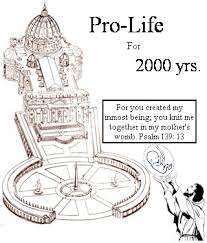 A society that teaches people that actions don't have natural consequences is doomed. Likewise, a society that teaches that some people aren't really human. A healthy society, by contrast, teaches natural virtue, respect for human dignity regardless of "utility" or circumstances, and the truth that love requires self-sacrifice. A society that doesn't "accept events like this as routine" is one that also condemns abortion, adultery, promiscuity, infidelity; that also upholds chastity, the sanctity of marriage, and the high dignity of the vocation to parenthood. Hence my opening comment about fundamental hypocrisy. It is viciously hypocritical to condemn violence against children in a school, and to propose sweeping societal changes to counter it, while also promoting systematic, devastating violence against children in the womb, and resisting efforts to counter it.
This is, of course, a fundamental truth. The whole point of "culture" is to raise children into virtuous, competent adults, and to reinforce by the continuous formation of adults the same virtues being passed on, in a manner consistent enough across time and space to be a shared and unifying vision of the Good. Successful cultures are successful, stable, and enduring exactly in these terms. People come to share this commitment to the Good that is envisioned, because it is demonstrably a Good, and because it tests positively against human experience.
But in this speech, Obama moves too easily from truth to truism, and thence to misdirection.
The truism is that threats of violence against our children come from outside, from disordered elements of the culture (like mental illness, or the apparent randomness of many forms of violence):
We gather here in memory of twenty beautiful children and six remarkable adults. They lost their lives in a school that could have been any school; in a quiet town full of good and decent people that could be any town in America.... As these difficult days have unfolded, you’ve also inspired us with stories of strength and resolve and sacrifice. We know that when danger arrived in the halls of Sandy Hook Elementary, the school’s staff did not flinch, they did not hesitate....
This dichotomy is partly true, at the level of personal experience, and yet wholly false, morally. Obama alludes to this falsity when he says:
But if that's true, then there's not an "us" who try to protect children from violence and raise them in virtue, and a "them" who try the opposite. Those who harm our more vulnerable members are also "us." But from the ambiguity of the superficial truism, the speech is able to misdirect:
In the coming weeks, I will use whatever power this office holds to engage my fellow citizens — from law enforcement to mental health professionals to parents and educators — in an effort aimed at preventing more tragedies like this. Because what choice do we have? We can’t accept events like this as routine. Are we really prepared to say that we’re powerless in the face of such carnage, that the politics are too hard? Are we prepared to say that such violence visited on our children year after year after year is somehow the price of our freedom?
The misdirection here is actually three-fold.
First, there is the straw man of opposing "freedom" with "preventing more tragedies like this." Politically, this is a false dichotomy because freedom - true freedom, virtuous freedom, not license (as "freedom" is often cast) - is what makes a culture strong and resilient. Only a society characterized by humility, fortitude, and prudence is capable of reining in the impulses to violent brutality, without resorting to strict tyranny. Morally, this is a straw man because moral freedom is essential to love, and to the meaningfulness. Without moral freedom, life just is; neither good nor evil, but simply to be endured.
Second, there is the implied "big government" thinking, that only (or perhaps, best) the federal government is equipped to deal effectively with this problem. This is typical of this president's work (bailouts, Obamacare, etc). This is misdirection in this context to the extent that it belies the need for vigorous subsidiarity in making and enforcing good laws, and so forth. (The whole question of proper care for the mentally ill can be hooked onto this point.)
Third, and most blatantly, there is the elephant in the room of abortion, and indeed of the whole contraceptive mentality of behavior without natural consequence. Mr. Obama said, "Can we honestly say that we’re doing enough to keep our children — all of them — safe from harm?" Abortion is the most grievous form of violence visited upon our children - in scale (roughly 3000 children murdered daily), in social damage (emotional consequences, lives and relationships gravely harmed, etc), and in moral damage (abortion justifies other grave evils, because if this person's humanity can be denied, then so too can this one's). Abortion is a fatal cancer at the heart of our culture.
Tuesday, November 27, 2012
Papal Nuncio, Archbishop Vigano, on Persecution of the Church in the Modern World - updated 11/28
Earlier in November, the Institute for Church Life at the University of Notre Dame hosted a conference on the current global persecution of Christians. Archbishop Vigano, the Apostolic Nuncio to the United States, was the keynote speaker. (Additional presentations available.) Here's his excellent, accurate, and unapologetic talk (and as PDF):
Here's his thesis (italic text indicates quotation from the PDF linked above): [I]t is crucial to see that in the world of the present age, persecution of the faithful can manifest itself in a variety of forms, some obvious, but others less so. While it is necessary to remind ourselves of the obvious, we must also consider the not-so-obvious, for great danger to the future of religious freedom lies with religious persecution that appears inconsequential or seems benign but in fact is not. (emphasis added)
In this talk, he separates the interrelated ideas of martyrdom, persecution, and religious freedom. Martyrdom, he notes, depends on two things: the fidelity of the believer who refuses to compromise the demands of the faith, and the intention of the persecutor: [T]he intention underlying the objectives of the persecutor is important to understand: it was to eradicate the public witness to Jesus Christ and His Church. An accompanying objective can be the incapacitation of the faith by enticing people to renounce their beliefs, or at least their public manifestations, rather than undergo great hardships that will be, or can be, applied if believers persist in their resistance to apostasy. The plan is straightforward: if the faith persists, so will the hardships. (emphasis added) He also notes that the "hardships" can be not only legal or physical, but also social (ridicule, social isolation, marginalization).
Persecution is a slightly larger set of actions than those that end in martyrdom: Persecution is typically associated with the deeds preceding those necessary to make martyrs for the faith. While acts of persecution can mirror those associated with martyrdom, other elements can be directed to sustaining difficulty, annoyance, and harassment that are designed to frustrate the beliefs of the targeted person or persons rather than to eliminate these persons. It would seem, then, that the objective of persecution is to remove from the public square the beliefs themselves and the public manifestations without necessarily eliminating the persons who hold the beliefs. The victimization may not be designed to destroy the believer but only the belief and its open manifestations. From the public viewpoint, the believer remains but the faith eventually disappears. (emphasis added) This is just the same distinction between "public" and "private" faith that we are seeing, as an attempt to change the meaning of the First Amendment's guarantee of freedom of religion (i.e., limiting it to freedom of worship only, but not freedom of practice of all the moral consequences of that worship).
In opposition to martyrdom and persecution, Religious freedom is the exercise of fidelity to God and His Holy Church without compromise. He rightly makes the classic distinction, best made by St. Augustine in the "City of God," between the "two cities" of God and of man: At the core of this fidelity is the desire to be a good citizen of the two cities where we all live: the City of Man and the City of God. Baptism makes us citizens of the City of God, but we remain "sojourners" in the world. Worldly justice, then, requires making the worldly city resemble more (it will never do so perfectly) the true freedom and true justice of the heavenly city. Freedom of religion, then, is simply that set of attitude and priorities, enshrined into positive law to the extent necessary, that allows one to be "good citizens" of both cities at the same time. Without religious freedom, the inherent difference between the two cities results in opposition, hostility, and therefore persecution and martyrdom.
Abp Vigano puts his finger right on this point: The problem of persecution begins with this reluctance to accept the public role of religion in these affairs, especially but not always when the protection of religious freedom involves beliefs that the powerful of the political society do not share. This is precisely the heart of the issue. A secular worldview assumes that religion is, in itself, problematic for the "city of man." It rejects that religion in general, and Christianity in particular, ought to influence the culture, the laws, the State, etc., in the direction of "resembling more" Christ's true freedom and true justice. Thus, the more forceful or radical the secular view, the more it is at odds with the Church; the less it can value religious freedom (replacing it with mere "freedom of worship" and vacuous "toleration"), and the more likely it is to persecute Christians, even to the point of martyrdom.
Abp Vigano lists several current examples of that sort of persecution, not yet to the point of martyrdom, and builds to this crescendo: An Englishman who found his way to the United States, Christopher Dawson (who became a Catholic in his early adulthood) still reminds us that the modern state, even the democratic one, can exert all kinds of pressure on authentic religious freedom. Dawson insightfully explained that the modern democratic state can join the totalitarian one in not being satisfied with “passive obedience” when “it demands full cooperation from the cradle to the grave.” He identified the challenges that secularism and secular societies can impose on Christians which surface on the cultural and the political levels. Dawson thus warned that “if Christians cannot assert their right to exist” then “they will eventually be pushed not only out of modern culture, but out of physical existence.” He acknowledged that this was not only a problem in the totalitarian and non-democratic states, but “it will also become the issue in England and America if we do not use our opportunities while we still have them.” (citing Christopher Dawson, “The Challenge of Secularism”, Catholic World (1956); emphasis added)
He then cites the same point made by Pope John Paul II in Christifideles Laici (1988) and Centesimus Annus (1991), and concludes very strongly: We are still a far cry from fully embracing the Holy Father’s encouraging exhortation [i.e. Christifideles Laici] when we witness in an unprecedented way a platform being assumed by a major political party, having intrinsic evils among its basic principles, and Catholic faithful publicly supporting it. There is a divisive strategy at work here, an intentional dividing of the Church; through this strategy, the body of the Church is weakened, and thus the Church can be more easily persecuted. His last two paragraphs are an exhortation to resist this division, remain united to the life-giving vine that is Christ, and to protect religious freedom by living the Faith deeply and authentically in every area of our life.
Update (11/28) - The Holy Father touched on the theme of making the city of man resemble more the city of God, in his Wednesday audience today. His approach is that of evangelization: Speaking about God, therefore, means enabling others to understand through words and acts that God is not a competitor in our existence but rather its true guarantor, the guarantor of the greatness of the human person. Thus we return to the beginning: speaking about God means communicating, with power and simplicity, through words and the life we lead, that which is essential: the God of Jesus Christ, the God Who showed us a love so great that He took on human flesh, died and rose again for us; the God Who asks us to follow Him and to allow ourselves to be transformed by His immense love in order to renew our lives and our relationships; the God Who gave us the Church, to allow us to journey together and, through the Word and the Sacraments, to renew the entire City of Man so that it might become the City of God. Anthony Esolen also had a relevant article in Crisis Magazine recently.
Here's his thesis (italic text indicates quotation from the PDF linked above): [I]t is crucial to see that in the world of the present age, persecution of the faithful can manifest itself in a variety of forms, some obvious, but others less so. While it is necessary to remind ourselves of the obvious, we must also consider the not-so-obvious, for great danger to the future of religious freedom lies with religious persecution that appears inconsequential or seems benign but in fact is not. (emphasis added)
In this talk, he separates the interrelated ideas of martyrdom, persecution, and religious freedom. Martyrdom, he notes, depends on two things: the fidelity of the believer who refuses to compromise the demands of the faith, and the intention of the persecutor: [T]he intention underlying the objectives of the persecutor is important to understand: it was to eradicate the public witness to Jesus Christ and His Church. An accompanying objective can be the incapacitation of the faith by enticing people to renounce their beliefs, or at least their public manifestations, rather than undergo great hardships that will be, or can be, applied if believers persist in their resistance to apostasy. The plan is straightforward: if the faith persists, so will the hardships. (emphasis added) He also notes that the "hardships" can be not only legal or physical, but also social (ridicule, social isolation, marginalization).
Persecution is a slightly larger set of actions than those that end in martyrdom: Persecution is typically associated with the deeds preceding those necessary to make martyrs for the faith. While acts of persecution can mirror those associated with martyrdom, other elements can be directed to sustaining difficulty, annoyance, and harassment that are designed to frustrate the beliefs of the targeted person or persons rather than to eliminate these persons. It would seem, then, that the objective of persecution is to remove from the public square the beliefs themselves and the public manifestations without necessarily eliminating the persons who hold the beliefs. The victimization may not be designed to destroy the believer but only the belief and its open manifestations. From the public viewpoint, the believer remains but the faith eventually disappears. (emphasis added) This is just the same distinction between "public" and "private" faith that we are seeing, as an attempt to change the meaning of the First Amendment's guarantee of freedom of religion (i.e., limiting it to freedom of worship only, but not freedom of practice of all the moral consequences of that worship).
In opposition to martyrdom and persecution, Religious freedom is the exercise of fidelity to God and His Holy Church without compromise. He rightly makes the classic distinction, best made by St. Augustine in the "City of God," between the "two cities" of God and of man: At the core of this fidelity is the desire to be a good citizen of the two cities where we all live: the City of Man and the City of God. Baptism makes us citizens of the City of God, but we remain "sojourners" in the world. Worldly justice, then, requires making the worldly city resemble more (it will never do so perfectly) the true freedom and true justice of the heavenly city. Freedom of religion, then, is simply that set of attitude and priorities, enshrined into positive law to the extent necessary, that allows one to be "good citizens" of both cities at the same time. Without religious freedom, the inherent difference between the two cities results in opposition, hostility, and therefore persecution and martyrdom.
Abp Vigano puts his finger right on this point: The problem of persecution begins with this reluctance to accept the public role of religion in these affairs, especially but not always when the protection of religious freedom involves beliefs that the powerful of the political society do not share. This is precisely the heart of the issue. A secular worldview assumes that religion is, in itself, problematic for the "city of man." It rejects that religion in general, and Christianity in particular, ought to influence the culture, the laws, the State, etc., in the direction of "resembling more" Christ's true freedom and true justice. Thus, the more forceful or radical the secular view, the more it is at odds with the Church; the less it can value religious freedom (replacing it with mere "freedom of worship" and vacuous "toleration"), and the more likely it is to persecute Christians, even to the point of martyrdom.
Abp Vigano lists several current examples of that sort of persecution, not yet to the point of martyrdom, and builds to this crescendo: An Englishman who found his way to the United States, Christopher Dawson (who became a Catholic in his early adulthood) still reminds us that the modern state, even the democratic one, can exert all kinds of pressure on authentic religious freedom. Dawson insightfully explained that the modern democratic state can join the totalitarian one in not being satisfied with “passive obedience” when “it demands full cooperation from the cradle to the grave.” He identified the challenges that secularism and secular societies can impose on Christians which surface on the cultural and the political levels. Dawson thus warned that “if Christians cannot assert their right to exist” then “they will eventually be pushed not only out of modern culture, but out of physical existence.” He acknowledged that this was not only a problem in the totalitarian and non-democratic states, but “it will also become the issue in England and America if we do not use our opportunities while we still have them.” (citing Christopher Dawson, “The Challenge of Secularism”, Catholic World (1956); emphasis added)
He then cites the same point made by Pope John Paul II in Christifideles Laici (1988) and Centesimus Annus (1991), and concludes very strongly: We are still a far cry from fully embracing the Holy Father’s encouraging exhortation [i.e. Christifideles Laici] when we witness in an unprecedented way a platform being assumed by a major political party, having intrinsic evils among its basic principles, and Catholic faithful publicly supporting it. There is a divisive strategy at work here, an intentional dividing of the Church; through this strategy, the body of the Church is weakened, and thus the Church can be more easily persecuted. His last two paragraphs are an exhortation to resist this division, remain united to the life-giving vine that is Christ, and to protect religious freedom by living the Faith deeply and authentically in every area of our life.
Update (11/28) - The Holy Father touched on the theme of making the city of man resemble more the city of God, in his Wednesday audience today. His approach is that of evangelization: Speaking about God, therefore, means enabling others to understand through words and acts that God is not a competitor in our existence but rather its true guarantor, the guarantor of the greatness of the human person. Thus we return to the beginning: speaking about God means communicating, with power and simplicity, through words and the life we lead, that which is essential: the God of Jesus Christ, the God Who showed us a love so great that He took on human flesh, died and rose again for us; the God Who asks us to follow Him and to allow ourselves to be transformed by His immense love in order to renew our lives and our relationships; the God Who gave us the Church, to allow us to journey together and, through the Word and the Sacraments, to renew the entire City of Man so that it might become the City of God. Anthony Esolen also had a relevant article in Crisis Magazine recently.
Wednesday, October 17, 2012
Homily for Oct 17 - St. Ignatius, Bishop and Martyr
In the second century, the Roman Empire had a growing problem. There were increasing numbers of these "Christians" everywhere, and they just would not cooperate with how the Empire did things. And the Romans simply could not understand why the Christians held themselves apart like that.
About the year 106, the Emperor Trajan, in thanksgiving for a great military victory, passed a law that all the people of Syria should offer a sacrifice to the traditional Roman gods. But in the middle of Syria was the capital, Antioch, and the Bishop of Antioch was Ignatius. St. Ignatius preached loudly, in his pulpit and in the streets, that Christians could not obey this law.
The Romans simply did not understand this. Why couldn't the Christians do what everybody else did - offer the public sacrifice once, and then go home and follow their own religion in private? Why couldn't the Christians compartmentalize their faith, like everybody else?
In our own time, our government increasingly acts the same way toward Christians. There are many examples, but one of the most important instances is the HHS Mandate: that all employers must offer their employees, in their health insurance plans, the benefits - and "benefits" are in quotation marks - of contraception, sterilization, and chemical abortions. And our government simply doesn't understand why we Christians cannot compartmentalize our faith, and perform our economic duties over here, in accordance with the law, and our religious duties over there, in private, however we want.
 In the Gospel today, Jesus teaches us that, "Unless a grain of wheat falls to the ground and dies, it remains only a grain of wheat. But if it dies, it brings forth much fruit." (Jn 12:24-5) St. Ignatius used this very Gospel passage in a letter to the Church in Rome. He pointed to himself, saying, "I am the grain of wheat." He called the teeth of the wild animals which would kill him in the arena, the "millstones" grinding the wheat into bread, a bread like Christ's own Body, that would nourish the faith of others. He wanted to be that bread, to nourish the Church and to change the Roman world.
And that's exactly what he did as a martyr. The witness of his death for the crime of being a Christian and not committing idolatry nourished the faith of others. It took two hundred years, and thousands of martyrs dying for Christ, to change the Roman Empire, but it happened. In the fourth century, the Roman Empire became the Christian Roman Empire.
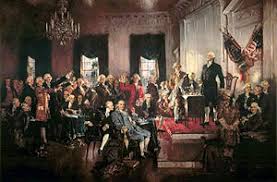 That's why, when our own government was founded in the 18th century, it could be founded as a Christian government. But if we want to keep it a Christian government and a Christian country, we need to change the hearts and minds of our neighbors, by the witness of our lives. We may not be called to "red" martyrdom, but we still preach about Christ, or not, by the actions of our lives every day. Our actions show what are our priorities, and the daily witness of our charity shows whether we love God and neighbor.
We are the only Christ, that those who don't yet know Him, can learn about Him by. We are the grains of wheat, and our daily witness for Him grinds us into bread. Will we be a tasteless and worthless bread of no value? Or will we be the bread that we really are as the Body of Christ - the bread that nourishes the faith of others?
 | |
| Emperor Trajan |
The Romans simply did not understand this. Why couldn't the Christians do what everybody else did - offer the public sacrifice once, and then go home and follow their own religion in private? Why couldn't the Christians compartmentalize their faith, like everybody else?
In our own time, our government increasingly acts the same way toward Christians. There are many examples, but one of the most important instances is the HHS Mandate: that all employers must offer their employees, in their health insurance plans, the benefits - and "benefits" are in quotation marks - of contraception, sterilization, and chemical abortions. And our government simply doesn't understand why we Christians cannot compartmentalize our faith, and perform our economic duties over here, in accordance with the law, and our religious duties over there, in private, however we want.
 |
| St. Ignatius in the arena |
We are the only Christ, that those who don't yet know Him, can learn about Him by. We are the grains of wheat, and our daily witness for Him grinds us into bread. Will we be a tasteless and worthless bread of no value? Or will we be the bread that we really are as the Body of Christ - the bread that nourishes the faith of others?
Thursday, October 11, 2012
Year of Faith - some online resources
The Vatican's webpage for the Year of Faith
The Diocese's webpage for the Year of Faith
Bishop Nickless's Prayer for the Year of Faith
A Year of Faith Facebook page
A collection of videos for the Year of Faith at the USCCB
The Catechism of the Catholic Church at the Vatican website
Read the Catechism in a year, with a daily email or app
Friday, October 5, 2012
Plenary Indulgences for Year of Faith announced - (Corrected)

"Each time they [the faithful] attend at least three sermons during the Holy Missions, or at least three lessons on the Acts of the Council or the articles of the Catechism of the Catholic Church, in church or any other suitable location. [There will be various programs and lectures on the CCC in our diocese, including all the study for the Catechist Certification program that many of our schools and parishes are beginning this year.]

Each time that, on the days designated by the local ordinary for the Year of Faith, ... in any sacred place, they participate in a solemn celebration of the Eucharist or the Liturgy of the Hours, adding thereto the Profession of Faith in any legitimate form. [With Bishop's approval, we can meet this requirement on our formation days.]
On any day they choose, during the Year of Faith, if they make a pious visit to the baptistery, or other place in which they received the Sacrament of Baptism, and there renew their baptismal promises in any legitimate form.”
The statement added that diocesan or eparchial bishops, and those who enjoy the same status in law, on the most appropriate day during that period or on the occasion of the main celebrations, "may impart the papal blessing with the Plenary Indulgence".
 In addition to the above, we're promoting the praying of the Rosary during the Year of Faith. A plenary indulgence can be gained by praying the Rosary in a church, as a group, out loud. A partial indulgence can be gained by praying the Rosary in any other circumstances. One must actually meditate on the mysteries (which is the point, after all), and not just go through the motions. All the usual conditions apply; namely, the normal requirements for any indulgence are:
- To attend Holy Mass and Confession within a week (before or after) of the event the indulgence is attached to,
- To be free of all attachment to sin, and
- To pray for the intentions of the Holy Father.
- No more than one indulgence may be gained per day, either for oneself or for others*, including the dead in Purgatory. *Correction - Indulgences may not be applied to other living people, only to oneself or to the dead; see Can. 994. Unfortunately, CCC #1471 is more vague than this, saying only "Indulgences may be applied to the living or to the dead." This is correct but incomplete. Thanks to T.H. for catching my error.
Subscribe to:
Posts (Atom)